
The iSocial Foundation and its member organisations travel to Finland for the 3rd Innotrip


The iSocial Foundation and its member organisations travel to Finland for the 3rd Innotrip
The visits to organisations and facilities in Helsinki and Espoo allowed us to gain closer insight into some pioneering initiatives in one of the countries with the most advanced social infrastructure.
From June 2nd to 6th, the iSocial Foundation organised a new edition of Innotrip, the annual learning journey it promotes with its member organisations to explore international best practices in the social sector. This year’s destination was Helsinki, with the aim of discovering innovative experiences currently being developed in Finland — a leading country in the implementation of the welfare state.
The trip offered a valuable opportunity to observe and reflect on advanced care models through visits to municipal services, social organisations and community initiatives that tackle key challenges such as poverty, disability, homelessness, mental health, and digital inclusion.
A focus on integrated, person-centred care
he first day of visits took us to resources such as the Roihuvuori Senior Centre and Kallio Perhekeskus, which focus on supporting older adults and families through an integrated and preventative approach. We also explored municipal services aimed at mental health and youth at risk, as well as initiatives for caregiver training and peer support.
One of the key takeaways from this first encounter with the Finnish social model was becoming familiar with its strong commitment to collaboration among stakeholders and to the active involvement of citizens in community-based care.
Mentorship, participation, and social impact evaluation
LOn the second day, we discovered projects like Icehearts, which offers long-term mentoring through sports and education, and Vamos! by the Diaconia Foundation, which supports vulnerable youth. During this visit, we also learned about the use of social impact bonds — a tool to activate social projects more efficiently and quickly, involving private companies in the promotion of social wellbeing.
On the other hand, the City of Helsinki presented the Feedback-Informed Treatment (FIT) system to us, which integrates service users’ feedback to improve care quality. We also got to know Pokka, a platform developed by the organisation Kukunori, which is used by over 100 entities to evaluate the impact of social projects.
Housing, self-determination, and child protection
On the third day, we visited organisations such as Y-Säätiö, a key promoter of the Housing First model in Finland, and Tukena, which advocates for self-directed support for people with disabilities. We also explored Rinnekodit, a residential facility located in a natural setting for individuals with high support needs, and the Barnahus model for integrated child protection services — currently being rolled out in Catalonia — giving us a valuable international reference for this system.
These experiences provided tools to rethink how we can ensure dignity and autonomy for people in vulnerable situations, while promoting community-based approaches and respect for individual rights.
Deinstitutionalisation and digital inclusion
The final day introduced us to two initiatives addressing access to community life and basic rights from different angles. On one hand, Kehitysvammaliitto (the Finnish Association on Intellectual and Developmental Disabilities) presented its work in the deinstitutionalisation process and the implementation of peer support networks. Through Peer Support Groups, people with disabilities share knowledge and experiences, strengthening both their autonomy and collective advocacy capacity.
On the other hand, the DigiUp programme, — led by the Moniheli network — works to reduce the digital divide among migrant populations. It trains digital facilitators — both volunteers and professionals — who offer guidance in basic digital skills, such as safe device usage and access to digital services. Both initiatives contribute to enabling more inclusive and equitable participation in social life.
A shared experience with collective impact
This journey was a unique opportunity to discover inspiring initiatives, identify shared challenges, and explore alternative approaches that can help strengthen social services in our own context. The time spent together over these five days of Innotrip and the chance to learn from some of Finland’s most innovative social projects also fostered meaningful dialogue and collective learning among participating organisations — exchanges that will continue well beyond the trip.
We at the iSocial Foundation would like to thank all the participating organisations for their active engagement and interest: ABD, AMPANS, Fundació Família i Benestar Social, Fundació Joia, Fundació Catalana Síndrome de Down, Fundació Resilis, Pere Claver Grup, Fundació Idea, Fundació El Maresme, FAFAC, Agintzari, REIR, Som Alba, Intress, Fundació Hàbitat3, Grup ATRA, Grupo SSI, Som Fundació, Fundació Aspace Catalunya, Grup MIFAS.
We are also deeply grateful to all the Finnish organisations that welcomed us and generously shared their knowledge and experience.
Actualitat
RAPNIC receives the 2nd prize in the AINA “Territorial Intelligence” contest
Towards Independent Living: Community Support Networks and Personalised Guidance Points

Self‑care to prevent burnout and improve the wellbeing of social services professionals
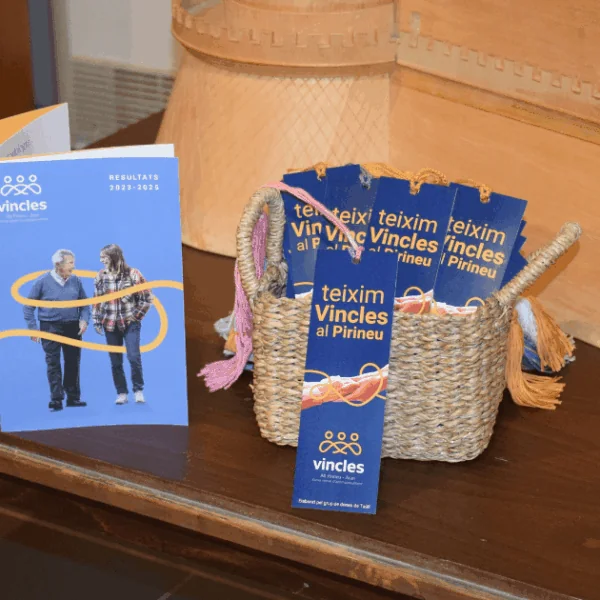
Presentation of the results of the Vincles Alt Pirineu-Aran project for the 2023–2025 period at an event in Sort
iSocial and Somos Conexión join forces to promote knowledge and social technology