
RAPNIC receives the 2nd prize in the AINA “Territorial Intelligence” contest

Publications News

RAPNIC receives the 2nd prize in the AINA “Territorial Intelligence” contest

Aplicació IA de reconeixement de veu

RAPNIC has been recognized in the category “Artificial Intelligence to Reduce Digital Divides” in the AINA “Territorial Intelligence” contest, which promotes Catalan-language solutions aimed at improving accessibility and digital inclusion.

RAPNIC has been awarded the 2nd Prize in the AINA “Territorial Intelligence” competition, a recognition that seeks to promote Catalan-language artificial intelligence solutions with social impact and the ability to reduce digital divides. The jury highlighted the project’s contribution to improving Catalan speech recognition in non‑standard speech, with particular emphasis on dialectal varieties, as well as its data‑driven approach and testing in everyday use environments.

A technological response to a social challenge: reducing digital divides in voice technologies

RAPNIC is an initiative of the iSocial Foundation that addresses a persistent issue in both the technological and social spheres: many voice systems work well with standard speech but fail to interpret non‑fluent speech. This technological gap creates a significant digital barrier for groups that often already face communication difficulties, such as people with Down syndrome, cerebral palsy, or other speech disorders. The situation becomes even more challenging when these individuals speak less dominant linguistic varieties or dialects, as is the case with Catalan and, specifically, the dialects of the Terres de l’Ebre (Tarragona) region.

To address this issue, the RAPNIC project collects real recordings from local users—both read and spontaneous speech—and tests the technology through a web application used in everyday contexts. The involvement of social organizations, speech therapy professionals, and local services ensures that the solution is useful, accessible, and ethical, with particular care given to data protection and informed consent.

A competition to strengthen the presence of Catalan in AI technologies

The AINA “Territorial Intelligence” competition aims to support projects that use artificial intelligence to strengthen the presence of Catalan in the digital sphere, while generating social impact in areas linked to the Nuclear Transition Fund. The challenge in which RAPNIC participated—“Artificial intelligence to reduce digital divides”—called for solutions capable of reducing digital inequalities through accessible language technologies, particularly designed for people with communication difficulties and for territories with underrepresented dialectal varieties.

RAPNIC’s proposal responds directly to this need, combining technological innovation, local knowledge, and a people‑centred approach. In this regard, the creation of a genuine corpus of non‑standard Catalan speech and validation with users in real‑life situations were specially valued elements in the contest.

A project recognized for its impact and coherence

The jury valued that RAPNIC provides a solution that clearly contributes to digital inclusion, enabling people with speech disorders to use voice and transcription tools with greater autonomy. It also highlighted the project’s solid design, strong local roots, and the potential to scale this methodology to other groups and contexts.

This award adds to the CSC Impulsa 2024 Award for Innovation in AI in the social field, which had already recognized RAPNIC as a pioneering initiative in developing technologies capable of interpreting non‑fluent Catalan speech. The project continues to move forward with the aim of creating and opening corpus, data, and documentation that can be reused by researchers, social organizations, and other innovation projects in the country.

A broad ecosystem of collaborators

The RAPNIC project is built on a participatory approach and collaboration with organizations, professionals, and users in the territory, ensuring that the technology responds to real communication needs.

RAPNIC’s development is possible thanks to a wide network of collaboration that brings together social organizations, research centres, and local institutions. The project includes the University of Barcelona as an academic partner, as well as the organizations FCSD, Fundació Aspace Catalunya, Grup MIFAS, Associació Alba, and Fundació Maresme —all members of the iSocial Foundation— along with Esclat Grup Social, Fundació Astres, Down Lleida, and Grup Ramon Noguera. The participation of users and professionals from these organizations is key to building the corpus, and they also contribute wiith concrete, practical knowledge about the communication needs of the groups involved.

This multidisciplinary alliance ensures that the technology is developed with rigour, respect, and sensitivity, incorporating the perspectives of the people who will ultimately benefit from it.

Continuing to grow and expand its impact

The next steps for the project include continuing to expand data collection, strengthening territorial partnerships, and exploring new integrations into digital services aimed at communication accessibility. In this way, RAPNIC aims to keep advancing toward a more inclusive, more diverse artificial intelligence that better reflects the linguistic reality of the country, with the goal of contributing to a future where technology effectively helps overcome communication and social barriers.

Actualitat
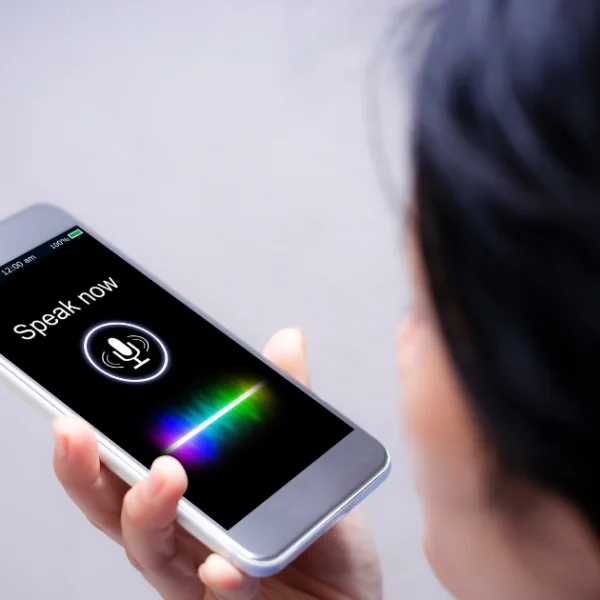
AI‑powered voice recognition application

RAPNIC receives the 2nd prize in the AINA “Territorial Intelligence” contest

RAPNIC has been recognized in the category “Artificial Intelligence to Reduce Digital Divides” in the AINA “Territorial Intelligence” contest, which promotes Catalan-language solutions aimed at improving accessibility and digital inclusion.
Imatge de portada del poper Innobreak, que tindrà lloc el 21 d'abril i que tractarà sobre vida independent.

Towards Independent Living: Community Support Networks and Personalised Guidance Points

Neighbourhood Networks (Scotland) and A-Punt (Catalonia). 21 April 2026, from 9:00 to 10:30. Open for registration.
Visual representation of job burnout: a burnt-out match, symbolizing work-related stress and the need for self-care among professionals in the social sector.

Self‑care to prevent burnout and improve the wellbeing of social services professionals

Taking care of our emotional wellbeing is essential to carrying out daily tasks with quality. For this reason, self‑care is especially important in fields like the social sector, where demands and pressure are very high.
Cartelleria de l'acte de presentació de resultats del projecte Vincles 2023-2026

Presentation of the results of the Vincles Alt Pirineu-Aran project for the 2023–2025 period at an event in Sort
On 5 March, we held the event in Sort to present the results of the Vincles project for the 2023–2025 period, highlighting both the programme’s success and the need to ensure its continuity.
Notícia Som Connexió

iSocial and Somos Conexión join forces to promote knowledge and social technology

The cooperative Somos Conexión will sponsor three of the Innobreaks that we will hold throughout 2026. These sessions will focus on the conscious and inclusive use of technology in the social sphere, helping bring innovative initiatives closer to the sector that address emerging digital challenges
Innobreak 17.02 -realitat virtual.

Virtual Reality in Social Care: Experiential Training and Intervention

Immersive Training Platform – Embodied Labs (USA) and VIA Project (Catalonia) Held on February 17, 2026.

Self‑care to prevent burnout and improve the wellbeing of social services professionals

Publications Articles

Self‑care to prevent burnout and improve the wellbeing of social services professionals

, ,
Visual representation of job burnout: a burnt-out match, symbolizing work-related stress and the need for self-care among professionals in the social sector.

Taking care of our emotional wellbeing is essential to carrying out daily tasks with quality. For this reason, self‑care is especially important in fields like the social sector, where demands and pressure are very high.

Social services are responsible for providing social support to the population, and teams work every day with situations of great emotional complexity that can affect their job satisfaction and mental health. It is a profession built on people and relationships. But in order to help others, you must first take care of yourself, that is, practice self‑care and know how to accept help when needed to avoid reaching burnout.

The social services sector faces numerous structural challenges: lack of resources, the complexity of the cases handled daily, and the pressure and expectations placed on professionals.

“Studies show that high job demands drain professionals’ physical and mental resources, leading to decreased energy and health problems.”

It is a highly demanding and emotionally exhausting job. Users of social services often put high expectations and demands on professionals. This is why it is common to experience high levels of stress that can lead to burnout. In such a delicate and demanding profession, which also struggles with a lack of economic and human resources, taking care of oneself becomes essential.

What is burnout?

Burnout is a psychological condition that develops after prolonged exposure to high levels of stress, especially in the workplace. Its main consequences include:

  • A sense of dissatisfaction
  • Physical and mental exhaustion
  • Decreased job performance

This situation affects not only the person experiencing it, but also their work and personal environments. For this reason, self‑care, the actions a person takes to protect their own physical and mental wellbeing, is key to preventing burnout and preserving emotional health.

How to reduce work‑related stress and avoid burnout in social services?

As mentioned earlier, sources of stress in social services teams are multifactorial and often structural (lack of resources, excessive caseloads, too much bureaucracy, lack of coordination with other services such as education or healthcare…). While changing these structural causes is difficult and requires large‑scale reforms, there are strategies and techniques that can help professionals reduce and better manage stress levels in the short term.

Self‑awareness and emotional management

A key first step in managing stress is self‑awareness. Identifying your own feelings and emotions helps detect early signs of stress and act before they intensify. Work in social services carries a heavy emotional load, so it is essential to stay alert to any signs of discomfort. Self‑awareness helps you understand your own skills and limits, know how far you can go, and avoid crossing those limits to prevent burnout. Self‑esteem is closely linked to self‑awareness, as it allows you to value your own strengths.

The process of becoming self‑aware is highly personal and different for everyone; there is no single method to achieve it. Even so, exploring techniques that help you connect with your emotions and sensations can be useful.

Some common exercises to develop self‑awareness include:

  • writing or journaling, writing down thoughts and feelings to identify and understand them.
  • meditation, a practice that promotes relaxation, awareness, and calmness, while increasing kindness toward oneself and others, contributing to emotional regulation.
  • mindfulness a widely recognized practice that focuses attention on the present moment to change how we experience daily life. It involves letting go of judgment and living more connected to the present, reducing the mental load associated with stress.

Self‑leadership to confront stress

One factor that often contributes to increased stress and burnout is excessive self‑demand. This can make it difficult to delegate tasks and lead to setting goals that are hard to achieve.

In response to self‑demand, self‑compassion involves accepting mistakes and being kind to oneself. This practice helps reduce the stress caused by very high self‑expectations and improves long‑term emotional wellbeing.

It is important to:

  • understand personal limits
  • distinguish between situations we can control and those beyond our control
  • properly separate work life from personal life
  • set clear, realistic goals aligned with personal values

As Brené Brown, researcher at the University of Houston and expert in self‑knowledge and resilience, points out, “owning our story and loving ourselves […] is the bravest thing we will ever do.
According to her, this process “involves letting go of who you think you’re supposed to be and embracing who you really are.”

Regulating self‑demand through self‑compassion helps you work with purpose and, as a result, maintain motivation. In fact, experts distinguish between intrinsic and extrinsic motivation. Extrinsic motivation is tied to external factors we cannot control. Intrinsic motivation, however, relates to how we perceive what we do and how we value our own work.

In this sense, keeping in mind the significance of the work carried out in the social sector can be another way to manage accumulated tension. Although it is a profession with a high risk of stress and burnout, a study by Community Care in the United Kingdom shows that 91% of social workers report high satisfaction with the impact of their work.

Remembering why social work is necessary and the positive impact it can have is a way to strengthen intrinsic motivation.

Healthy professional relationships and emotional support

How we relate to others directly influences our stress levels and emotional wellbeing. In this regard, the Bridge Model — a tool that describes different communication styles and ways of perceiving and managing relationships — helps identify both our own preferences and those of colleagues. Understanding these styles makes it easier to adapt to each interaction, reduce misunderstandings, and anticipate dynamics that may generate tension.

This understanding fosters empathy within teams, supports healthier relationships, and helps prevent unnecessary tensions in the workplace.

Creating healthy work environments and support networks is essential for promoting professionals’ mental health. It is important to encourage spaces for listening, trust, and vulnerability, as well as reduce the stigma associated with mental health.

One technique that helps create safe spaces is Nonviolent Communication, which involves understanding one’s own needs and those of others to practice self‑compassion and reach mutual understanding.

Physical health

Emotional discomfort often has physiological manifestations as well. It is important to stay alert to signs that may have an emotional origin. Taking care of physical health is essential, as it is closely linked to emotional wellbeing.

Basic needs must be met to prevent physical health from negatively affecting mental health:

  • Ensuring adequate rest and good‑quality sleep
  • Maintaining a balanced and healthy diet
  • Engaging in physical activity

Various studies have shown that moderate exercise has a direct positive impact on mental health. Greater benefits have been observed when physical activity is done in groups or outdoors. Exercise helps release tension, increase self‑esteem, reduce anxiety levels, and improve sleep quality.

Benefits have been observed both in people who exercise regularly and moderately, and in those who concentrate physical activity on weekends. It is therefore important to dedicate time to physical exercise.

In conclusion, taking care of oneself is an essential part of professional practice in social services. When teams have tools to manage stress, strengthen motivation, and build healthy work environments, their wellbeing is protected and the quality and sustainability of their work improve.

Self‑care is not just an individual attitude, it is a skill that can be learned, practiced, and integrated into team culture. Investing in it means investing in more resilient, cohesive, and purpose‑driven professionals.

Articles

Visual representation of job burnout: a burnt-out match, symbolizing work-related stress and the need for self-care among professionals in the social sector.

Self‑care to prevent burnout and improve the wellbeing of social services professionals

Taking care of our emotional wellbeing is essential to carrying out daily tasks with quality. For this reason, self‑care is especially important in fields like the social sector, where demands and pressure are very high.
Model TEAL

How can the TEAL model benefit the social sector?

The TEAL model represents a break from classical internal organizational models of entities, with a special emphasis on the people who are part of them. What benefits could its implementation have in the social sector?
Big Data

Predictive models through big data applied to social services

In recent years, multiple sectors have embraced big data technology and predictive models to manage large amounts of data, draw conclusions, and make predictions. How can this technology be applied to social services?
Infància i adolescència en risc

Social innovation in the protection of children and adolescents at risk

According to UNICEF, it is estimated that more than 1 billion children and adolescents are victims of violence worldwide, with profound, lasting, and sometimes deadly consequences. How can social innovation approach child protection?
Perspectives innovadores accés a l'habitatge

Innovative perspectives to promote access to housing

According to the UN, the lack of decent housing is a problem affecting over 20% of the global population. In Catalonia, nearly 60,000 people experience some form of residential exclusion. What innovative initiatives are being implemented worldwide to promote access to housing?
Innovació social per prevenir la violència masclista

Social Innovation to Prevent Gender Violence

During the year 2023, fifty-eight women and two minors died due to gender violence in Spain. How can we use social innovation to prevent and address this issue?