RAPNIC Project: Automatic Recognition of Impaired Speech in Catalan


RAPNIC Project: Automatic Recognition of Impaired Speech in Catalan
RAPNIC is a project focused on developing and training an Artificial Intelligence (AI) model capable of recognizing impaired speech in Catalan.
(2025-2026)
Despite technological advancements, voice recognition systems still face significant challenges in identifying and interpreting speech patterns that deviate from standard norms, particularly in the case of so-called “impaired speech.” As a result, people with speech disorders, such as dysarthria, often struggle to be understood and are unable to access technological tools that could facilitate their communication and autonomy. Furthermore, the few existing solutions are primarily available in English, creating an additional barrier for speakers of other languages, including Catalan.
The RAPNIC project aims to address this need by developing an AI-powered solution capable of recognizing and interpreting impaired speech in Catalan. This technology will allow individuals with speech disorders to interact effectively with voice assistants, speech-to-text transcription systems, and other digital tools, thereby improving their autonomy and quality of life.
What is RAPNIC?
RAPNIC is a pioneering initiative by the iSocial Foundation that seeks to eliminate a major technological barrier for people with speech disorders. Using Artificial Intelligence (AI), RAPNIC aims to develop a system capable of recognizing and understanding impaired speech, which current voice recognition systems fail to comprehend.
To achieve this, the project plans to create a database of impaired Catalan speech, built from voice recordings of individuals with speech disorders, with a particular focus on dysarthria— a motor impairment affecting facial muscles and making the pronunciation of certain phonemes difficult. This database will train AI algorithms using deep learning technology to recognize the sound patterns of these speech variations.

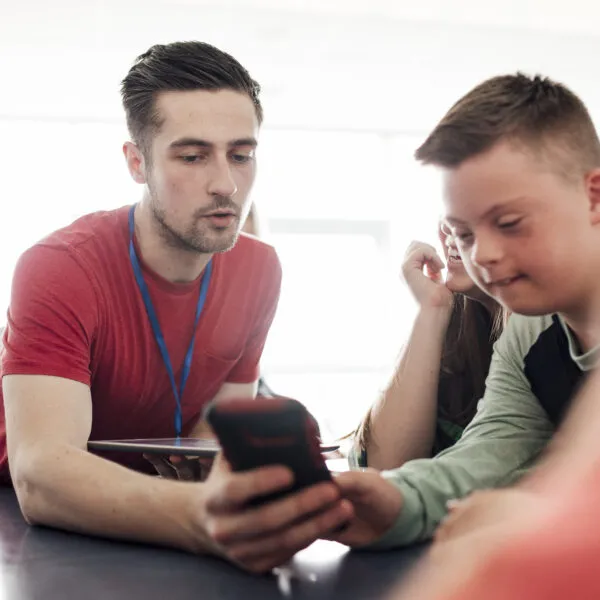
In the project’s initial phase, work has been carried out on a corpus of recordings from individuals with Down syndrome and cerebral palsy, as their speech patterns generally present fewer alterations than other forms of dysarthria, making AI training more manageable. The database will contain at least 25 hours of recorded speech and involve the participation of 100 volunteer speakers with Down syndrome and cerebral palsy from 9 different social organizations, along with social professionals, speech therapists, deep learning specialists, and computational linguists.
The ultimate goal of RAPNIC is to extend this system, first to the 22,000 people with Down syndrome and cerebral palsy within the Catalan linguistic community and, in a later phase, to the entire population of 49,000 individuals with speech disorders in the Catalan-speaking region, including those with other conditions. RAPNIC will enable affected individuals to communicate more effectively with those around them, give voice commands to digital assistants, transcribe their speech into text, and interact with other digital services more independently.
CSC Impulsa 2024 Award
The RAPNIC Project has been recognized as the winner of the CSC Impulsa 2024 Awards in the category of “Innovative AI Projects in the Social Sector.”
This recognition, granted by the Catalan Health and Social Consortium (CSC), includes financial support of €20,000 and technical guidance from the consortium, which will be crucial in transforming this initiative into a tangible reality.

Project Goals
RAPNIC aims to achieve the following key objectives:
- Develop an open-access dataset of impaired Catalan speech, based on voice recordings from individuals with speech disorders, particularly those with Down syndrome and cerebral palsy.
- Create an Artificial Intelligence model for the recognition of impaired speech, improving accessibility and digital inclusion for people with speech disorders.
- Publish a scientific study detailing the data collection process and research outcomes, contributing to the dissemination of knowledge and methodologies used in the project.
Expected Impact and Benefits
RAPNIC has significant potential to improve the lives of people with speech disorders by enhancing their interaction with digital technologies and fostering social inclusion. The main expected benefits include:
- Increased autonomy for individuals with speech disorders, that in the Catalan linguistical domain grow to especially the 22,000 Catalan speakers with mild speech impairments, who will gain access to voice assistants, speech captioning tools, and automatic transcription services currently unavailable to them.
- Improved accessibility and communication for affected individuals, allowing them to use the same digital tools as the rest of the population, with assurance that their specific needs will be addressed.
- Reduction of the digital divide affecting people with speech disorders, particularly those with additional motor impairments.
- Creation of a speech dataset that will enable researchers to continue training open-source AI models in Catalan and help companies develop speech recognition tools that support impaired speech.
- Development of an AI model and methodology that could, in the future, be applied to other speech disorders (e.g., stroke, brain injuries) and adapted to other languages.
Leads:

Partners:


With the support of:

Projectes d’innovació

NIDUS Mental Health
Solidigital

DigitaliSSB (Promotion of the Digitalization of the Basic Social Services of Catalonia)

Vincles Alt Pirineu-Aran
Rehab-Lab