
RAPNIC receives the 2nd prize in the AINA “Territorial Intelligence” contest


RAPNIC receives the 2nd prize in the AINA “Territorial Intelligence” contest
RAPNIC has been recognized in the category “Artificial Intelligence to Reduce Digital Divides” in the AINA “Territorial Intelligence” contest, which promotes Catalan-language solutions aimed at improving accessibility and digital inclusion.
RAPNIC has been awarded the 2nd Prize in the AINA “Territorial Intelligence” competition, a recognition that seeks to promote Catalan-language artificial intelligence solutions with social impact and the ability to reduce digital divides. The jury highlighted the project’s contribution to improving Catalan speech recognition in non‑standard speech, with particular emphasis on dialectal varieties, as well as its data‑driven approach and testing in everyday use environments.
A technological response to a social challenge: reducing digital divides in voice technologies
RAPNIC is an initiative of the iSocial Foundation that addresses a persistent issue in both the technological and social spheres: many voice systems work well with standard speech but fail to interpret non‑fluent speech. This technological gap creates a significant digital barrier for groups that often already face communication difficulties, such as people with Down syndrome, cerebral palsy, or other speech disorders. The situation becomes even more challenging when these individuals speak less dominant linguistic varieties or dialects, as is the case with Catalan and, specifically, the dialects of the Terres de l’Ebre (Tarragona) region.
To address this issue, the RAPNIC project collects real recordings from local users—both read and spontaneous speech—and tests the technology through a web application used in everyday contexts. The involvement of social organizations, speech therapy professionals, and local services ensures that the solution is useful, accessible, and ethical, with particular care given to data protection and informed consent.
A competition to strengthen the presence of Catalan in AI technologies
The AINA “Territorial Intelligence” competition aims to support projects that use artificial intelligence to strengthen the presence of Catalan in the digital sphere, while generating social impact in areas linked to the Nuclear Transition Fund. The challenge in which RAPNIC participated—“Artificial intelligence to reduce digital divides”—called for solutions capable of reducing digital inequalities through accessible language technologies, particularly designed for people with communication difficulties and for territories with underrepresented dialectal varieties.
RAPNIC’s proposal responds directly to this need, combining technological innovation, local knowledge, and a people‑centred approach. In this regard, the creation of a genuine corpus of non‑standard Catalan speech and validation with users in real‑life situations were specially valued elements in the contest.
A project recognized for its impact and coherence
The jury valued that RAPNIC provides a solution that clearly contributes to digital inclusion, enabling people with speech disorders to use voice and transcription tools with greater autonomy. It also highlighted the project’s solid design, strong local roots, and the potential to scale this methodology to other groups and contexts.
This award adds to the CSC Impulsa 2024 Award for Innovation in AI in the social field, which had already recognized RAPNIC as a pioneering initiative in developing technologies capable of interpreting non‑fluent Catalan speech. The project continues to move forward with the aim of creating and opening corpus, data, and documentation that can be reused by researchers, social organizations, and other innovation projects in the country.
A broad ecosystem of collaborators
The RAPNIC project is built on a participatory approach and collaboration with organizations, professionals, and users in the territory, ensuring that the technology responds to real communication needs.
RAPNIC’s development is possible thanks to a wide network of collaboration that brings together social organizations, research centres, and local institutions. The project includes the University of Barcelona as an academic partner, as well as the organizations FCSD, Fundació Aspace Catalunya, Grup MIFAS, Associació Alba, and Fundació Maresme —all members of the iSocial Foundation— along with Esclat Grup Social, Fundació Astres, Down Lleida, and Grup Ramon Noguera. The participation of users and professionals from these organizations is key to building the corpus, and they also contribute wiith concrete, practical knowledge about the communication needs of the groups involved.
This multidisciplinary alliance ensures that the technology is developed with rigour, respect, and sensitivity, incorporating the perspectives of the people who will ultimately benefit from it.
Continuing to grow and expand its impact
The next steps for the project include continuing to expand data collection, strengthening territorial partnerships, and exploring new integrations into digital services aimed at communication accessibility. In this way, RAPNIC aims to keep advancing toward a more inclusive, more diverse artificial intelligence that better reflects the linguistic reality of the country, with the goal of contributing to a future where technology effectively helps overcome communication and social barriers.
Actualitat

Towards Independent Living: Community Support Networks and Personalised Guidance Points

Self‑care to prevent burnout and improve the wellbeing of social services professionals
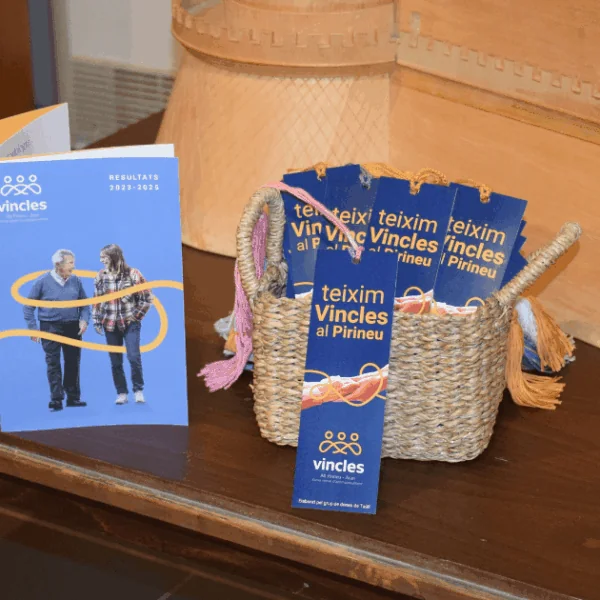
Presentation of the results of the Vincles Alt Pirineu-Aran project for the 2023–2025 period at an event in Sort
iSocial and Somos Conexión join forces to promote knowledge and social technology

Virtual Reality in Social Care: Experiential Training and Intervention