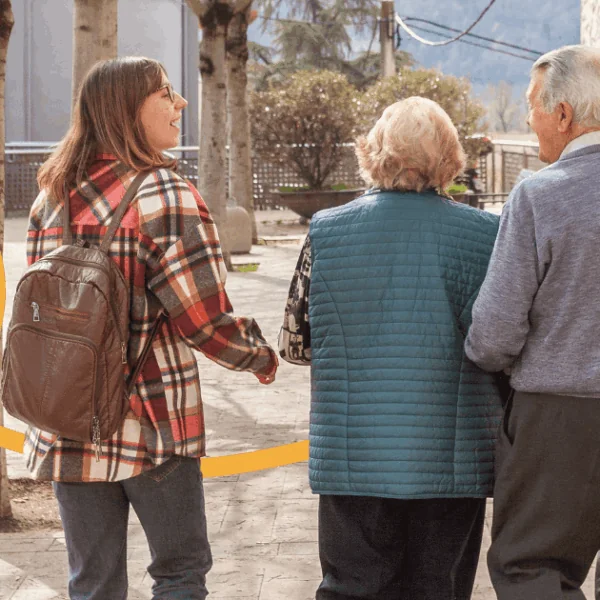
First Annual Meeting of the Rehab-Lab network in Barcelona


First Annual Meeting of the Rehab-Lab network in Barcelona
We have accredited the new manufacturing laboratories (FabLabs) of the 10 entities throughout Catalonia that have joined the Rehab-Lab network
On Friday, July 4th, the First Annual Meeting of the Rehab-Lab network took place at the Faculty of Mathematics and Statistics of the Polytechnic University of Catalonia.
What is the Rehab-Lab network?
The Rehab-Lab network is an initiative that enables the creation of personalized functional aids for people with disabilities or dependents through 3D printing.
Rehab-Lab is the result of a project led by the iSocial Foundation and supported by four other entities: the Ampans Foundation, the Guttman Institute, CIM-UPC, and Avinent Group. This project has allowed the Rehab-Lab model, promoted in France by the Mutualist Center for Rehabilitation and Functional Rehabilitation (CMRRF), to be adapted to Catalonia. The project has been co-financed by the Department of Social Rights of the Generalitat of Catalonia through the European Next Generation Fund.
New entities of the Rehab-Lab Network
During this first Rehab-Lab event, we welcomed and formally accredited the following ten entities as new manufacturing laboratories (FabLabs) to the network: Alba Association; MIFAS Group; Aspace Catalunya Foundation; ASPID Association; Esclat Social Group; El Maresme Foundation; Àuria Foundation; Onada Foundation; Althaia, Manresa University Healthcare Network, and Ramon Noguera Foundation. These entities join the two FabLabs that were previously part of the network (Guttmann Institute and Ampans Foundation). These new additions expand the Rehab-Lab network’s capacity to create customized solutions and serve people throughout the country.
The meeting, opened by Víctor Cid of the CIM-UPC Foundation, featured an introduction by representatives of the Kerpape CMRRF, the founding organization of the European Rehab-Lab community. The results obtained over the past few months were also presented, as well as the most outstanding solutions created by the nine FabLabs. Attendees were able to vote for the best functional aids created during the training period in three different categories: innovation, technical complexity, and social impact.
A process of co-creation
Functional aids are low-cost, quickly manufactured, custom plastic devices created through a co-creation process with the beneficiary. These solutions address specific daily needs of people with disabilities, enhancing their autonomy and improving their quality of life.
During the training months leading up to their accreditation as FabLabs, the new network entities had the opportunity to explore this design methodology and develop new proposals for functional aids, which they presented during Friday’s event. After the presentations, the audience selected the most outstanding aids in various categories. The winning proposals were:
- Most innovative functional aid: The Domino Stand, from the Onada Foundation. A stand that uses 32 articulated pieces to hold and play dominoes independently.
- Most complex functional aid: Feedycare, from the Maresme Foundation. An automated system that facilitates PEG tube feeding, making it more convenient for both professionals and family members, as well as for the user, who can activate it themselves using a switch or a computer and share the meal with the family.
- Most impactful functional aid: Ceramic hob guide plate, from the Àuria Group. A tactile surface that allows blind people to use a ceramic hob safely and independently..
The day concluded with a presentation by Toni Codina, director of the iSocial Foundation, who expressed his commitment to continue working together to consolidate and expand the Rehab-Lab network.
Actualitat

Second Annual Rehab-Lab Network day in Barcelona

ConfIA, AI to humanise mental health consultations
We are opening the call for entries for the 2026 Award for Social Integration through Digitalisation

iSocial organisations travel to Bologna for the 4th Innotrip for member entities
Weaving community: experiences to tackle unwanted loneliness