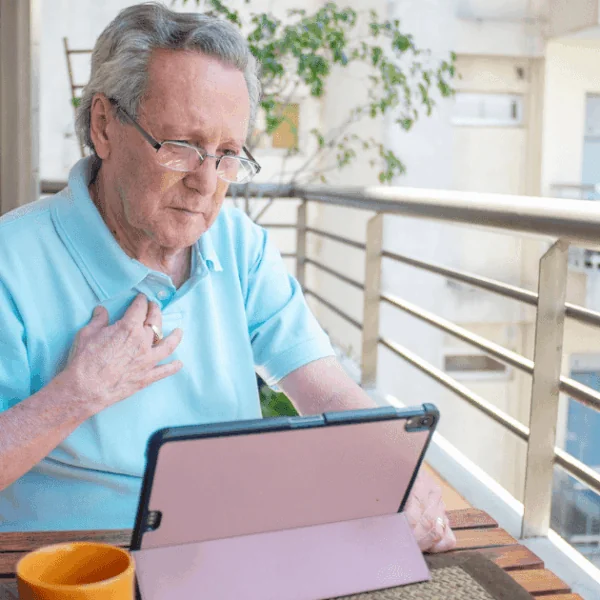
Self-directed support: autonomy and decision-making through personal budgets
Individualised Funding (New Zeland) and Pilotaje de Apoyos Autodirigidos (Spain). Held on 17/09/2025.
Webinar held in English and Spanish, with simultaneous translation into English and Catalan
Social services and supports for people with disabilities —and other groups in situations of dependency— have traditionally been organized from an institutional logic, offering standardized responses that often fail to consider people’s real preferences and needs. This approach has limited access to an autonomous, fulfilling life connected to the community.
In contrast to this model, two key ideas are emerging with great transformative potential: self-directed supports and personal budgets.
Self-directed supports place the person at the center, recognizing their right to decide how they want to be supported, by whom, and in what they want to invest their supports. It is a model that champions freedom, autonomy, and decision-making capacity, and understands that supports must adapt to the person’s life — not the other way around.
The main tool to achieve this goal is personal budgets, which consist of allocating a financial resource that the person can use flexibly to configure the supports best suited to their life project. This model goes beyond the rigidity of pre-assigned supports, such as fixed placements in centers, and opens the door to more meaningful, community-based, and personalized options.
This shift in perspective not only improves people’s quality of life, but also promotes a structural transformation of the social services system: toward a logic of trust, personalization, and co-production. It is a true paradigm shift that involves professionals, administrations, and communities, and places people’s dignity and will at the heart of social action.
In this Innobreak, we will reflect on the potential of self-directed supports and personal budgets through two pioneering initiatives that are already paving the way in their territories.
Individualised Funding (New Zeland): A support system that, through a personal budget, allows people with disabilities to decide how, when, and with whom they receive their supports. With the guidance of agents —mostly volunteers— users can design their own life plan and gain autonomy, independence, and freedom of choice.
Pilotaje de Apoyos Autodirigidos (Spain): a pilot project that explores, with a small group of people with intellectual or developmental disabilities, how a support system based on personal budgets could work. The goal is to assess its viability as an alternative to current services and to investigate what would be needed to make the model sustainable.
SPEAKERS
Simon Anderson, Marketing and Relationship Team Lead in Manawanui (New Zelanda)
Amalia San Román, technical coordinator at Plena Inclusión España, and Núria Ambrós, social consultant (Spain)
Oroi, a virtual reality tool aimed at providing physical and cognitive stimulation to older adults
OROI
Virtual reality platform designed to promote physical and cognitive stimulation for older adults
Oroi is a virtual reality platform developed to improve the quality of life of older adults through immersive experiences that promote emotional well-being and active aging. Its main objective is to facilitate Person-Centered Care (PCC) with stimulating and easy-to-use digital content.
Using a simple display system with virtual reality glasses, people can travel to natural landscapes, cities, monuments, or relive spaces and moments from their past. These experiences connect them with past experiences, stimulating their memory and improving their emotional well-being.
The platform includes a comprehensive support service for professionals who use it: initial training, technical assistance, and follow-up. This makes it very easy to incorporate into the routine of healthcare centers, without requiring advanced technical knowledge. Professionals can use Oroi as a practical and effective tool to deliver the most engaging and dynamic sessions.
Oroi features a simple and accessible interface with dynamic and stimulating audiovisual content aimed at seniors. This customization allows sessions to be tailored to each individual’s tastes, life history, and preferences.
The tool helps improve the emotional and cognitive state of older adults, increasing their participation and engagement in activities. It also offers professional teams a new way of working that enriches interventions and strengthens the bond between caregivers and those being cared for.
Oroi was born in 2018 as a project focused on the tourism sector through virtual reality. At a trade show, they observed the interest and positive response from seniors when they tried the experience, which led them to conduct a trial in a nursing home. The success of this initiative prompted them to redirect the project and focus fully on the application of virtual reality for the well-being of seniors.
Level of implementation
The product began being used in nursing homes and daycare centers as a support tool for therapy sessions. Starting in 2023, home pilots began, and the tool began being sold to various companies.
Oroi, a virtual reality tool aimed at providing physical and cognitive stimulation to older adults
OROI
Virtual reality platform designed to promote physical and cognitive stimulation for older adults
Oroi is a virtual reality platform developed to improve the quality of life of older adults through immersive experiences that promote emotional well-being and active aging. Its main objective is to facilitate Person-Centered Care (PCC) with stimulating and easy-to-use digital content.
Using a simple display system with virtual reality glasses, people can travel to natural landscapes, cities, monuments, or relive spaces and moments from their past. These experiences connect them with past experiences, stimulating their memory and improving their emotional well-being.
Oroi features a simple and accessible interface with dynamic and stimulating audiovisual content aimed at seniors. This customization allows sessions to be tailored to each individual’s tastes, life history, and preferences.
La plataforma incluye un servicio de soporte completo para los profesionales que la utilizan: formación inicial, asistencia técnica y seguimiento. Esto hace que sea muy fácil de incorporar en la rutina de los centros de salud, sin requerir conocimientos técnicos avanzados. Los y las profesionales pueden utilizar Oroi como una herramienta práctica y efectiva para realizar las sesiones más atractivas y dinámicas.
The platform includes a comprehensive support service for professionals who use it: initial training, technical assistance, and follow-up. This makes it very easy to incorporate into the routine of healthcare centers, without requiring advanced technical knowledge. Professionals can use Oroi as a practical and effective tool to deliver the most engaging and dynamic sessions.
The tool helps improve the emotional and cognitive state of older adults, increasing their participation and engagement in activities. It also offers professional teams a new way of working that enriches interventions and strengthens the bond between caregivers and those being cared for.
Oroi was born in 2018 as a project focused on the tourism sector through virtual reality. At a trade show, they observed the interest and positive response from seniors when they tried the experience, which led them to conduct a trial in a nursing home. The success of this initiative prompted them to redirect the project and focus fully on the application of virtual reality for the well-being of seniors.
Level of implementation
The product began being used in nursing homes and daycare centers as a support tool for therapy sessions. Starting in 2023, home pilots began, and the tool began being sold to various companies.
Silverce, a platform that makes it easier for people over 50 years of age to share home to combat unwanted loneliness
Silverce
Platform that encourages coexistence among people over 50 to combat unwanted loneliness
Silverce is a European digital platform that connects people over 50 to safely share housing. Its main objective is to combat unwanted loneliness and promote new, more accessible and sustainable models of living together.
Through a simple and intuitive mobile app, Silverce allows users to create a personal profile, define the characteristics they value in cohabitation, and offer or search for a room in shared housing. Using an intelligent algorithm, the platform securely connects people with similar interests and life moments.
The platform is specifically geared toward people unfamiliar with technology and includes accessibility filters, verified profiles, and personalized support.
Silverce was created by Sonia Paz in 2025 with the aim of combating unwanted loneliness and offering solutions that promote active, autonomous and inclusive aging.
Level of implementation
Currently, the platform has been implemented in Spain and plans to expand to other European countries such as Germany, France, the United Kingdom, and the Netherlands.
Laura Roig, speech therapist at Audivers 360º: “Immersive therapy allows us to help people with deafness better understand what is happening around them.
We interview speech therapist Laura Roig about Audivers 360º, the winning project of the GrausTIC Award for Social Integration through Digitalization awarded by the iSocial Foundation in 2023
How did the Audivers 360º project come about?
The Audivers 360º project was born at the beginning of 2023 as a result of the Harvi project. This project consisted of speech therapy sessions aimed at deaf children who used virtual reality, using 3D glasses. At that time, the advantages of doing speech therapy with virtual reality to work on sounds from everyday life were beginning to be discovered.
The main disadvantage of the Harvi project was the weight of the glasses, especially in children. On the other hand, this therapy generated a disconnection with the environment, since wearing the glasses meant a loss of relationship with others and with the professional who accompanies the person in the room.
Taking the Harvi project as a reference and thanks to Suara Cooperativa, which was just starting to do projects with immersive reality, we met Broomx, the company that owns the tool. This allowed us to begin developing immersive reality as a tool for auditory rehabilitation of children and people with deafness.
How was the process of giving shape to the project like?
In July 2023, we began a pilot test with adults with deafness, where we tested immersive scenarios that had already been created by Broomx. However, when conducting the pilot test, we identified several drawbacks and the need to adapt the scenarios to people with deafness.
The scenarios we had were very empty in sound content and, since the objective was to work on auditory skills, we needed the sound environment to be richer. Then, we co-created three new scenarios: the Boqueria Market and Plaça Espanya, which are adaptations of existing scenarios and a children’s playground, which was new. In these scenarios, we added ambient sound, as a masking of the sounds we wanted to work on
In February 2024, we conducted another pilot test with the new scenarios, and this time they did respond to the needs of the users. We secured funding to build an immersive room here at ACAPPS during April and May 2024. Since then, we have fully implemented the tool for all people undergoing hearing rehabilitation at our facilities.
What needs does the project respond to?
The Audivers360 project allows us to place the person at the center of the therapy and work specifically in those real environments that generate the most difficulties for them.
It mainly responds to the need that adults and children with deafness have to work on real situations in a safe environment. Immersive reality allows us, for example, to reproduce the sound of a car and ask the person what they are listening to. In addition, we can decide whether or not we want to show the car at that moment. If the person sees the car while hearing the sound, this reinforces auditory discrimination with visual support. On the other hand, if they only hear the sound without seeing the car, they have to remember that that noise corresponds to a car, which favors the work of auditory memory.
What user profile do you work with?
We mainly use the tool to work on auditory skills with deaf people who wear hearing aids, such as an implant or hearing aids. Right now, most people who do auditory rehabilitation with us are adults with deafness, but it is true that we are increasingly starting to incorporate children, although for reasons of extracurricular activities or family reconciliation it is more complicated for them to travel here.
We also work with older people with hearing loss. In this case, the tool helps to promote more active aging. Older people often do not have much access to new technologies, and these sessions motivate them and they perceive a faster evolution of their progress: they tell us that it is easier for them to talk to the person selling the newspaper or that they can hear a car approaching them.
What are the advantages of immersive speech therapy?
Immersive speech therapy allows us to work with real-life sounds and situations in an integrative, enjoyable and safe way, avoiding auditory overattention. Working with real sounds and situations in a controlled way brings naturalness and realism to the therapy. Unlike sessions without technological innovation, immersive therapy helps people with deafness to better understand what is happening around them, which is a stimulus for auditory comprehension because it is not only about identifying a sound, but also recognizing it. Identifying a sound is only the first step; then you need to know what it represents and, finally, understand its meaning. It is not the same to hear the sound of a door, know that it is a door, and associate this sound with the word “door”. The use of immersive reality reduces the error rate in activities. On the other hand, immersive therapy also helps to work more on auditory memory, because we can work on auditory input and visual input at the same time.
How is customization worked on in this project?
We do individual sessions of 45 minutes per week. Especially in terms of auditory rehabilitation, it is interesting that we can do them individually. This way we can more specifically address the needs of each person undergoing therapy.
Before a person starts at Audivers360, we do a speech therapy assessment session, to find out the person’s needs and above all to know how they are in terms of hearing and, with that, plan the work plan. From there, and depending on their interests, we work on various aspects of hearing with the immersive scenarios. For example, since it is stereo, with two speakers in front (right and left) and one in the back, the immersive room allows us to lateralize sounds, a fundamental aspect in rehabilitation.
How does this tool help improve the communication experience of people with deafness?
With Audivers360, we work on both auditory skills, which are the identification, recognition and understanding of sounds and words, and verbal expression. For example, the speech therapist tells a story related to the immersive scenario that is being seen and the user listens to this story, and this allows us to work on auditory comprehension. Later, we ask them to tell the same story again, and in this way we work on verbal expression.
In which environments can this tool be used?
We have the room at the ACAPPS premises. Currently, the attention is very centralized in Barcelona, and usually the adults, children and families who participate in the sessions travel from different points of the Metropolitan Area.
However, the projector we use is small and can be transported. For example, if we wanted to do a session in the hospital, we would only have to find a room with white walls.
Speech therapy session in the ACAPPS immersive room
How has Audivers been received by users?
During the pilot test, we asked people to tell us, using a visual analog scale, how they felt, from 1 to 10, before the session and how they were when they left. With this, we saw that emotional well-being with the immersive room really increased, there was a positive evolution. Currently, in most cases, we carry out satisfaction surveys at the end of each activity and what they tell us is that Audivers360 provides them with a new, more motivating and enjoyable experience.
On the other hand, immersive speech therapy also allows us to work on executive functions, such as memory and attention. Most people tell us, through satisfaction surveys, that with Audivers360 the experience is more motivating and that it does not produce as much auditory fatigue as traditional sessions, which greatly increases the desire to continue with the rehabilitation.
What does it mean to you to have won the Catalonia Graustic Digital Innovation Awards in 2023?
Winning the Innovation Award made us very excited, not so much because of the fact of winning, but because of the recognition of knowing that we are doing work that has a social impact and that we are contributing to improving the lives of people with deafness. It is also important because we are developing an innovative proposal in terms of technology, at a time when technology is advancing at breakneck speed, for example with artificial intelligence. In this context, receiving this recognition as a pioneering and innovative project makes us very excited and makes us aware of the value of the work that the entire technical team behind it does.
What are your current future challenges?
Beyond the technical improvements of Audivers, our challenge is to publicize the project. We would like it to be a methodology that could also be incorporated into hospitals or other centers and to publicize it throughout the healthcare sector, so that it could be used by otolaryngologists, speech therapists, psychologists, etc.
First Annual Meeting of the Rehab-Lab network in Barcelona
We have accredited the new manufacturing laboratories (FabLabs) of the 10 entities throughout Catalonia that have joined the Rehab-Lab network
On Friday, July 4th, the First Annual Meeting of the Rehab-Lab network took place at the Faculty of Mathematics and Statistics of the Polytechnic University of Catalonia.
What is the Rehab-Lab network?
The Rehab-Lab network is an initiative that enables the creation of personalized functional aids for people with disabilities or dependents through 3D printing.
Rehab-Lab is the result of a project led by the iSocial Foundation and supported by four other entities: the Ampans Foundation, the Guttman Institute, CIM-UPC, and Avinent Group. This project has allowed the Rehab-Lab model, promoted in France by the Mutualist Center for Rehabilitation and Functional Rehabilitation (CMRRF), to be adapted to Catalonia. The project has been co-financed by the Department of Social Rights of the Generalitat of Catalonia through the European Next Generation Fund.
New entities of the Rehab-Lab Network
During this first Rehab-Lab event, we welcomed and formally accredited the following ten entities as new manufacturing laboratories (FabLabs)to the network:Alba Association; MIFAS Group; Aspace Catalunya Foundation; ASPID Association; Esclat Social Group; El Maresme Foundation; Àuria Foundation; Onada Foundation; Althaia, Manresa University Healthcare Network, and Ramon Noguera Foundation. These entities join the two FabLabs that were previously part of the network (Guttmann Institute and Ampans Foundation). These new additions expand the Rehab-Lab network’s capacity to create customized solutions and serve people throughout the country.
The meeting, opened by Víctor Cid of the CIM-UPC Foundation, featured an introduction by representatives of the Kerpape CMRRF, the founding organization of the European Rehab-Lab community. The results obtained over the past few months were also presented, as well as the most outstanding solutions created by the nine FabLabs. Attendees were able to vote for the best functional aids created during the training period in three different categories: innovation, technical complexity, and social impact.
A process of co-creation
Functional aids are low-cost, quickly manufactured, custom plastic devices created through a co-creation process with the beneficiary. These solutions address specific daily needs of people with disabilities, enhancing their autonomy and improving their quality of life.
During the training months leading up to their accreditation as FabLabs, the new network entities had the opportunity to explore this design methodology and develop new proposals for functional aids, which they presented during Friday’s event. After the presentations, the audience selected the most outstanding aids in various categories. The winning proposals were:
Most innovative functional aid: The Domino Stand, from the Onada Foundation. A stand that uses 32 articulated pieces to hold and play dominoes independently.
Most complex functional aid: Feedycare, from the Maresme Foundation. An automated system that facilitates PEG tube feeding, making it more convenient for both professionals and family members, as well as for the user, who can activate it themselves using a switch or a computer and share the meal with the family.
Most impactful functional aid: Ceramic hob guide plate, from the Àuria Group. A tactile surface that allows blind people to use a ceramic hob safely and independently..
The day concluded with a presentation by Toni Codina, director of the iSocial Foundation, who expressed his commitment to continue working together to consolidate and expand the Rehab-Lab network.
New Edition of the Award for Social Integration through Digitalization within the Digital Innovation Awards of Catalonia 2025
Applications for this award, co-organized by iSocial and GrausTIC, can be submitted until October 17
Since June 4, the call for the new edition of the Digital Innovation Awards of Catalonia 2025 – GrausTIC has been open. These awards recognize outstanding initiatives for their ability to innovate through information and communication technologies (ICT) and their transformative impact on Catalan society. Once again, the iSocial Foundation is co-organizing and sponsoring the Award for Social Integration through Digitalization.
The Award for Social Integration through Digitalization is aimed at companies, organizations, or institutions that, over the past year, have embraced digital innovation to promote social inclusion—either by making their projects accessible to everyone or by creating technological tools that support vulnerable groups. The goal of the award is to highlight initiatives that, through technology, have a direct impact on people’s lives, especially those of individuals in vulnerable situations.
The call will remain open until October 17, 2025, and the awards ceremony will take place during the “Diada de les TIC” (ICT Day) in Catalonia, scheduled for November 12 and 13 at the Telefónica Tower in Barcelona.
With this fourth edition of the award, we aim to continue contributing to a digital transformation with a positive social impact, centered on people and driven by a commitment to inclusion. We encourage all initiatives working along these lines to submit their applications!
In addition to the social integration award, the Digital Innovation Awards of Catalonia also recognize outstanding projects in other areas such as energy management and sustainability, health innovation, the digital transformation of local government, youth digital entrepreneurship, Industry 4.0, and female leadership in the ICT sector. This year, a new category has been added to recognize university-based projects focused on digital technologies. A broad range of awards designed to showcase how digital innovation is transforming various sectors and improving society as a whole.
The iSocial Foundation has joined the cooperative Fiare Banca Etica as a member, within the framework of an agreement that also includes a line of credit to finance iSocial’s projects and the sponsorship of several of our foundation’s publications.
After several years of growing collaboration with Fiare Banca Ètica, the iSocial Foundation has signed an agreement to establish a stronger alliance with this cooperative ethical finance entity, which operates in both Spain and Italy. The agreement includes, among other aspects, iSocial’s membership in the cooperative bank, the creation of a €400,000 line of credit to support iSocial’s projects, and the sponsorship of several of the foundation’s publications.
The line of credit will enable iSocial to carry out its projects while awaiting the disbursement of already-approved public grants. This measure brings stability to the Foundation’s day-to-day operations and strengthens a model of sustained growth aligned with social responsibility principles.
In parallel, Fiare Banca Etica will sponsor two Professional Guides on Innovation in Social Action this year, which will be published in the coming months. These Professional Guides are a series of publications promoted by iSocial and aimed at social services professionals, offering information and practical resources to help incorporate innovative approaches into their daily work. Fiare’s support will give a boost to the second and third guides in the series: “Click to Digital Inclusion”, a guide to accompany the use of technologies in people experiencing homelessness, and “Opening Doors to Inclusion, Guide of Practical Tools For Deinstitutionalization”, focused on social inclusion methodologies.
Fiare Banca Etica is a cooperative financial institution born from the merger of Fiare (Spain, 2005) and Banca Popolare Etica (Italy, 1999), with the aim of putting finance at the service of social transformation. The bank has more than 46,000 individual and organizational members and is governed by a democratic model based on the principle of “one person, one vote.”
Its financing activities prioritize projects related to social inclusion, the social and solidarity economy, agroecology, education, and culture, among other areas. The agreement represents a step forward in building synergies between organizations working toward more just social and economic models, through initiatives that promote innovation, sustainability, and the transformation of care services.
A delegation of 27 representatives from iSocial member organisations travelled to Helsinki for the third edition of the Innotrip, discovering innovative initiatives in areas such as social housing, child welfare, mental health, disability, digital inclusion, and homelessness.
The third edition of Innotrip, the international learning programme led by the iSocial Foundation, took place in 2025 in the city of Helsinki. It brought together 27 professionals from iSocial’s member organisations, joined by 4 members of the Foundation’s technical team. Supported by the Department for Foreign Action and the European Union of the Government of Catalonia, InnoTrip has established itself as a collective learning experience focused on discovering innovative strategies in the field of social action.
Over four intensive days of visits and meetings, the Catalan delegation had the opportunity to explore firsthand a wide range of projects and service models being implemented in Finland, promoted by both public authorities and third sector organisations. The initiatives visited cover a variety of fields including support for children and young people, prevention of institutionalisation, person-centred care, supported housing, community-based mental health, peer support, and digital inclusion for migrants.
These visits enabled participants to dive deeper into approaches that address common social challenges, and to engage in knowledge exchange with local professionals around methodologies, outcomes, and evaluation systems. Moreover, the Innotrip experience strengthened collaboration among iSocial member organisations, offering shared spaces for reflection and the identification of ideas with potential for adaptation in the Catalan context.
With this latest edition, InnoTrip continues to evolve as a key tool for identifying international best practices and inspiring new ways of working, fostering innovation and continuous improvement in the field of social services.
Programme for the visit
Roihuvuori Senior Centre:A public facility offering community-based activities and emotional support for older adults. Known for its innovative programmes on digital inclusion and addiction care for seniors.
Family Services for Young People and Mental Health: Preventive services for families and adolescents, with a focus on support for migrant youth.
Miina Sillanpään Säätiö: Works to combat unwanted loneliness and promote well-being among older adults through person-centred approaches.
Kallio Perhekeskus (Family Center): An example of city of Helsinki’s integrated family support model, bringing together various services under one roof.
Icehearts: A long-term (12-year) mentoring programme for children and youth at risk, based on sports and stable relationships with adult mentors.
City of Hèlsinki – Social Reporting i FIT (Feedback-Informed Treatment): Tools designed to actively involve service users in shaping public policies and to identify social inequalities through public services.
Vamos! – Diaconia Foundation: Individualised and holistic support for vulnerable youth, covering housing, mental health, education, and employment.
Kukunori – Plataforma Pokka:A national network of mental health organisations that developed a widely used impact assessment tool adopted by over 100 organisations.
Y-Säätiö: A pioneer organisation in implementing the Housing First model in Finland and in Europe for people experiencing homelessness.
Tukena:Focused on self-directed support for people with disabilities, with active participation from users (self-advocates).
Rinnekodit:Residential and rehabilitation services in a natural setting for people with profound intellectual disabilities or complex mental health needs.
Del 20 al 23 de maig de 2024 va tenir lloc el 2n InnoTrip de la Fundació iSocial a Escòcia, amb el suport del Departament d’Acció Exterior i Govern Obert de la Generalitat de Catalunya. Durant tres dies una trentena de representants de les entitats membres d’iSocial van visitar 10 iniciatives escoceses innovadores en el camp de l’acció social
L’InnoTrip és un servei de la Fundació iSocial adreçat a les seves entitats membres que consisteix en realitzar una visita d’estudi internacional per tal de fomentar la innovació a través de la descoberta in situ d’experiències punteres en el camp de l’acció social. L’InnoTrip 2024 va tenir lloc entre el 20 i el 23 de maig a Escòcia.
El programa d’activitats d’aquesta edició inclogué la descoberta d’organitzacions i projectes de caràcter innovador a través de visites de diferent format a entitats no lucratives, empreses socials i organismes de l’administració pública escocesa. Entre altres beneficis, els participants van poder descobrir noves maneres de fer front a problemàtiques socials comunes, crear potencials sinergies de caràcter internacional i van poder enfortir de les relacions amb la resta d’entitats membres d’iSocial.
El sistema escocès de serveis socials i de les cures és internacionalment reconegut per promoure la implementació de diferents models i iniciatives de caràcter innovador. La integració de l’atenció sanitària i social, el model de suport auto-dirigit, la construcció comunitària o els enfocaments preventius en són alguns exemples.
A més, les organitzacions membres d’iSocial van identificar i mostrat interès en organitzacions i iniciatives concretes de l’ecosistema social escocès, amb un enfocament especial en àrees com l’habitatge social, el desenvolupament comunitari, el suport a la vida independent o la inclusió sociolaboral.
Programa de la visita
Govern escocès i Scottish Enterprise: Introducció al context escocès, model d’integració social i sanitària, model d’empresa social.
Quarriers:Model de suport auto-dirigit i ús d’eines digitals pel suport a la vida independent.
Simon Community:Access Hub (centre d’assessorament i suport multi institucional per a persones sense llar i/o en risc d’exclusió social), eines digitals i model Housing First.
Aberlour: Serveis integrats d’atenció sanitària i social i model de suport familiar intensiu.
Penumbra Mental Health: Serveis de suport a la vida independent i model de suport entre iguals.
Social Bite: Model d’empresa social i recursos de conscienciació social.
Kibble: Enfocament d’atenció integral (habitatge, formació i ocupació) i model d’empresa social.
Homes For Good: Habitatges de qualitat a través de lloguers assequibles. Adquisició d’immobles i suport als llogaters.
Blackwood Homes and Care: Innovació i ús d’eines digitals a residències i habitatges amb suport.
Our app Nidus and the Vincles Alt Pirineu-Aran project against unwanted loneliness were two of the main features at ESSC 2025.
From June 22 to 25, the iSocial Foundation took part in the European Social Services Conference (ESSC 2025), the leading European forum dedicated to welfare policies and social services, held this year in Aarhus, Denmark.
Under the theme “Where Care meets Tech”, this year’s edition focused on the role of technology in the transformation of social services—an area in which iSocial contributed its experience through two of its own initiatives.
Nidus, featured in the Innovation Zone
On one hand, we presented Nidus, our digital support app for people in vulnerable situations, which was one of the main features in the conference’s “Innovation Zone”. We also had a dedicated stand to demonstrate how the app works to attendees.
Nidus is a tool designed to facilitate communication and support between social services users and their professional contacts. Among other features, it offers a secure digital vault for storing personal documents easily and safely, a direct chat between the user and their professional support team, an AI-powered personal assistant, a shared calendar, customizable questionnaires, and other tools aimed at empowering the user and improving service efficiency.
Vincles Alt Pirineu-Aran: detection and community
As part of the ESSC, we also presented the Vincles Alt Pirineu-Aran project—an initiative aimed at detecting and preventing situations of unwanted loneliness through big data technology and community activation in the region. This project was presented alongside the Auzosare program from the Basque Country, led by Agintzari, a member organization of the iSocial Foundation. Both initiatives share the goal of creating community networks that prevent and address social isolation in rural and sparsely populated areas.
A reference space for social innovation
Participating in ESSC 2025 was a great opportunity to exchange knowledge, discover inspiring initiatives from across Europe, and build new partnerships with organizations working to rethink social services through a lens that blends technology with essential human values such as inclusion and dignity.
The iSocial Foundation thanks the European Social Network for organizing this event and for the invitation to take part. We return from Aarhus with fresh ideas and the satisfaction of having shared our work in a leading international forum.
To provide the best experiences, we use technologies like cookies to store and/or access device information. Consenting to these technologies will allow us to process data such as browsing behavior or unique IDs on this site. Not consenting or withdrawing consent, may adversely affect certain features and functions.
Funcional
Always active
L'emmagatzematge o accés tècnic és estrictament necessari amb la finalitat legítima de permetre l'ús d'un determinat servei sol·licitat explícitament per l'abonat o usuari, o amb l'única finalitat de realitzar la transmissió d'una comunicació a través d'una xarxa de comunicacions electròniques.
Preferències
L'emmagatzematge tècnic o l'accés és necessari amb la finalitat legítima d'emmagatzemar preferències que no siguin sol·licitades pel subscriptor o usuari.
Estadístiques
L'emmagatzematge o accés tècnic que s'utilitza exclusivament amb finalitats estadístiques.The technical storage or access that is used exclusively for anonymous statistical purposes. Without a subpoena, voluntary compliance on the part of your Internet Service Provider, or additional records from a third party, information stored or retrieved for this purpose alone cannot usually be used to identify you.
Màrqueting
L'emmagatzematge tècnic o l'accés són necessaris per crear perfils d'usuari per enviar publicitat o per fer un seguiment de l'usuari en un lloc web o en diversos llocs web amb finalitats de màrqueting similars.