Cuppa, virtual meetups for unpaid carers

Publications Bank of innovations

Cuppa, virtual meetups for unpaid carers

Mobilise

CUPPA

Video calls aimed at carers with the goal of sharing experiences and building community

Cuppa is a free 45-minute virtual meetup program specially designed for unpaid carers. Through video calls, around a dozen carers come together to share their experiences, offer support, and meet others in similar situations in a safe and understanding environment.

The meetings are moderated by a host, also a carer, who facilitates the conversation and ensures everyone has the opportunity to speak. The sessions are simple and accessible, requiring only a device with internet and a microphone. Using the camera is recommended but not essential, and there is also the option to interact via chat.

Additionally, to cater to the varying needs of carers, a wide range of time slots is available, and attendance is unlimited. Cuppa aims not only to provide emotional support to carers but also to create a network of people who share tips and experiences, always with a touch of humor and optimism.

Banc d’innovacions

Imatge d'una persona amb necessitats d'accessibilitat digital

Acctua, a technological solution promoting digital accessibility on the Internet

Acctua is a technological service that promotes digitial accessibility and digital inclusion.
Soy yo literal, a Digital Platform for Youth Mental Health

Soy yo literal, a Digital Platform for Youth Mental Health

Soy yo literal is a digital platform promoting mental health among young people
Fokus PI

FOKUS PI, an application that facilitates digital social planning

FOKUS PI is a a decision-making support tool for professionals in the social, healthcare, and educational sectors
BCI

BCI, a device that restores communication in patients with neurodegenerative diseases

The BCI is a technological innovation that restores communication in patients with neurodegenerative diseases
CUPPA

Cuppa, virtual meetups for unpaid carers

Cuppa is a video call program aimed at carers with the goal of sharing experiences and building community.
ATENEA

ATENEA, device adapted to combat the digital divide

ATENEA is an adapted device that contributes to the digital and technological transformation of social services, focusing on the most vulnerable citizens

Solidigital’s Second Project Meeting Takes Place in Andorra

Publications News

Solidigital’s Second Project Meeting Takes Place in Andorra

,
Trobada Solidigital Andorra

The seven partner organizations of the European project gather in Andorra to coordinate Solidigital’s deployment plan

On September 5th and 6th, we held the second meeting of the Solidigital project in Andorra la Vella, with the participation of seven entities from Catalonia, France, and Andorra. The aim of the meeting was to coordinate the first phase of this European project’s deployment, driven within the framework of the European Union’s cross-border collaboration program, Interreg Poctefa.

Solidigital, which aims to facilitate access to social services for people in vulnerable situations, as well as the support work of professionals assisting them, is based on the use of three innovative digital tools: Soliguia, an interactive map of social resources providing detailed information on services available in each region; our app Nidus, a virtual safe box designed to support people in precarious situations; and Reconnect’s Coffre-fort numérique, a similar tool to Nidus operating in France.

During the meeting, we had the opportunity to learn more about these three tools, address integration issues, resolve doubts, generate debate, and, above all, get to know better the team we work with daily. Moreover, thanks to our hosts, Andorra Research and Innovation, we had the chance to meet Laura Mas de la Rosa, Director of the Department of Childhood, Adolescence, and Youth, and visit the facilities of the Andorran Red Cross to gain a deeper understanding of the country’s social ecosystem.

The meeting laid the groundwork for launching the project’s first phase, which will focus on mapping social resources in each region and will be carried out in collaboration with various local social entities and institutions.

The seven entities involved in the project will carry out this task in their respective regions. On the Catalan side, the project will involve the iSocial Foundation, project leader, Resilis, Alba, and Pere Claver, along with Solinum, which will coordinate the creation of Soliguia across all regions. In Andorra, the Foundation Andorra Research and Innovation will be responsible for implementing the project, while in France, Solinum and Reconnect will participate.

The project also includes the interconnection of these three tools and a training plan for 8,000 professionals, aiming to equip them with the necessary skills to use the tools, ensuring efficient implementation and quicker access to social services for the most vulnerable populations.


Actualitat

Willy Allègre, coordinator of the European Rehab-Lab network, visits the commodities of the partners in Catalonia

Willy Allègre, coordinator of the European Rehab-Lab network, visits project partners in Catalonia.

The iSocial Foundation leads the establishment of a Rehab-Lab network in Catalonia. Willy Allègre’s visit is part of the accreditation process to join the European Rehab-Lab network, which will be completed this May
The iSocial team celebrates its first work meeting

The iSocial team celebrates its first work meeting

The iSocial Foundation met at the Cal Muns building, managed by the Pere Claver Group, a partner entity of the foundation.
Kick-off of the Solidigital project

The Solidigital project kicks off with a dual opening session of partner organizations in Barcelona

The iSocial Foundation hosts partner entities of Solidigital, a cross-border project to be developed in Catalonia, France, and Andorra.
Presentacio guia FICE

The iSocial Foundation presents its Guide for Digital Transformation in Entities at the SocialDigital Conference of FICE.

FICE, a network of social organizations that focuses on advocating for children’s rights, commissioned iSocial to create a guide to promote technological innovation in the third social sector.
Premis GrausTIC

The iSocial Foundation awards the GrausTIC Prize for Social Integration through Digitalization to the Audivers 360º project, promoted by the ACAPPS association

The iSocial Foundation participates as a sponsor in the GrausTIC Awards 2023, in the category of the GrausTIC Award for Social Integration through Digitalization.
Imatge de les Jornades de formació d'activadores comunitàries per al projecte de Detecció i Intervenció de Situacions de Soledat no desitjada a l'Alt Pirineu-Aran

Training for Community Activators in the DISS Alt Pirineu-Aran Project

The DISS project aims to combat unwanted loneliness in the six regions of Alt Pirineu-Aran. The Community Activators play a crucial role in coordinating the efforts for detection and intervention and in raising community awareness.

ATENEA, device adapted to combat the digital divide

Publications Bank of innovations

ATENEA, device adapted to combat the digital divide

ABD Group

ATENEA

An adapted device that contributes to the digital and technological transformation of social services, focusing on the most vulnerable citizens

The ATENEA system uses a buttonless mobile phone with a highly simplified user interface that enables vulnerable groups, such as the elderly or people with disabilities, to manage their basic needs and request social services digitally. The device only requires voice use and operates through a voicebot that combines natural language processing and artificial intelligence to engage in smooth and agile conversations with users.

The main goal is to reduce the digital gap and ensure everyone has access to the necessary technology to improve their quality of life. Additionally, ATENEA seeks to mitigate unwanted loneliness through easy communication with their immediate environment and increase personal safety by requesting assistance in emergencies.

Furthermore, the tool facilitates access to basic goods such as food through online shopping, helps people orient themselves in space and time, and simplifies interaction with social services by scheduling appointments and enabling direct communication with social workers.

Banc d’innovacions

Imatge d'una persona amb necessitats d'accessibilitat digital

Acctua, a technological solution promoting digital accessibility on the Internet

Acctua is a technological service that promotes digitial accessibility and digital inclusion.
Soy yo literal, a Digital Platform for Youth Mental Health

Soy yo literal, a Digital Platform for Youth Mental Health

Soy yo literal is a digital platform promoting mental health among young people
Fokus PI

FOKUS PI, an application that facilitates digital social planning

FOKUS PI is a a decision-making support tool for professionals in the social, healthcare, and educational sectors
BCI

BCI, a device that restores communication in patients with neurodegenerative diseases

The BCI is a technological innovation that restores communication in patients with neurodegenerative diseases
CUPPA

Cuppa, virtual meetups for unpaid carers

Cuppa is a video call program aimed at carers with the goal of sharing experiences and building community.
ATENEA

ATENEA, device adapted to combat the digital divide

ATENEA is an adapted device that contributes to the digital and technological transformation of social services, focusing on the most vulnerable citizens

IWI Project, a support program for families seeking to improve their well-being

Publications Bank of innovations

IWI Project, a support program for families seeking to improve their well-being

Fundació Acció Social Infància (FASI)

Projecte IWI

A program that provides support to families with minors in their care who detect difficulties within their own homes and wish to address them in a community-based manner

The IWI Project (community in Maori) is a pioneering service in Catalonia that offers support to families with underage children to improve their well-being, using the Family Group Conference restorative justice methodology, originally from New Zealand. This methodology is based on dialogue and trust in the abilities of families to find solutions to their problems through the active involvement of their community and support network.

The project is aimed at families who detect difficulties in their family dynamics and wish to address them. IWI offers a safe space where family members can express their needs and, together with the reference people they select, find community solutions to their problems. This process includes individual meetings with family members, the creation of a support community, and a final meeting where actions to be taken are discussed and agreed upon.

After the family meeting, IWI conducts follow-ups to assess progress and strengthen community ties. This follow-up is an opportunity to acknowledge the community’s effort and recognize the positive changes that have taken place. Thus, IWI not only works to resolve immediate issues but also seeks to strengthen family and community relationships in the long term. Additionally, there are plans to establish physical offices in all four provinces to provide a point of reference for families.

Banc d’innovacions

Imatge d'una persona amb necessitats d'accessibilitat digital

Acctua, a technological solution promoting digital accessibility on the Internet

Acctua is a technological service that promotes digitial accessibility and digital inclusion.
Soy yo literal, a Digital Platform for Youth Mental Health

Soy yo literal, a Digital Platform for Youth Mental Health

Soy yo literal is a digital platform promoting mental health among young people
Fokus PI

FOKUS PI, an application that facilitates digital social planning

FOKUS PI is a a decision-making support tool for professionals in the social, healthcare, and educational sectors
BCI

BCI, a device that restores communication in patients with neurodegenerative diseases

The BCI is a technological innovation that restores communication in patients with neurodegenerative diseases
CUPPA

Cuppa, virtual meetups for unpaid carers

Cuppa is a video call program aimed at carers with the goal of sharing experiences and building community.
ATENEA

ATENEA, device adapted to combat the digital divide

ATENEA is an adapted device that contributes to the digital and technological transformation of social services, focusing on the most vulnerable citizens

NIDUS Mental Health

Lab Innovation projects

NIDUS Mental Health

Adaptation of the NIDUS app as a digital support tool in mental health for the needs of people with severe mental disorders who are transitioning from long-term hospitalization to community life and/or strengthening their ties with the community.

(2024-2025)

NIDUS Deinstitutionalization is a pilot project aimed at addressing the lack of tools focused on promoting the autonomy, empowerment, and life project development of people with mental health issues who are in the process of deinstitutionalization or at risk of institutionalization. To this end, the NIDUS app from the iSocial Foundation, which has so far been successfully used in the field of homelessness care, will be adapted, piloted, and evaluated.

The adaptation of this digital solution to the mental health field, with a focus on the needs of the individuals, will enable:

• A connection and easy communication between the individual and their reference professionals

• Support and facilitation of tools for the individual to enhance their personal responsibility and autonomy

• Provision of support and facilities for the individual’s participation and integration into the community

• A standardized system of remote support, through which the individual can report on the evolution of their health and well-being

Leads:

Fundació iSocial. Innovació en l'acció social

Partners:

logo pere claver grup
Logo ParcSanitari Horitzontal esc al
Logo Hospital Sanitari Pere Mata

In collaboration with:

Antares logo esc al
Logo inqbarna

With the support of:

Logo HISS

iSocial meets with the 19 Mayors of Alt Urgell to present the Vincles project

Publications News

iSocial meets with the 19 Mayors of Alt Urgell to present the Vincles project

,
Vincles Alt Urgell

Starting in September, six new municipalities in the territory are expected to be incorporated after the pilot in Monteferrer-Castellbò

Last Wednesday, July 24, we met with nineteen municipal representatives from the Alt Urgell region to explain the Vincles project. This initiative, supported by the Department of Social Rights of the Generalitat de Catalunya, the University of Lleida, and La Caixa Foundation, applies innovation to address the increase in situations of unwanted loneliness among the elderly in the Alt Pirineu and the Aran region, combining, on one hand, data science to geolocate risk areas, and on the other hand, the activation of the local community network.


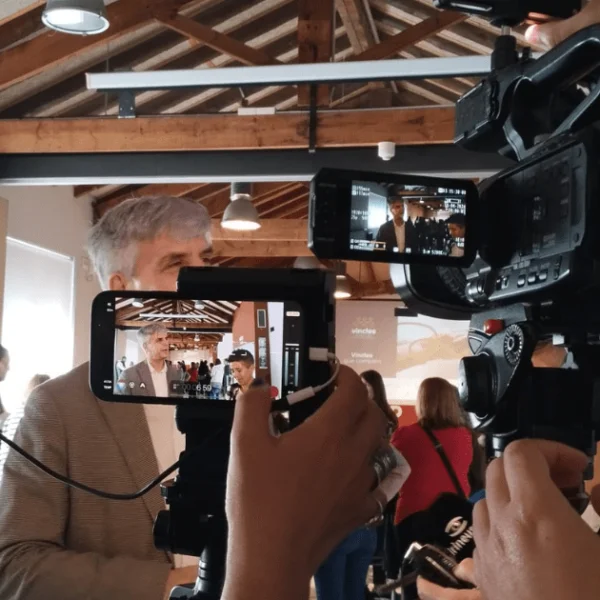
The meeting, held during the Council of Mayors at Espai La Vansa (Sorribes) and wsa covered by PirineusTV, allowed us to explain the current development stage of Vincles in Alt Urgell. The first phase began with a pilot in Monteferrer-Castellbò and, starting in September, six new municipalities in the territory are expected to be incorporated.


Additionally, thanks to the support of HISS (Catalonia’s Social and Health Innovation Hub), which selected the project in its 1st Call against Unwanted Loneliness, Vincles will be expanded to study how to incorporate various data from the healthcare system and the perspective of healthcare teams in the detection and intervention processes, thus making a common and integrated social and healthcare approach possible.

Watch the news coverage of the meeting in PirineusTV (in Catalan)


Actualitat

Willy Allègre, coordinator of the European Rehab-Lab network, visits the commodities of the partners in Catalonia

Willy Allègre, coordinator of the European Rehab-Lab network, visits project partners in Catalonia.

The iSocial Foundation leads the establishment of a Rehab-Lab network in Catalonia. Willy Allègre’s visit is part of the accreditation process to join the European Rehab-Lab network, which will be completed this May
The iSocial team celebrates its first work meeting

The iSocial team celebrates its first work meeting

The iSocial Foundation met at the Cal Muns building, managed by the Pere Claver Group, a partner entity of the foundation.
Kick-off of the Solidigital project

The Solidigital project kicks off with a dual opening session of partner organizations in Barcelona

The iSocial Foundation hosts partner entities of Solidigital, a cross-border project to be developed in Catalonia, France, and Andorra.
Presentacio guia FICE

The iSocial Foundation presents its Guide for Digital Transformation in Entities at the SocialDigital Conference of FICE.

FICE, a network of social organizations that focuses on advocating for children’s rights, commissioned iSocial to create a guide to promote technological innovation in the third social sector.
Premis GrausTIC

The iSocial Foundation awards the GrausTIC Prize for Social Integration through Digitalization to the Audivers 360º project, promoted by the ACAPPS association

The iSocial Foundation participates as a sponsor in the GrausTIC Awards 2023, in the category of the GrausTIC Award for Social Integration through Digitalization.
Imatge de les Jornades de formació d'activadores comunitàries per al projecte de Detecció i Intervenció de Situacions de Soledat no desitjada a l'Alt Pirineu-Aran

Training for Community Activators in the DISS Alt Pirineu-Aran Project

The DISS project aims to combat unwanted loneliness in the six regions of Alt Pirineu-Aran. The Community Activators play a crucial role in coordinating the efforts for detection and intervention and in raising community awareness.

Virtual Metaverse to Improve Daily Skills of People with Intellectual Disabilities

Publications Bank of innovations

Virtual Metaverse to Improve Daily Skills of People with Intellectual Disabilities

Plena Inclusión Aragón, Cooperativa Kairós

Metavers Plena Inclusión Aragón

Avatar that enables learning daily skills to enhance the autonomy of people with intellectual disabilities

Plena Inclusión Aragón and Cooperativa Kairós have developed a “metaverse” that allows practicing and learning daily skills through an avatar, aiming for people with intellectual disabilities to improve their autonomy and social participation.

The metaverse includes eight dimensions, in the form of virtual doors, symbolizing the central areas of a quality life: emotional well-being, interpersonal relationships, material well-being, personal development, physical well-being, self-determination, social inclusion, and rights. Some of the virtual activities that can be performed through the avatar include exercising, meeting friends, or participating in community activities. The application presents challenges in different areas and offers virtual rewards, such as avatar customization, thereby using gamification to encourage a healthy and fulfilling life.

The tool not only benefits people with disabilities in making decisions, but also allows professionals working with them to better understand their feelings and personal needs, expressed through the avatars. The creation of the metaverse is part of the project “Mi Casa: una vida en comunidad”, a model of deinstitutionalized long-term care for people with intellectual disabilities.

Banc d’innovacions

Imatge d'una persona amb necessitats d'accessibilitat digital

Acctua, a technological solution promoting digital accessibility on the Internet

Acctua is a technological service that promotes digitial accessibility and digital inclusion.
Soy yo literal, a Digital Platform for Youth Mental Health

Soy yo literal, a Digital Platform for Youth Mental Health

Soy yo literal is a digital platform promoting mental health among young people
Fokus PI

FOKUS PI, an application that facilitates digital social planning

FOKUS PI is a a decision-making support tool for professionals in the social, healthcare, and educational sectors
BCI

BCI, a device that restores communication in patients with neurodegenerative diseases

The BCI is a technological innovation that restores communication in patients with neurodegenerative diseases
CUPPA

Cuppa, virtual meetups for unpaid carers

Cuppa is a video call program aimed at carers with the goal of sharing experiences and building community.
ATENEA

ATENEA, device adapted to combat the digital divide

ATENEA is an adapted device that contributes to the digital and technological transformation of social services, focusing on the most vulnerable citizens

How can the TEAL model benefit the social sector?

Publications Articles

How can the TEAL model benefit the social sector?

, ,
Model TEAL

The TEAL model represents a break from classical internal organizational models of entities, with a special emphasis on the people who are part of them. What benefits could its implementation have in the social sector?

One area where we can apply innovation in the social sector is in the internal organizational model of entities and organizations. Frédéric Laloux (Belgium, 1973) published the book Reinventing Organizations in 2014, where he presents the TEAL model, a new perspective on business organization that breaks with classical models and aims to put people at the center of organizations. Below, we will explore what the TEAL model is and what benefits it can bring to the social sector.

Organizational Paradigms: Models Prior to TEAL

To explain what the TEAL model entails, we need to understand where we start. Laloux traces the evolution of organizational models and identifies different types according to their characteristics and advancements, each associated with a different color. From oldest to most recent, there are five:

a. Red. This stage is often associated with environments where strong direction and control are necessary to maintain order, and where power dynamics are clear and manifest. It can be observed in authoritarian regimes, religious sects, or highly competitive sports teams.

b. Amber. In this case, roles are well defined and stable, although they allow some movement on the scale. The organization is structured around a hierarchical pyramid, and control is exercised from top to bottom. The perspective is long-term with stable processes that usually repeat past patterns. Examples include the military, the Catholic Church, and governmental organizations.

c. Orange. This approach introduces innovation for the first time, incorporates accountability, and is based on merits. The main objective is to overcome competition and achieve profits and growth. Management is done through objectives that require control and prediction. Banks and many companies follow this organizational model.

d. Green. Culture and empowerment are at the center of this model, with the aim of boosting employee motivation. The organization’s purpose is articulated around interest groups, not just shareholders. A current example is non-profit organizations.

e. Teal. The last type, and the most recent, replaces the hierarchical pyramid with self-management. Organizations function as “living” entities oriented towards fulfilling their purpose. Thus, they are based on three principles that we will examine below: self-management, wholeness, and evolutionary purpose. Some organizations around the world are already beginning to implement this model.

The TEAL Model: Self-Management, Wholeness, and Evolutionary Purpose

As we have mentioned, the TEAL model is based on three key pillars that serve as a guide for organizations wishing to adopt this system:

a. Self-Management. This trait represents a break with the hierarchy that characterizes most organizations. The main objective is to replace traditional methods based on vertical communication and hierarchical structures with autonomous work groups. This does not mean that organigrams with differentiated positions disappear, but when working, decisions are made without hierarchies. In this way, everyone feels more involved in the goals and strategies. Through regular or spontaneous meetings, different decisions made by each work group are shared. These groups are also flexible and adapt to the needs of projects and contexts. Transparency, conflict management, and a sense of belonging are some characteristics of this self-management.

b. Wholeness. According to Laloux, companies require their workers to hide feelings of doubt or vulnerability and instead always show determination and strength through a “professional mask.” This approach questions the classic barrier between personal and professional life with the aim of creating spaces where people can express themselves fully and thus develop their full potential. It is key at this point to ensure that workers feel useful and have opportunities for fulfillment.

c. Evolutionary Purpose. The third pillar of the TEAL model is based on conceiving the organization as an organism that has its own life and sense of direction. Therefore, instead of trying to predict and control the future, the focus is on listening to its purpose within society. The goal is for the organization’s mission, values, and vision not to be based on the leaders’ interests, but to be aspects shared by all members. Additionally, this perspective also seeks to ensure that entities do not focus on rivalry with other organizations but place their purpose at the center.

The TEAL Model and the Social Sector

The TEAL model is particularly interesting and innovative in the social sector, given its community-oriented nature. However, there is not just one way to apply the model, as it will also depend on the uniqueness of each entity. Some of the benefits we can find are:

a. Increased Autonomy. Self-management allows decisions to be made more efficiently and quickly, as the people working on each project have more autonomy in their area of responsibility. This way, the organization is more flexible to changes and situations that require a quick response. This is useful in the field of social services and direct user care.

b. Motivation and Engagement. Sharing a vision and working towards the same purpose fosters commitment from all members of the organization, regardless of their area, and increases motivation and a sense of belonging.

c. Greater Initiative. Fostering a comfortable and participatory space helps reduce the fear of failure and increases self-confidence. Thus, workers show greater initiative in proposing ideas and making decisions.

d. Fostering Creativity. In relation to the previous point, the greater initiative and involvement of professionals encourages a more fluid exchange of ideas. Consequently, it creates an optimal space for the emergence of creativity.

e. Responsibility. Flattening the organizational chart allows everyone to make decisions. Thus, this autonomy increases the sense of responsibility in responding to the agreed-upon agreements.

In conclusion, the application of the TEAL model can generate numerous advantages in the social sector thanks to its emphasis on self-management, wholeness, and evolutionary purpose. On one hand, autonomy and flexibility in decision-making improve efficiency and adaptability in providing social services. On the other hand, creating a comfortable and participatory space fosters motivation, initiative, and creativity among workers, while increasing their sense of responsibility. All these characteristics make the TEAL model particularly interesting for social sector organizations looking to innovate and improve their internal structure to offer better services to the community.

References

Amurrio Gónzalez de Langarica, Í. (2019). Nuevos modelos organizativos de los recursos humanos en la empresa. Addi. https://addi.ehu.es/handle/10810/37110

Clos, I. (2020, 10 desembre). Organizaciones Teal: 50 prácticas revolucionarias que cambiarán tu futuro. Sociedad de la Innovación. https://www.sociedaddelainnovacion.es/50-practicas-organizativas-revolucionarias-cambiaran-futuro-organizacion-basado-modelo-teal/

De Hijas, P. M. (2023, 19 agost). Laloux, las organizaciones TEAL. Emergentes. https://emergentes.org/laloux-las-organizaciones-teal/

Great Place to Work. (2023, 25 abril). Organizaciones TEAL ¿Qué son? ¿Qué ventajas tienen?. Great Place To Work Spain. https://greatplacetowork.es/organizaciones-teal/

Organizaciones TEAL: ¿cómo reinventan la gestión y cuáles son sus ventajas? (s. f.). Iberdrola. https://www.iberdrola.com/talento/organizaciones-teal

Organizaciones Teal: qué son, qué ventajas ofrecen. (s. f.). https://thepower.education/blog/organizaciones-teal

Ortiz de Zárate Hors, María Eugenia (2019). Modelos organizativos evolutivos – Teal para startup social: estudios de caso. Tesis (Master), E.T.S.I. Industriales (UPM). https://oa.upm.es/65570/

Pablo, S. A. J. (2022, 10 març). Implementación del modelo Teal evolutivo para el desarrollo de la felicidad organizacional. https://repository.unimilitar.edu.co/handle/10654/43633

Romero, A. M., López, M. M., & Bravo, A. M. (2018). La transición hacia organizaciones evolutivas Teal. Dialnet. https://dialnet.unirioja.es/servlet/articulo?codigo=6535708


REIR joins as a new member of the iSocial Foundation

Publications News

REIR joins as a new member of the iSocial Foundation

,
REIR, nova entitat membre de iSocial

The iSocial board has approved the incorporation of REIR (Resources for Children at Risk), a social intervention organization that operates mainly in the Vallès Oriental region, as a new member of the Foundation.

On July 9, during the meeting of the iSocial Foundation board, the incorporation of REIR (Educational Resources for Children at Risk) as a member entity of the Foundation was approved. Established in 2007 by professionals from the field of social education and the third sector, REIR works with a multidisciplinary approach to improve the situation of groups at risk of social exclusion and vulnerability, with a primary focus on children.

Since its creation, REIR has carried out significant social intervention work, assisting over 2,500 people at risk of social exclusion across 29 different municipalities. Their projects, including residential centers for minors and integrated care spaces, reflect a strong commitment to equality and social welfare.

The organization has achieved significant regional presence in Vallès Oriental, Vallès Occidental, Osona, and Baix Llobregat, demonstrating its ability to adapt and grow in response to emerging social challenges. With its incorporation into the iSocial Foundation, REIR will bring valuable expertise in the field of child welfare, enriching our project and helping us define and promote new ways to foster innovation in the social sector.

Actualitat

Willy Allègre, coordinator of the European Rehab-Lab network, visits the commodities of the partners in Catalonia

Willy Allègre, coordinator of the European Rehab-Lab network, visits project partners in Catalonia.

The iSocial Foundation leads the establishment of a Rehab-Lab network in Catalonia. Willy Allègre’s visit is part of the accreditation process to join the European Rehab-Lab network, which will be completed this May
The iSocial team celebrates its first work meeting

The iSocial team celebrates its first work meeting

The iSocial Foundation met at the Cal Muns building, managed by the Pere Claver Group, a partner entity of the foundation.
Kick-off of the Solidigital project

The Solidigital project kicks off with a dual opening session of partner organizations in Barcelona

The iSocial Foundation hosts partner entities of Solidigital, a cross-border project to be developed in Catalonia, France, and Andorra.
Presentacio guia FICE

The iSocial Foundation presents its Guide for Digital Transformation in Entities at the SocialDigital Conference of FICE.

FICE, a network of social organizations that focuses on advocating for children’s rights, commissioned iSocial to create a guide to promote technological innovation in the third social sector.
Premis GrausTIC

The iSocial Foundation awards the GrausTIC Prize for Social Integration through Digitalization to the Audivers 360º project, promoted by the ACAPPS association

The iSocial Foundation participates as a sponsor in the GrausTIC Awards 2023, in the category of the GrausTIC Award for Social Integration through Digitalization.
Imatge de les Jornades de formació d'activadores comunitàries per al projecte de Detecció i Intervenció de Situacions de Soledat no desitjada a l'Alt Pirineu-Aran

Training for Community Activators in the DISS Alt Pirineu-Aran Project

The DISS project aims to combat unwanted loneliness in the six regions of Alt Pirineu-Aran. The Community Activators play a crucial role in coordinating the efforts for detection and intervention and in raising community awareness.

Energy Control, a drug analysis service to reduce risks

Publications Bank of innovations

Energy Control, a drug analysis service to reduce risks

Associació Benestar i Desenvolupament (ABD)

Energy Control

Drug analysis program that promotes responsible consumption

Energy Control is a project of the Association for Welfare and Development (ABD) that, among other services, sets up information points in drug consumption spaces, such as music festivals and nightclubs, to promote responsible and informed use and to offer a substance analysis service that ensures the safety of people who consume them in case of adulterated products.

The analysis results are obtained in less than five minutes. This allows for immediate advice on the actual composition of the substances. Moreover, the technique used is non-destructive and does not use reagents, which better reaches the population more reluctant to leave the substance at an analysis point.

The data obtained is inserted into the Energy Control database. Thus, practically all substances circulating at any given time can be identified, including adulterated or especially dangerous ones, and consumers can be alerted through their channels. The devices used in the analysis process are portable and can be easily moved to any space, so interventions can be carried out in usual consumption places.

The main objectives of this service are to contact drug users, inform about the composition of the substances the person wants to consume, advise on how to consume with less risk, monitor the market, detect trends, and alert interested parties in case adulterated products especially dangerous to health are circulating.

Banc d’innovacions

Imatge d'una persona amb necessitats d'accessibilitat digital

Acctua, a technological solution promoting digital accessibility on the Internet

Acctua is a technological service that promotes digitial accessibility and digital inclusion.
Soy yo literal, a Digital Platform for Youth Mental Health

Soy yo literal, a Digital Platform for Youth Mental Health

Soy yo literal is a digital platform promoting mental health among young people
Fokus PI

FOKUS PI, an application that facilitates digital social planning

FOKUS PI is a a decision-making support tool for professionals in the social, healthcare, and educational sectors
BCI

BCI, a device that restores communication in patients with neurodegenerative diseases

The BCI is a technological innovation that restores communication in patients with neurodegenerative diseases
CUPPA

Cuppa, virtual meetups for unpaid carers

Cuppa is a video call program aimed at carers with the goal of sharing experiences and building community.
ATENEA

ATENEA, device adapted to combat the digital divide

ATENEA is an adapted device that contributes to the digital and technological transformation of social services, focusing on the most vulnerable citizens