Pycipedia, collaborative platform for social workers specialized in parenting with intellectual disabilities

Publications Bank of innovations

Pycipedia, collaborative platform for social workers specialized in parenting with intellectual disabilities

Research and Development Center for Health, Care, and Social Work in Linköping (FoU)

Pycipedia

Web platform for social workers specialized in supporting parents with intellectual disabilities

Parenting processes can be especially challenging for people with intellectual disabilities. Additionally, the number of social workers specialized in this intervention area is very limited, and in the case of rural or non-urban areas, geographical distance makes it difficult for professionals to share their experiences and methods.

Pycipedia is a platform that connects social workers, regardless of where they work, through a digital network, to provide assistance and enable them to improve their support tasks. This ensures more equitable attention throughout the territory, ensuring that all professionals have access to useful resources and training.

The tool allows social workers to create, navigate, edit, and share training materials to support families with intellectual disabilities in everyday situations. Resources include texts, videos, and images. Materials are categorized, such as child health or hygiene tasks. Pycipedia also offers a forum where professionals can share best practices and provide empirical results on the different methods they use.

Banc d’innovacions

Digital Streetwork

Digital Streetwork, social workers who assist young people through the Internet

Digital Streetwork is an initiative that moves street work with youth to the Internet
BRUS

BRUS, accompaniment to young people who live in families with situations of drug addiction

BRUS is an accompaniment program to young people who live in families with situations of drug addiction
App Morada

App Morada, support against gender-based violence for women with disability

App Morada is an application that helps and guides women with disability and victims of gender-based violence
Nagaya Tower

Nagaya Tower, an intergenerational building to combat unwanted loneliness

Nagaya Tower is a building that connects people of different generations to combat the feeling of loneliness.
Imatges Posts Web 6 min 1

Barnahus, care service for child victims of sexual abuse

Barnahus is an integrated unit formed by a specialized multidisciplinary team, whose objective is to prevent the re-victimization of children and adolescents who are victims of sexual abuse.
Access4You

Access4you, accessibility certification for people with disabilities

Access4You is an Innovative initiative based on the certification of accessibility of the built environment for people with special needs

Willy Allègre, coordinator of the European Rehab-Lab network, visits project partners in Catalonia.

Publications News

Willy Allègre, coordinator of the European Rehab-Lab network, visits project partners in Catalonia.

,
Willy Allègre, coordinator of the European Rehab-Lab network, visits the commodities of the partners in Catalonia

The iSocial Foundation leads the establishment of a Rehab-Lab network in Catalonia. Willy Allègre’s visit is part of the accreditation process to join the European Rehab-Lab network, which will be completed this May

This week, we welcomed Willy Allègre, coordinator of the European Rehab-Lab network, as it soon expands to include Catalonia’s local network.

Willy Allègre is an engineer and technical director at the Mutual Rehabilitation and Functional Rehabilitation Center (CMRRF) in Kerpape, France. He is the creator of the Rehab-Lab network, a project empowering people with disabilities through the creation of functional aids using 3D printing technology.

One of the most notable aspects of Rehab-Lab, distinguishing its aids from those produced by typical Fab-Labs, is the inclusion of its beneficiaries in the creation process, ensuring the aids are tailored to their specific needs. Working alongside occupational therapists and specialized engineers, beneficiaries contribute their perspectives to the ideation and creation of tools that will facilitate their daily tasks.

In Catalonia, the establishment of a Rehab-Lab network expanding the existing European network is a project led by the iSocial Foundation, with participation from the Ampans Foundation, the Guttmann Institute, CIM-UPC, and Grup Avinent. It is funded by the Government of Catalonia through the Next Generation funds.

A Catalunya, la creació d’una xarxa Rehab-Lab que ampliï la xarxa europea ja existent és un projecte liderat per la Fundació iSocial i en el qual participen la Fundació Ampans, l’Institut Guttmann, CIM-UPC i el grup Avinent. Compta amb el finançament de la Generalitat de Catalunya a través dels fonts Next Generation.

Willy Allègre’s visit is part of the accreditation process that project partner entities have been following since last May and will conclude this May, when the Rehab-Lab network will be operational.

Actualitat

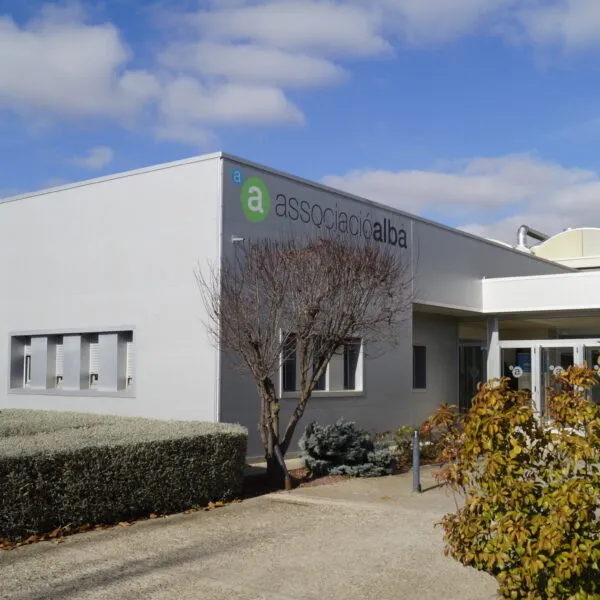
The Alba Group becomes the fourteenth member of iSocial

The Alba Group becomes the fourteenth member of iSocial

This September, the Alba Group approved its membership of the iSocial Foundation as a partner-collaborating organisation.
iSocial Foundation has completed 4 years. We are no longer a start-up, find out why. .

iSocial Foundation has completed 4 years. We are no longer a start-up, find out why. .

We are now facing a new stage marked by the start of new projects, growth in all indicators, increased projection and visibility, and economic consolidation.
The basque cooperative group Angintzari, new iSocial member – Agintzari euskal erakundeak iSozialean sartzea onartu du

The basque cooperative group Angintzari, new iSocial member – Agintzari euskal erakundeak iSozialean sartzea onartu du

It becomes the thirteenth member entity of iSocial. AGINTZARI is a cooperative group with more than 40 years of experience and with strong implementation in Euskadi. iSocial erakundeko hamahirugarren erakunde kidea da. Agintzari kooperatibak 40 urte baino gehiagoko ibilbidea du, eta ezarpen handia du Euskadin.
iSocial members discuss systems for measuring social impact

iSocial members discuss systems for measuring social impact

In a new Innovation Coffee, in which 11 Catalan and Basque member organizations took part.
We’ve started “All by myself”, an aggregator of ICT tools for the intellectually disabled

We’ve started “All by myself”, an aggregator of ICT tools for the intellectually disabled

It is promoted by 5 foundations: Found.iSocial, Found.AMPANS, Found.Maresme, Found.Catalana Síndrome de Down and Found.Support-Girona.
Successful enrollment in the course “How to improve communication and image of Social Services”

Successful enrollment in the course “How to improve communication and image of Social Services”

An edition for technicians began on February 14, and another for elected officials will start on March 9.

Victoria Mandefield: “Soliguide allows professionals to save time for social work and support”

Publications Interviews

Victoria Mandefield: “Soliguide allows professionals to save time for social work and support”

,
Victoria Mandefield, creadora de la Soliguía, en la sede de la Fundación iSocial

We speak with Victoria Mandefield, CEO of Solinum and creator of Soliguide, a digital search engine for resources or social organizations aimed to people in vulnerable situations. Thanks to the Solidigital project, Soliguide arrives in Catalonia and will integrate with Nidus and the French application Reconnect.

How did the idea of Soliguide come about?

The idea originated in France, stemming from my experience as a volunteer, where I often found myself providing inaccurate information. The social sector undergoes frequent changes, with high turnover among social workers, volunteers, and organizations opening and closing. This dynamic environment can make it challenging to navigate. Moreover, there are numerous stakeholders involved, including associations and public services, making the landscape somewhat chaotic. I needed access to updated, precise, and comprehensive information, which led me to create Soliguide. Initially, it was a small and limited project, but over time, it has evolved into something more professional.

And now Soliguide is reaching Catalonia. How do you view this expansion beyond the border?

I believe the main advantage of this expansion into Catalonia, compared to our experience in France, is the significant time savings. Currently, when we expand into new territories in France, the process is rapid; we know exactly what we’re doing, understand the methodologies, follow well-defined steps, and get the job done. Whereas initially, we were somewhat unsure of what we were doing, leading to a bit of chaos. Consequently, it took us a long time to see the social impact of Soliguide, to spread its reach, and to gather quality data. Now, it’s different. And that’s what I aim to bring to Catalonia and Spain: the ability to move faster to achieve a greater social impact. Of course, this will involve adapting to local realities because there will be things we don’t know and will discover, while other aspects will require modification, which will be an interesting exercise.

What challenges do you foresee Soliguide encountering in its deployment in Catalonia?

I think the beauty of it all lies in being surprised by certain things. Institutional relations are probably not the same in France and Spain. Culturally, they are two quite different countries. There won’t be the same realities. The type of migration present in Catalonia and France is different, even though there may be some similarities. And this is the great interest of a cross-border project: there will be bilateral exchanges that will allow us to better assist people.

You have a fundamentally technological background. How do you think technology can contribute to improving people’s living conditions and reducing inequality?

Precisely because I’m an engineer, people often expect me to have a very pro-technology stance, to say that it will solve all the world’s needs, when in fact I don’t believe that at all. Technology can be relevant in various aspects. Especially in terms of efficiency. In 2023, there were 3.7 million searches made in Soliguia. Those are significant numbers. When I compare it to when I was a volunteer, I think back then I would provide information one by one, and I could give an average of ten pieces of information over a few hours. In this case, technology allows us to have a much larger scale impact and make certain things more efficient that are not always rewarding. For social workers, for example, desperately searching for information, asking colleagues, making calls who knows where, searching through old files… these are not activities that have a great added value. And suddenly, if they can save this time, it’s time they gain for social work. This is one of the great impacts of Soliguide: it allows professionals to focus on human relationships, on social support, something that digital tools can never replace.

How do you measure the social impact of Soliguide?

The topic of social impact assessment is very important to me. We have already produced 3 reports in this regard. It’s relevant because obviously there are always anecdotes, and we see people whom Soliguide has helped access care, find assistance, etc. But that’s not enough. There needs to be a rigorous impact assessment that goes beyond anecdotes, meaning it should be quantitative. And then we see that the biggest impacts are the time saved for social workers and volunteers, better coordination among actors in the same territory, providing guidance with better quality data. There’s also a better relationship of trust between actors in the social sector and their beneficiaries. Previously, beneficiaries would ask for information and the people working in the sector would provide whatever they could, which wasn’t always the right information. Now, with Soliguide, they provide updated information, which builds more trust. We also know that Soliguide is very economically efficient for a territory. For every euro invested, there’s a return of €1.93 in savings because all that lost time, all that lost energy costs money.

How is the quality of the data collected in Soliguide reviewed?

This is the key aspect, and it’s not always given the attention it deserves. Often people think, “I’ll create a fantastic mapping, the application will have these features, those functionalities, and everything will go smoothly.” And they overlook the heart of the project: the data. It’s very, very difficult to have quality data. What we do is evaluate the currency of data for a territory to ensure it’s up to date. And we are very precise in this aspect. For example, if an organization closes during the summer, that will be reflected. We don’t just list the hours, but also which days they close, etc., because that’s important for people. And we also ensure that the information is complete. It’s good to know that there’s a food distribution point in a certain place, but if you don’t know exactly which public it’s aimed at, what documentation is required, if it’s saturated or not, or if you don’t have contact information, it’s not so useful.

It’s a work of detail…

We make a concerted effort to comprehensively cover each territory. If we were to include only two or three entities or structures from each territory in Soliguide, it wouldn’t be relevant. It’s important to collect as many as possible, and if possible, all the organizations that exist in a particular territory in order to better guide people.

And achieving this requires the human touch. There’s no substitute for it with technology. While we do run summer and winter update campaigns and strive to automate processes, ensuring the accuracy of information always involves making calls and confirming details. It’s a significant undertaking. Additionally, there’s a misconception that digital tools can operate independently, but that’s not the case; they require human oversight. This is why Soliguide always seeks partners to carry out the work on the ground.

One of the key strengths of the Solidigital project is cross-border collaboration. What advantages do you think this collaboration format brings?

There’s a fundamental reason why this cross-border collaboration is interesting, and it’s because these borders are highly permeable. Administratively, a border exists, but in reality, one can move from one side to the other, and many issues are shared across these boundaries. Cross-border cooperation allows us to collectively address the common problems we face, as well as exchange best practices, avoiding redundant efforts. What I find particularly compelling about this project is the concept of interconnection. In the social sector, we’ve lagged behind in adopting and developing technology and digital tools compared to the private sector. We are way behind compared to the private sector. However, for the last few years, the private sector has been heavily focused on the interconnection of tools. The era of creating monolithic, standalone tools is over. Developers now work to create tools that interconnect with other tools, which in turn connect with others, and so on. This approach has proven to be the most effective. And suddenly, it turns out that we’re not as far behind in the social sector: we simply need to prioritize interconnecting existing tools rather than seeking a singular and magical solution to all problems. This aspect underscores the significance of the Solidigital project: it represents a significant stride forward in the social sector, advancing the democratization of technology and the integration of technological tools.

An example of this interconnection, within the framework of the Solidigital project, is the integration of Soliguide with the Nidus tools in Catalonia and Reconnect in France. What benefits do you think this integration will bring?

I believe that what Soliguide will bring to Nidus and Reconnect is more added value for users. We’ve tested this in France on several occasions, such as with the app Entourage, and I think it will be the same with Nidus and Reconnect: for users, it will be fantastic to have a map from the Soliguide database, as they won’t have to search for the information they need in another application. And in our case, integration has an immense advantage, which is to increase our social impact. For example, we don’t have a communication strategy for the general public; we don’t address all citizens, but thanks to the interconnections we’ve been making, we reach users we never thought we’d reach.

How can the continuity of this project be ensured in the long term?

To ensure its long-term continuity, two key aspects come into play. Firstly, there’s the imperative of doing a good job: if you have a significant social impact, you become necessary. If you can objectively prove that your social impact evaluation indicators are excellent, things continue. This has been our experience across various regions. Secondly, there is the appropriation by institutional actors. Co-construction has many virtues. One of them is the ability to make better decisions, tailored to local realities. However, it also has the benefit of allowing people to take ownership of the project. And if they feel that the project is theirs, they are less likely to abandon it, and politicians and entities are more likely to invest in it, either with money or with human resources.

Do you think the social sector has changed in recent years?

It has changed, undoubtedly; in some ways for the better, in others for the worse, but I think we have participated, in any case, in a certain positive digitalization of the sector. I say “positive digitalization” because there has been another less positive one in the sense that, for example, now beneficiaries of social services are forced to do all the procedures online, without assistance, and that’s complicated. But technology can also be useful, and that’s what we’re working on.

Another contribution that has been made, and of which we have been part, is a certain form of collaboration. At the beginning, for example, when we talked about the involvement of the beneficiaries in social action, we felt a bit alone. It seems very obvious that in a social project, the opinions of those involved should be sought, but the truth is that a few years ago it was not a majority position. People were accompanied in their daily lives, yes, but there was the idea that their real needs were already known, which is not true. And I think that has changed, that it has been understood that the participation of those people involved must be included.

What role should politics play regarding poverty and social exclusion? Do you think technological innovation can help address these issues on the agenda?

What technology can bring, and what we try to bring in any case, is reliable data. We have more and more data and analyze them more. We can tell politicians: “Look, we have data confirming that there are so many food banks in this area, and that many of these banks are saturated; and according to the data, in this other area there are no resources. These are the data, do what you think is appropriate.” I still think there is a lack of reliable data on which to make reasoned decisions. Otherwise, it’s easy to fall into abstract political protest, which I experienced as a volunteer and which is very tiring and doesn’t contribute much. If we can change perspective, we can say: “Okay, here’s a problem, and it’s objective. We’re not saying it, the data are.” And from there we can work together to solve it. And I think that’s the role politicians of the future can have: working on problems from the root, beyond the ambitions of each organization. Identifying the problem and seeing what could be done to solve it before it arises.


CoParticiPA

Lab Innovation projects

CoParticiPA

CoParticiPA is a cross-border collaboration project aimed at fostering the active participation of service users in social services and the exchange of best practices.

(2024-2026)

CoParticiPA is a collaborative cross-border project that brings together Spain, France, and Andorra with the goal of promoting the active participation of individuals in the network of social services and socio-educational and community intervention entities. Spanning three years (2024-2026), this project, led by the Research and Innovation in Social Work Group (GRITS) in the School of Social Work at the University of Barcelona in collaboration with an extensive network of partners, aims to strengthen community ties and empower service users through their active involvement in decision-making and resource management.

What is CoParticiPA?

CoParticiPA stems from the need to promote people’s participation in the network of social services and socio-educational and community entities. With the support of the POCTEFA 2021-2027 program, this project focuses on the creation, piloting, and evaluation of a Cross-Border People’s Participation Program (PTP-P from its Catalan and French initials). Through this program, the aim is to strengthen community bonds and involve them in the management and decision-making of social services in their territories.

The project’s action will revolve around eight working groups, corresponding to eight social intervention areas: social services, childhood and adolescence, aging, migration, disability, health and mental health, social exclusion and community action, and university and continuing education.

The iSocial Foundation will lead the development of the digital solution that will facilitate the participation of service users in the planned intervention processes.

Grups de treball CoParticiPA
CoParticipa working groups

Partners and Financing

CoParticiPA has an extensive network of partners, including academic institutions, public administrations, and entities specialized in social intervention. The project is co-financed by the European Union through the Interreg POCTEFA 2021-2027 program, with the aim of reinforcing socioeconomic and social integration in the region.

Leads:

Universitat de Barcelona

Partners:

Fundació iSocial
Fundació Idea Full A4 v1
Logo UdG
Logo Càritas
Logo Andorra R + I
Logo Anras
Logo Arseaa
Logo Consell Comarcal de l'Alt Empordà
Logo Faire
Logo Universitat d'Andorra

With the co-financing of the European Union through the INTERREG POCTEFA program:

Logotipo POCTEFA RGB

Mapathon UPC, a web platform that gathers geolocated points on a map

Publications Bank of innovations

Mapathon UPC, a web platform that gathers geolocated points on a map

UPC

Mapathon UPC

An open web platform that allows for the collection of geolocated points on a map collaboratively

Mapathon UPC is a tool aimed at groups and collectives wishing to highlight and raise awareness of the impact of certain social issues or needs in specific locations through a map where they are geolocated. The information collection process is collaborative, involving social entities, public administration, and the UPC community, among others. Participants only need mobile phones or tablets with Android system, GPS, and Internet access to participate in the mapping.

Mapathon addresses various issues, from identifying architectural barriers hindering accessibility to points of risk for gender-based violence and areas of waste accumulation, among others. It also allows for a more positive focus by helping to identify resting places or safe spaces.

The duration of the data collection process typically ranges from one to two hours, although it can exceptionally last a week. Once the map is completed, it cannot be updated, serving as an «snapshot» of reality at a given time. Additionally, the platform generates a report that organizes the data and aids decision-making.

Banc d’innovacions

Digital Streetwork

Digital Streetwork, social workers who assist young people through the Internet

Digital Streetwork is an initiative that moves street work with youth to the Internet
BRUS

BRUS, accompaniment to young people who live in families with situations of drug addiction

BRUS is an accompaniment program to young people who live in families with situations of drug addiction
App Morada

App Morada, support against gender-based violence for women with disability

App Morada is an application that helps and guides women with disability and victims of gender-based violence
Nagaya Tower

Nagaya Tower, an intergenerational building to combat unwanted loneliness

Nagaya Tower is a building that connects people of different generations to combat the feeling of loneliness.
Imatges Posts Web 6 min 1

Barnahus, care service for child victims of sexual abuse

Barnahus is an integrated unit formed by a specialized multidisciplinary team, whose objective is to prevent the re-victimization of children and adolescents who are victims of sexual abuse.
Access4You

Access4you, accessibility certification for people with disabilities

Access4You is an Innovative initiative based on the certification of accessibility of the built environment for people with special needs

AutisMIND, an application to stimulate the social cognition of children with ASD

Publications Bank of innovations

AutisMIND, an application to stimulate the social cognition of children with ASD

IDAPP MIND SL

AutisMIND

The tool enhances the ability to empathize with others in children with Autism Spectrum Disorder (ASD)

There are more and more experiences and studies endorsing that technology is a particularly useful resource to support therapeutic and learning processes in children with ASD. Whether through robotics or specialized computer programs, research is showing the benefits of this approach.

AutisMIND is a mobile application that supports families and professionals in working on the development of social thinking and theory of mind in children with ASD, that is, the ability of individuals to be aware of the feelings, desires, and beliefs of others when acting.

The AutisMIND application addresses ten different aspects of socio-cognitive development with six levels of difficulty and a total of over a thousand interactive and playful exercises. Some of the topics it covers include interpreting emotions in context, anticipating actions, physical sensations, and symbolism.

The platform presents learning in a simple and dynamic way. On one hand, it uses sharp images with simple outlines that avoid overstimulating the child. On the other hand, it includes visual reinforcements that enhance the interest, attention, and motivation of the user. The functions are adaptable to the needs of each person, and statistics allow evaluating progress and achieved milestones.

Banc d’innovacions

Digital Streetwork

Digital Streetwork, social workers who assist young people through the Internet

Digital Streetwork is an initiative that moves street work with youth to the Internet
BRUS

BRUS, accompaniment to young people who live in families with situations of drug addiction

BRUS is an accompaniment program to young people who live in families with situations of drug addiction
App Morada

App Morada, support against gender-based violence for women with disability

App Morada is an application that helps and guides women with disability and victims of gender-based violence
Nagaya Tower

Nagaya Tower, an intergenerational building to combat unwanted loneliness

Nagaya Tower is a building that connects people of different generations to combat the feeling of loneliness.
Imatges Posts Web 6 min 1

Barnahus, care service for child victims of sexual abuse

Barnahus is an integrated unit formed by a specialized multidisciplinary team, whose objective is to prevent the re-victimization of children and adolescents who are victims of sexual abuse.
Access4You

Access4you, accessibility certification for people with disabilities

Access4You is an Innovative initiative based on the certification of accessibility of the built environment for people with special needs

Digital Streetwork, social workers who assist young people through the Internet

Publications Bank of innovations

Digital Streetwork, social workers who assist young people through the Internet

Bavarian Youth Council

Digital Streetwork

Initiative that moves street work with youth to the Internet

Digital Streetwork is a project aimed at individuals between 14 and 27 years old, in which a team of specialists work with youth through chats, social networks, platforms, and phone calls. Some of these spaces include Instagram, Discord, and Reddit. The main objective is to support them in areas such as mental health, school, work, and interpersonal relationships.

Social workers are actively present online and reach out to young people who show a need for support through messages and posts. If they do not wish to establish communication, the conversation stops. Similarly, the workers can be contacted by users who require their help. The program consists of fourteen professionals, two for each local government in Bavaria.

The platform is free and anonymous. Digital workers maintain the confidentiality of conversations and receive training in online counseling and crisis management. In case they cannot address an issue, the professionals connect the youth with specialized organizations.

Banc d’innovacions

Digital Streetwork

Digital Streetwork, social workers who assist young people through the Internet

Digital Streetwork is an initiative that moves street work with youth to the Internet
BRUS

BRUS, accompaniment to young people who live in families with situations of drug addiction

BRUS is an accompaniment program to young people who live in families with situations of drug addiction
App Morada

App Morada, support against gender-based violence for women with disability

App Morada is an application that helps and guides women with disability and victims of gender-based violence
Nagaya Tower

Nagaya Tower, an intergenerational building to combat unwanted loneliness

Nagaya Tower is a building that connects people of different generations to combat the feeling of loneliness.
Imatges Posts Web 6 min 1

Barnahus, care service for child victims of sexual abuse

Barnahus is an integrated unit formed by a specialized multidisciplinary team, whose objective is to prevent the re-victimization of children and adolescents who are victims of sexual abuse.
Access4You

Access4you, accessibility certification for people with disabilities

Access4You is an Innovative initiative based on the certification of accessibility of the built environment for people with special needs

2nd InnoTrip to Scotland

Knowledge InnoTrips

2nd InnoTrip to Scotland

From May 20th to 23rd, 2024, the 2nd InnoTrip organized by the iSocial Foundation took place in Scotland, with the support of the Department of Foreign Affairs and Open Government of the Government of Catalonia. For three days, around thirty representatives from iSocial member entities visited 10 innovative Scottish initiatives in the field of social action

The InnoTrip is a service provided by the iSocial Foundation aimed at its member entities, consisting of an international study visit to promote innovation through the on-site discovery of cutting-edge experiences in the field of social action. In it’s 2024 edition, the Innotrip took place from May 20th to 23rd in Scotland.

The program of activities for this edition includee the discovery of innovative organizations and projects through visits of various formats to non-profit entities, social enterprises, and Scottish government agencies. Among other benefits of participating in the InnoTrip, the participants had the chance to discover new ways to address common social issues, to create potential international synergies, and to strengthen relationships with other iSocial member entities.

The Scottish system of social services and care is internationally recognized for promoting the implementation of different models and innovative initiatives. Examples include the integration of health and social care, the self-directed support model, community building, and preventive approaches.

In addition, iSocial member organizations did identify and showed interest in discovering specific organizations and initiatives in the Scottish social ecosystem, with a special focus on areas such as social housing, community development, support for independent living, and socio-labor inclusion.

Visit program

  • Quarriers: Self-directed support model and use of digital tools for independent living support.
  • Simon Community: Access Hub (multi-institutional counseling and support center for homeless and/or socially excluded people), digital tools, and Housing First model.
  • Aberlour: Integrated healthcare and social care services and intensive family support model.
  • Social Bite: Social enterprise model and social awareness resources.
  • Kibble: Comprehensive care approach (housing, training, and employment) and social enterprise model.
  • Homes For Good: Quality housing through affordable rentals. Property acquisition and tenant support.

Amb el suport de

Generalitat de Catalunya. Secretaria d'Acció Exterior del Govern

Robots for the treatment of children with ASD

Publications Articles

Robots for the treatment of children with ASD

,
Robots tractament infants amb TEA

In recent years, the use of robots in the treatment of children with Autism Spectrum Disorder (ASD) has been brought to the table. What benefits does this type of therapy offer?

What is ASD?

The concept of ASD (Autism Spectrum Disorder) emerged in 2013 when the American Psychiatric Association (APA) unified autism and Asperger’s syndrome under a single diagnosis, considering both conditions shared very similar traits. According to this categorization, ASD is a neurodevelopmental disorder that mainly affects communication and social interaction, characterized by the presence of very rigid thought patterns. Some examples include focus on interests, deficits in emotional expression, and problems with nonverbal expression. The first signs can be observed in very early stages of individual development, between the first and third year of life.

Another peculiarity of ASD is the diversity of ways in which it can manifest. This is why the concept of a spectrum is used. Each person expresses difficulties in communication, social interaction, and cognitive rigidity differently.

Robots for children with ASD

In recent years, numerous scientific studies, such as the one conducted by the University of the Balearic Islands, have investigated the use of robots to support the development of the learning process in children with Autism Spectrum Disorder (ASD). The conclusions suggest that the predictable and consistent interactions of robots make them feel comfortable, as individuals with ASD tend to have a strong aversion to unpredictability. Additionally, robots are capable of generating motivation to carry out tasks and activities, while also helping children engage in social interactions that may otherwise be threatening in other contexts.

Experts emphasize the importance of designing robots with highly personalized programming that can address the needs of each child. However, they warn that the robot should not be conceived as a teacher or a social worker, but rather as a support tool. In this sense, it should not be an end in itself, but rather the aim should be for the relationship between the child and the robot to serve as a starting point for reinforcing the child’s sociability.

Benefits of using robots for children with ASD

Some of the benefits of this type of therapy are:

  • Improves communication skills and expression of emotions. The robot encourages the child’s participation through interactive communication, with visual aids, voice synthesis, and programmed instructions. This enhances the ability to express emotions and empathize with others. Additionally, it creates a comfortable and non-judgmental space where children can develop their skills.
  • Facilitates social interaction. The security provided by a robot, through controlled repetitions, allows for more effective interaction. Imitation, turn-taking, and eye contact simulate real-life interactions that teach appropriate responses and gestures for different situations. They can also be useful as mediators and objects of shared attention with adults and peers. The ultimate goal is for children to use all this knowledge in interactions with humans.
  • Provides routine. Predictability and routine establish coherent behavior patterns that provide security and stability for children with ASD. This reduces crises and anxiety.
  • Promotes play and learning. Often, children with autism have difficulties playing and learning. Robots are capable of adapting to the child’s specific interests to program educational games. Thus, learning becomes a more fun and effective task.
  • Simplifies the learning process. Interaction with the robot is simple and helps simplify the learning process. Similarly, it avoids information overload that could overwhelm the child.

Types of support robots for children with ASD

Currently, there are different types of robots. Although each of them has its specificities and its scope of action, in broad strokes we can distinguish them based on their objective, that is, the way they provide support to children with ASD. Thus, we find three classifications:

  • Social robots. Thinking androids to interact with children with ASD, with conversations, signals, or expression of emotions.
  • Educational robots. Tools that aid during the children’s learning process, using attractive tools to teach different subjects and skills in an organized manner.
  • Assistive robots. Robots that provide support in everyday activities. This way, they can reinforce their confidence and independence. For example, with activities such as dressing, brushing teeth, or organizing themselves.

Some examples of robots for children with ASD

Over the past few years, there has been a significant increase in the use of support robots for children with Autism Spectrum Disorder, accompanied by a rise in research on this practice and its benefits. Below, we outline some significant initiatives in this field:

  • AURORA. In the late nineties, Kerstin Dautenhahn (University of Reading, England) carried out a pioneering work in the field of robots and autism. The AURORA project aimed to enable children with autism to use a mobile autonomous robot to take initiatives and engage in various actions. According to Dautenhahn, “repetitive behavior can be interpreted as a way to escape from the overstimulation, visual or auditory, that many people with autism experience.” For this reason, a robot easily programmable to perform repetitive and predictable movements can establish “a link between the child and the surrounding world.
  • Aisoy 1. Another example is Aisoy 1, a robot capable of recognizing the person with whom it interacts and simulating emotions. Although initially not designed to help children with autism, a study by the MIT Media Lab used the model for this purpose, with a positive result.
  • MILO. The first humanoid robot with facial expressions arrived in Spain in 2022, under the name MILO. It is a model that the Polytechnic University of Cartagena (UPCT) purchased from the American company RoboKind. The academic institution acquired it without configuration in order to be able to program it with its own protocol that addresses the emotions and reactions of the child during interaction with the robot. The main objective is to reduce the stress and pressure of children with ASD during exchanges with other people, while training them with the most predictable and simple interactions of the robot. MILO measures 60 cm, has a human-like toy-shaped face, and is capable of expressing emotions through smiles and grimaces, among others.

In conclusion, the use of robots in children with ASD allows for improvement in their social interaction, thanks to the ability to perform repetitive and predictable actions. This possibility, along with the customization of the device, makes the robot an innovative tool that brings new intervention methods to the table in this field.

References

¿Qué es el TEA?, EspacioAutismo. Available in: https://telos.fundaciontelefonica.com/la-cofa/robots-sociales-que-ayudan-a-abrirse-al-mundo-al-nino-autista/ [12/03/24] 

Programación de Robots para mejorar la atención terapéutica de niños con Trastornos Generalizados del Desarrollo (TGD), Diego Paracuellos de los Santos. Universitat Politècnica de València. Available in: https://riunet.upv.es/bitstream/handle/10251/91794/PARACUELLOS%20-%20Programaci%C3%B3n%20de%20Robots%20para%20mejorar%20la%20atenci%C3%B3n%20terapeutica%20de%20ni%C3%B1os%20con%20Trastornos….pdf?sequence=1 [12/03/24] 

Robots sociales que ayudan al niño autista a abrirse al mundo, Pablo Rodríguez Canfranc. Telos (Fundación Telefónica). Available in: https://telos.fundaciontelefonica.com/la-cofa/robots-sociales-que-ayudan-a-abrirse-al-mundo-al-nino-autista/ [12/03/24] 

Robots para autismo: ¿el futuro de una terapia eficaz de ayuda?, Autismo En Vivo. Available in: https://www.autismovivo.org/post/robots-para-autismo-el-futuro-de-una-terapia-eficaz-de-ayuda [12/03/24] 

El robot social de Elche que se cruzó en Kansas con un niño autista, Ana Hernando. SINC. Available in: https://www.agenciasinc.es/Reportajes/El-robot-social-de-Elche-que-se-cruzo-en-Kansas-con-un-nino-autista [12/03/24] 

Así es Milo, el primer robot con emociones que interactúa con el autismo y que ya está en Cartagena, Jorge García Badía. El Español. Available in: https://www.elespanol.com/omicrono/tecnologia/20220713/mylo-primer-robot-emociones-interactua-autismo-cartagena/687431519_0.html [12/03/24] 

Robot como tratamiento para niños con autismo, Jessica Davó García. El mundo del autismo. Available in: https://www.elmundodelautismo.es/el-robot-como-tratamiento-para-ninos-con-autismo/ [12/03/24] 

Use of technology in interventions for Children with Autism, Tina R. Goldsmith, Lina A. LeBlanc. APA PsycNet. Available in: https://psycnet.apa.org/fulltext/2014-52005-004.html [12/03/24] 

Robots sociales como promotores de la comunicación en los Trastornos del Espectro Autista (TEA), Virginia Pinel, Laura Aguiló Rendón, Daniel Adrover-Roig. Letras de Hoje. Available in: https://www.scielo.br/j/lh/a/bgNcrznydKySBCKJPtyW7HG/# [18/03/2024] 

Tools and services to address cyberbullying and other youth vulnerabilities in the digital environment

Campus InnoBreaks

Tools and services to address cyberbullying and other youth vulnerabilities in the digital environment

Eines i serveis per detectar el ciberassetjament

Digital Streetwork (Germany) and B-resol (Catalonia). Held on April 9th, 2024.

Digital environments open spaces of connection and valuable exchange opportunities, but at the same time, they harbor new forms of vulnerability, especially for young people. The most visible forms of these vulnerabilities are cyberbullying and digital violence, which according to UNESCO data, affect nearly 20% of the young population. However, other issues are gaining more prominence, such as screen addiction, digital predation, or privacy breaches. This reality not only affects the emotional and psychological well-being of young people but can also have lasting repercussions on their personal and academic development.

In this context, the need for new forms of intervention and support becomes evident. The widespread adoption of new communication technologies has profoundly altered interaction and socialization patterns, imposing the urgency to adapt professional practices to these new contexts. In this sense, social work, and more specifically virtual social work, plays a key role in creating safe spaces where young people can report aggression and undesirable situations and receive professional support to address them properly.

In this Innobreak, two initiatives will be presented that respond to vulnerabilities emerging in digital environments from two complementary perspectives, adopting in one case the role of detection service and approach to young people in need of support, and in the other defining an alert channel for teenagers:

  • Digital Streetwork (Germany) brings the street work approach with young people to the Internet. Project workers navigate social networks, participate in online communities, and actively approach young people who indicate or show support needs.
  • B-resol is a digital omnichannel alert system that educational, leisure, sports, social entities, and protection centers make available to children and adolescents to prevent and detect bullying situations and any other type of violence or discomfort.

Speakers:

  • Jonas Luz, Digital Streetwork (Germany)
  • Cihara Vílchez, B-resol (Catalonia)