Audivers 360º, immersive reality speech therapy for individuals with hearing impairment

Publications Bank of innovations

Audivers 360º, immersive reality speech therapy for individuals with hearing impairment

ACAPPS, Broomx and UAB 

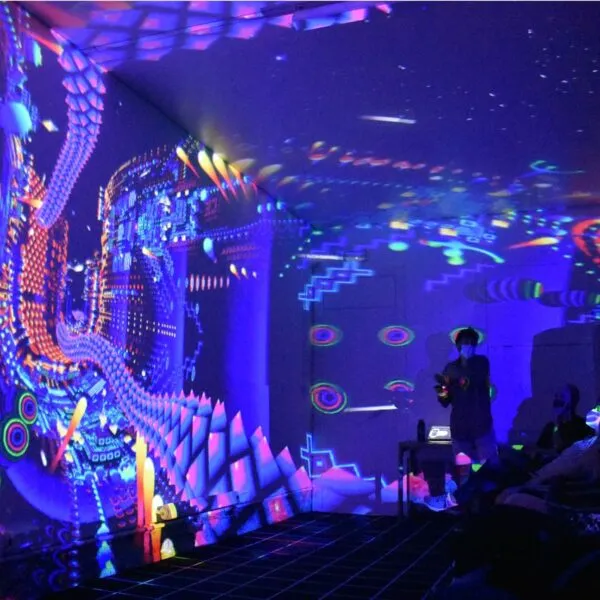
Dues usuàries del servei Audivers 360º en una sala de realitat immersiva.

A pioneering project in speech therapy with immersive reality, aimed at children and adults with hearing loss

Audivers 360º seeks to apply new technologies to transform conventional speech therapy sessions into experiences that allow individuals to immerse themselves in the real sounds of an environment, making the session more natural, enriching and efficient.


In collaboration with Broomx, the technological company that owns the tool, they have created immersive scenarios adapted to the needs of people with hearing impairment. With these immersive scenarios, all the objectives set in a conventional speech therapy session are addressed, comprehensively reinforcing aspects of hearing, language and communication. They address aspects such as sound detection and discrimination, recognition, verbal expression and comprehension, as well as other aspects of language pragmatics.


Simultaneously, while these activities are carried out, they are working on other aspects such as executive functions, auditory memory, motivation towards speech therapy and emotional well-being, among others. This innovative methodology has a direct and significant impact on the social inclusion process of adults and children with hearing loss, addressing and incorporating all auditory, communicative and emotional needs to successfully carry out and optimize speech therapy sessions.

e-Rueca, a virtual support for citizens at risk of exclusion

Publications Bank of innovations

e-Rueca, a virtual support for citizens at risk of exclusion

La Rueca Asociación

User using the eRueca application with the mobile phone

A virtual social center that provides information, guidance, and support to individuals facing social exclusion through a multi-channel online connection.

e-Rueca is available 24 hours a day, 365 days a year, and is a completely free service. The application is designed as a physical care center, a building with multiple floors and service rooms where users can find and interact with teams of professionals ready to help them, provide support, and offer information. The more than 10 technicians involved in this project provide user support in various intervention fields. Of the eight rooms that e-Rueca makes available to the user, five are dedicated to direct social and psychological care: the Psychology Room, the Work Room, the Legal and Immigration Room, the Social Care Room, and the Youth Room; in these rooms, they offer everything from legal advice for foreigners to mediation. They also provide answers to frequently asked questions related to each intervention area and a section of resources in text and video format. With these five rooms, the different needs for accompaniment and support of people in situations of social exclusion are covered, always taking into account their specific circumstances.

The remaining three rooms are: the Reception, which provides information about the project and its goals; the Exhibition Room, where tools and resources (hobbies, games, tests, infographics, etc.) are collected with the aim of raising awareness about situations and groups in social vulnerability; and the auditorium, a meeting space for third-sector professionals that includes updates related to online training, webinars, or events that the organization makes available to professionals.

Communication between users and professionals is possible through various channels. The most direct is instant chat, but it is also possible to make inquiries via SMS, WhatsApp, email, or video calls. If the user requests it, the possibility of face-to-face assistance with a hybrid option is also considered. The team of professionals responds within a maximum of 48 hours. Thus, in a simple way and through mobile devices, tablets, and computers, vulnerable individuals can contact and receive the attention they need quickly and efficiently.

Digitalizing Social Services: Apps Supporting Users and Professionals

Campus InnoBreaks

Digitalizing Social Services: Apps Supporting Users and Professionals

Innobreak - Digitalitzar els serveis socials

Reconnect (France) and Gàvius (Catalonia). Held on 6th February, 2024.

Digitization has transformed the world and relationships between people, affecting all aspects of our lives. The numerous tools offered by new technologies have become instruments that significantly facilitate our tasks and have become almost indispensable in daily life.

Gradually, this transformative trend is also reaching social services. In this field, where efficiency and speed in communications between professionals and the people supported are a key factor, digital media provide users with very useful resources and offer very effective monitoring tools for social services.

In this Innobreak, we will explore two initiatives and applications that put technology at the service of professionals and beneficiaries of social services:

  • Reconnect (France), through its Solution Pro tool, allows social services professionals to centrally monitor the social integration processes of the people supported, consulting their history, recording meeting reports, scheduling reminders, etc.
  • Gavius (Catalonia), a project promoted by the Catalan municipalities of Gavà and Mataró, together with other partners. Gavius consists in the implementation of an intelligent virtual assistant that helps citizens with assistance procedures. It recognizes users based on biometric factors and automates processes and aid collection.

Speakers:

  • Valentine de Dreuille, Reconnect (France)
  • Mònica Sagredo, Gàvius (Catalonia)

The iSocial Foundation presents its Guide for Digital Transformation in Entities at the SocialDigital Conference of FICE.

Publications News

The iSocial Foundation presents its Guide for Digital Transformation in Entities at the SocialDigital Conference of FICE.

, ,
Presentacio guia FICE

FICE, a network of social organizations that focuses on advocating for children’s rights, commissioned iSocial to create a guide to promote technological innovation in the third social sector

On November 24th, the SocialDigital conference – Transforming Lives took place at the Cibernàrium auditorium, bringing together experts and entities from the third sector to reflect on how new technologies can contribute to the development of the social sector.

The event was organized by FICE Spain, a network of social organizations specializing in the defense of children’s rights, with the participation of two iSocial member entities: the private foundation Resilis and the Basque cooperative Agintzari.

The highlight of the event was the presentation of the “Guide for Digital Transformation. A Vision from the Social Sector of Childhood,” commissioned by FICE to the iSocial Foundation as part of the TIC Impulsa 3 digital transformation project, a state initiative coordinated by FICE Spain and funded by the Ministry of Social Rights and Agenda 2030 through NextGeneration funds.

Among other content, the guide analyzes what digital transformation is and its implications for the third social sector. It reflects on the specificity of digital transformation in the field of childhood, discusses some challenges and opportunities, and proposes 20 examples of best practices that can help define paths to follow. The guide also includes a questionnaire that allows organizations to self-assess their level of digital transformation, providing recommendations based on the results obtained.

For those interested in the guide, it can be consulted in the research section of our website.

During the FICE-driven event, several inspiring practices of digital transformation with a social perspective were also presented. In this context, there was a presentation of Flapp!, our digital tool for accompanying adolescents and young people with emancipation needs, co-designed participatively with more than 120 young people. Flapp! is the result of a project led by iSocial and funded by the Government of Catalonia and the La Caixa Foundation, with the participation of the Idea Foundation, Pere Claver Group, Resilis, the University of Barcelona and Punt de Referència as partners, and Alba Jussà and the Open University of Catalonia as collaborators.

Actualitat

Fundació IDEA becomes iSocial’s eleventh entity member

Fundació IDEA becomes iSocial’s eleventh entity member

It is an entity from Sabadell founded in 1985, specialized in the field of education in leisure, unruled youth training and protection of minors.
There is growing interest in our FLAPP! project
There is growing interest in our FLAPP! project

We have presented it to institutions of Andalusia, the Basque Country, Morocco and Mexico, and to UNICEF-Europe. Variants are also of interest for other areas of social intervention.
The “Innovation Coffees in social services”, a new bimonthly activity of iSocial

The “Innovation Coffees in social services”, a new bimonthly activity of iSocial

The 1st Coffee, on June 14, will be dedicated to learning about applications of immersive technology in social services.
iSocial Foundation awards the Prize for Social Integration through ICT to Pere Tarrés Foundation

iSocial Foundation awards the Prize for Social Integration through ICT to Pere Tarrés Foundation

In the framework of the Day of information and communication technologies (ICT) of Catalonia, organized by GrausTIC.
For three years we will help train the managers of the third social sector in Andalusia

For three years we will help train the managers of the third social sector in Andalusia

The iSocial Foundation will be part of an interdisciplinary team with Federación Enlace EDE Fundazioa, Escuela Andaluza de Economía Social, Leit Motiv and Economia del bien común.
We are starting a new project to rethink the residential model of Catalonia after the Covid-19

We are starting a new project to rethink the residential model of Catalonia after the Covid-19

The iSocial Foundation will carry out the international benchmarking part. The project is led by UVic and has been funded by AGAUR.

E-Fabrik, innovative and solidarity solutions for people with disabilities

Publications Bank of innovations

E-Fabrik, innovative and solidarity solutions for people with disabilities

Hàbitat3 

Projecte e-Fabrik - Joves col·laboren amb persones amb discapacitat per crear ajuts funcionals

An innovative initiative that brings together young people and individuals with disabilities in a creative community with the aim of jointly conceiving and manufacturing tangible solutions to address the challenges faced by people with disabilities in their daily lives.

Through the E-Fabrik program, which is free for all participants, young people and individuals with disabilities learn to use digital fabrication tools, such as 3D printers and laser cutters, and become familiar with the spaces where they can find them. The goal is for them to acquire new skills in the use of emerging digital technologies. Using the FabLab concept, pairs or teams are formed consisting of young people and individuals with disabilities who work together to find solutions to everyday problems and create practical solutions to improve the quality of life for people with disabilities. Participants receive a budget of approximately €150 to develop and produce their specific solution.

The project unfolds through courses, educational programs of 20 half-days, and a 5-month vocational training course. In all of them, active solidarity among project participants is encouraged, allowing them to reclaim technology and use it for specific and meaningful purposes.

On the other hand, the program actively works to connect spaces and platforms of technological and digital creativity with structures dedicated to young people and individuals with disabilities. Thus, E-Fabrik not only offers the opportunity to create concrete solutions but also seeks to create bonds and partnerships with local structures.

The iSocial Foundation awards the GrausTIC Prize for Social Integration through Digitalization to the Audivers 360º project, promoted by the ACAPPS association

Publications News

The iSocial Foundation awards the GrausTIC Prize for Social Integration through Digitalization to the Audivers 360º project, promoted by the ACAPPS association

Premis GrausTIC

The iSocial Foundation has participated in the Information and Communication Technologies (ICT) Day, where the immersive speech therapy project Audivers 360º has received an award.

On November 17th, the iSocial Foundation participated as a sponsor in the GrausTIC Awards 2023, in the category of the GrausTIC Award for Social Integration through Digitalization. This category aims to highlight and celebrate initiatives that have significantly contributed to social integration through new technologies.

This year, the award for Social Integration through Digitalization was granted to the Audivers 360º project, driven by the ACAPPS association, a pioneering initiative in immersive speech therapy designed for children and adults with hearing loss.

The awards presented during the event recognize excellence and innovation in the use and promotion of ICT to improve efficiency and social responsibility in the community. The objective is to showcase technological innovation in Catalonia. The ceremony took place within the framework of the Information and Communication Technologies (TIC) Day.

In the GrausTIC Award for Social Integration through Digitalization, sponsored by the iSocial Foundation, we aim to acknowledge companies, organizations, and institutions that, over the past year, have exceptionally contributed to social inclusion through technology. This includes promoting universal accessibility in their products, services, projects, or activities and creating innovative digital tools for the integration of individuals and vulnerable groups.

Actualitat

Fundació IDEA becomes iSocial’s eleventh entity member

Fundació IDEA becomes iSocial’s eleventh entity member

It is an entity from Sabadell founded in 1985, specialized in the field of education in leisure, unruled youth training and protection of minors.
There is growing interest in our FLAPP! project

There is growing interest in our FLAPP! project

We have presented it to institutions of Andalusia, the Basque Country, Morocco and Mexico, and to UNICEF-Europe. Variants are also of interest for other areas of social intervention.
The “Innovation Coffees in social services”, a new bimonthly activity of iSocial

The “Innovation Coffees in social services”, a new bimonthly activity of iSocial

The 1st Coffee, on June 14, will be dedicated to learning about applications of immersive technology in social services.
iSocial Foundation awards the Prize for Social Integration through ICT to Pere Tarrés Foundation

iSocial Foundation awards the Prize for Social Integration through ICT to Pere Tarrés Foundation

In the framework of the Day of information and communication technologies (ICT) of Catalonia, organized by GrausTIC.
For three years we will help train the managers of the third social sector in Andalusia

For three years we will help train the managers of the third social sector in Andalusia

The iSocial Foundation will be part of an interdisciplinary team with Federación Enlace EDE Fundazioa, Escuela Andaluza de Economía Social, Leit Motiv and Economia del bien común.
We are starting a new project to rethink the residential model of Catalonia after the Covid-19

We are starting a new project to rethink the residential model of Catalonia after the Covid-19

The iSocial Foundation will carry out the international benchmarking part. The project is led by UVic and has been funded by AGAUR.

Llar Casa Bloc, Social Housing and Support for Empowering Individuals in Vulnerable Situations

Publications Bank of innovations

Llar Casa Bloc, Social Housing and Support for Empowering Individuals in Vulnerable Situations

Hàbitat3 

Imatge d'una resident dels habitatges socials de Llar Casa Bloc a l'entrada de l'edifici.

Project for the Promotion and subsequent management of 17 inclusive social housing units (social rent with support for individuals), jointly managed with Third Sector social organizations.

Access to housing is a fundamental element in ensuring the dignity of individuals and enabling their development. Nevertheless, many members of the community are living in insecure or inadequate housing conditions, or find themselves homeless or facing eviction, making them highly vulnerable. These circumstances not only directly impact their quality of life but also hinder their ability to secure employment, education, and social integration.

Llar Casa Bloc aims to address these challenges and provide a robust response for individuals in vulnerable situations. In the first phase, which began in 2020, the project, led by Hàbitat 3, initiated the rehabilitation of the renowned social housing complex Casa Bloc, designed by the pioneering architects of GATPAC in the 30s. In the second phase, ongoing since 2021, the 17 social housing units have been allocated to individuals in situations of high vulnerability, who are supported by specialized social support teams from various organizations, ensuring a proper process of social inclusion.

Currently, around forty individuals with diverse circumstances and needs reside in Llar Casa Bloc, including people evicted and referred by the Emergency Services Table of the Barcelona City Council, women who have experienced situations of gender-based violence, individuals with mental health issues or intellectual disabilities, and those with physical disabilities. All of them pay rent according to their income level and are supported by the respective organizations.

Furthermore, the building features technological measures to ensure a reduction in the digital divide and energy empowerment, such as WiFi installation and digitalized energy monitoring systems to supervise the comfort level of the 17 social housing units.

Training for Community Activators in the DISS Alt Pirineu-Aran Project

Publications News

Training for Community Activators in the DISS Alt Pirineu-Aran Project

,
Imatge de les Jornades de formació d'activadores comunitàries per al projecte de Detecció i Intervenció de Situacions de Soledat no desitjada a l'Alt Pirineu-Aran

The DISS project aims to combat unwanted loneliness in the six regions of Alt Pirineu-Aran. The training took place between October 2 and 5 in Sort

The pilot project for the Detection and Social Intervention of Unwanted Loneliness (DISS) in the elderly population of Alt Pirineu and Vall d’Aran takes its first steps with training sessions for community activators, held between October 2 and 5 in Sort.

The region of Alt Pirineu-Aran is home to some of the most aging areas in Catalonia: Alt Urgell, Cerdanya, Vall d’Aran, Pallars Sobirà, Pallars Jussà, and Alta Ribagorça. In this context, the issue of unwanted loneliness in the elderly is a prevalent concern for the social services in the region. However, addressing this problem is not easy, as social services professionals often find themselves lacking the appropriate resources and methodology to tackle the situation.

The training that took place from October 2 to 5 aims to address this problem by introducing Auzosare (formerly known as Tecnoadineko), an intelligent technology-based tool that enables the detection, community activation, and intervention in cases of unwanted loneliness. The system was developed by the Basque social cooperative Agintzari, a member of iSocial, and the technology company Gislan, with the support of BBK and the European Union. It has been successfully applied for eight years in various municipalities in the Basque Country. Now, the iSocial Foundation is coordinating its implementation in Catalonia with this pilot project in Alt Pirineu-Aran.

The training was conducted by Olaiz Gorrino, from the Basque social cooperative Agintzari. Three community activators hired for the project through three local entities, namely the Integra Pirineus Foundation, the Welfare and Development Association (ABD), and the Alba Jussà Cooperative, participated in the sessions. Some of the sessions also had the involvement of the coordinators of the social services of the regions involved and their technical teams.

The sessions were held at the facilities of the Pallars Sobirà County Council, providing the framework for the project just before the commencement of the first phase of the pilot, which will be rolled out in one municipality in each of the six regions in the coming weeks.

Actualitat

Fundació IDEA becomes iSocial’s eleventh entity member

Fundació IDEA becomes iSocial’s eleventh entity member

It is an entity from Sabadell founded in 1985, specialized in the field of education in leisure, unruled youth training and protection of minors.
There is growing interest in our FLAPP! project

There is growing interest in our FLAPP! project

We have presented it to institutions of Andalusia, the Basque Country, Morocco and Mexico, and to UNICEF-Europe. Variants are also of interest for other areas of social intervention.
The “Innovation Coffees in social services”, a new bimonthly activity of iSocial

The “Innovation Coffees in social services”, a new bimonthly activity of iSocial

The 1st Coffee, on June 14, will be dedicated to learning about applications of immersive technology in social services.
iSocial Foundation awards the Prize for Social Integration through ICT to Pere Tarrés Foundation

iSocial Foundation awards the Prize for Social Integration through ICT to Pere Tarrés Foundation

In the framework of the Day of information and communication technologies (ICT) of Catalonia, organized by GrausTIC.
For three years we will help train the managers of the third social sector in Andalusia

For three years we will help train the managers of the third social sector in Andalusia

The iSocial Foundation will be part of an interdisciplinary team with Federación Enlace EDE Fundazioa, Escuela Andaluza de Economía Social, Leit Motiv and Economia del bien común.
We are starting a new project to rethink the residential model of Catalonia after the Covid-19

We are starting a new project to rethink the residential model of Catalonia after the Covid-19

The iSocial Foundation will carry out the international benchmarking part. The project is led by UVic and has been funded by AGAUR.

iSocial Foundation travels to Austria to coordinate a StepForME program meeting

Publications News

iSocial Foundation travels to Austria to coordinate a StepForME program meeting

,

The StepForME project, led by iSocial, is part of the Erasmus+ program and involves the participation of 10 organizations from different countries.

During the week of October 2 to 6, the iSocial Foundation traveled to Austria to coordinate a meeting with ten European entities participating in the StepForME project. This project, within the framework of the Erasmus+ program, is an international exchange of best practices in the field of youth mental health. It was initiated in 2021 and is led by iSocial. The project also includes Chance B (Austria), Aunua Global (Ireland), Tenenet (Slovakia), and the Center for Studies and Research for an Inclusive Society (CERSIN) from the Autonomous University of Barcelona as partners, along with Catalan entities Support Girona, Ampans, Atra Group, El Maresme Foundation, Joia Foundation, and Resilis Foundation as collaborating entities in the local area.

After the first meeting in Dublin last year, the participating entities in the project met again this year in Graz and Gleisdorf, Austria, hosted by the local organization Chance B. The meeting aimed to define the final steps of StepForME and its conclusion, as well as to refine the resulting documents, which will constitute a useful open-access resource for anyone working in the field of youth mental health or those interested in it.

During the various meetings held these days, topics such as the appropriate use of new technologies in the treatment of youth mental health issues, the employment inclusion of this group, and a community-based approach to this reality were discussed. The responsible entities for developing each of the planned training modules presented them to the other participants, and the contents were jointly discussed for refinement.

We also had the opportunity to visit the facilities of Chance B and their Organic Bio-Social Farm, an inclusive project where people with disabilities and mental health issues work, and which serves as an example of best practices.

In the meeting we also settled the final text for the StepForME Handbook of Technology-based Practices for the Intervention with young people with emotional well-being issues, which is already available on the project’s website. The training modules will be available in the website as well shortly.

Actualitat

Fundació IDEA becomes iSocial’s eleventh entity member

Fundació IDEA becomes iSocial’s eleventh entity member

It is an entity from Sabadell founded in 1985, specialized in the field of education in leisure, unruled youth training and protection of minors.
There is growing interest in our FLAPP! project

There is growing interest in our FLAPP! project

We have presented it to institutions of Andalusia, the Basque Country, Morocco and Mexico, and to UNICEF-Europe. Variants are also of interest for other areas of social intervention.
The “Innovation Coffees in social services”, a new bimonthly activity of iSocial

The “Innovation Coffees in social services”, a new bimonthly activity of iSocial

The 1st Coffee, on June 14, will be dedicated to learning about applications of immersive technology in social services.
iSocial Foundation awards the Prize for Social Integration through ICT to Pere Tarrés Foundation

iSocial Foundation awards the Prize for Social Integration through ICT to Pere Tarrés Foundation

In the framework of the Day of information and communication technologies (ICT) of Catalonia, organized by GrausTIC.
For three years we will help train the managers of the third social sector in Andalusia

For three years we will help train the managers of the third social sector in Andalusia

The iSocial Foundation will be part of an interdisciplinary team with Federación Enlace EDE Fundazioa, Escuela Andaluza de Economía Social, Leit Motiv and Economia del bien común.
We are starting a new project to rethink the residential model of Catalonia after the Covid-19

We are starting a new project to rethink the residential model of Catalonia after the Covid-19

The iSocial Foundation will carry out the international benchmarking part. The project is led by UVic and has been funded by AGAUR.

New Models of Social Housing Against Exclusion

Campus InnoBreaks

New Models of Social Housing Against Exclusion

Innobreak - Webinar d'innovació

Mixed Living (Netherlands) and Llar Casa Bloc (Catalonia). Held on Tuesday, 31st. October 2023.

Access to housing is a fundamental right as stated in Article 25 of the Universal Declaration of Human Rights, but unfortunately, it remains far from effective for everyone. It is estimated that in Catalonia alone, 25,000 people are homeless, not counting those who can access housing only at great personal sacrifice and in extremely fragile situations.

In recent years, numerous initiatives have emerged to facilitate access to decent housing for the most vulnerable people, offering new alternatives to traditional social housing schemes. Some of these initiatives have been driven by the Third Sector, yielding remarkable results. In this InnoBreak, we present two initiatives moving in this direction, originating from the Netherlands and Catalonia:

  • Mixed Living: A project initiated by Tussenvorziening, managing mixed social housing apartments where homeless individuals and economically vulnerable people coexist. The project’s key idea is to expedite housing access for low-income individuals while simultaneously promoting destigmatization of homelessness and breaking the cycle of social isolation they often experience. To this end, the housing units managed by Mixed Living feature common areas for residents to encourage positive cohabitation and integration of both groups.
  • Llar Casa Bloc: Led by the Hàbitat3 Foundation, this network project involves government bodies and Third Sector entities. It focuses on the rehabilitation of the iconic social housing complex, Casa Bloc, built in Barcelona during the 1930s, during the Second Republic, to make them habitable. Currently, nearly forty individuals at risk of social exclusion, including those with mental health issues, addictions, homelessness, or those facing eviction, reside there. The residents receive support from social organizations and the Barcelona City Council, and the building is equipped with measures to address digital divide and energy poverty.

Speakers:

  • David de Goede, Mixed Living (Netherlands)
  • Lourdes Borrell, Llar Casa Bloc (Catalonia)

With the support of:

Generalitat de Catalunya Departament de Drets Socials