Innovative proposals to combat unwanted loneliness in the elderly

Publications Articles

Innovative proposals to combat unwanted loneliness in the elderly

,
En aquest article, abordem propostes innovadores per combatre la soledat no desitjada

Unwanted loneliness is a problem that has a particularly relevant impact on the elderly population. How should it be addressed? What innovative tools can be promoted from social services to reverse this feeling?

What is unwanted loneliness?

Unwanted loneliness is a subjective and complex phenomenon that occurs when people feel that their relationships are not satisfactory. There is a mismatch between real and desired relationships, either in terms of quantity or quality. Although it is a phenomenon that can occur at any age, it is more commonly present among the elderly. According to the spanish State Observatory of Unwanted Loneliness, this feeling has individual costs (mental and physical health, satisfaction of vital needs, relationship with the environment…) and social costs (impact on health systems and drug consumption).

This article discusses the emerging opportunities that arise from technology and novel approaches in addressing involuntary loneliness, providing innovative tools for professionals in social services and citizen support.

Factors influencing unwanted loneliness in older adults

According to the guide Detecting loneliness during aging, commissioned by the Loneliness Observatory of the organization Friends of the Elderly, it is necessary to pay attention to different areas to understand the risk factors:

  • Sociodemographic factors: gender, age, socioeconomic status, place of residence. Being female, having low income levels, and living in an inaccessible environment are factors that increase the risk of experiencing loneliness.
  • Health and personal autonomy: self-perceived health, mobility difficulties, deterioration of sensory capacities. Loss of autonomy and the accumulation of diseases are risk indicators.
  • Psychological and personality factors: depression, low mental health and self-esteem, unhealthy behaviors…
  • Interaction and participation: household composition, social network, quantity and quality of social relationships, level of social participation, social support…

The report Preventing and alleviating loneliness in older adults (Caritas) points out that there are situations of greater vulnerability, such as the death of a partner or other family members, retirement, and moving. On the other hand, the social conception of care for older people, which often focuses on physical needs but overlooks the importance of comprehensive care and psychological aspects, can worsen situations of unwanted loneliness.

How to address situations of unwanted loneliness?

The Barcelona City Council, in the Guide for the prevention, detection, and support of elderly people in situations of loneliness, recommends several points to follow:

  • Firstly, it is important to pay attention to indirect verbalizations, as they can be a source of information about the feeling of loneliness.
  • It is also relevant to know the family or cohabitation situation and build a relational map of the person. This will allow weaving alliances to reduce this feeling.
  • Similarly, it is necessary to know what their interests and preferences are, and thus collectively seek personalized alternatives that adapt to each individual.
  • On the other hand, the report highlights the importance of promoting a vision of relationships that contributes to reducing the guilt that family members may feel in the face of loneliness. On many occasions, when the person expresses this feeling, people in their environment feel responsible. It is important to understand that someone can feel lonely even when surrounded by people, as it is a subjective feeling and families cannot always alleviate it.

The Friends of the Elderly association emphasizes that it is key not to promote self-perception of fragility, as it promotes isolation. It is also necessary to avoid using infantilizing and judgmental language. Additionally, it emphasizes the relationship between the social perception of loneliness and the personal experience of the feeling. To break negative stereotypes, it is necessary to create an empowering narrative that reverses discrimination.

The organization suggests five lines of action:

  1. Recognize: Professionals’ perspective is crucial to identify situations of loneliness.
  2. Understand: It is important to understand the phenomenon and its causes to have common starting points.
  3. Consider: The subjective nature of unwanted loneliness, the diversity in each case, and the existing stigma in our sociocultural context should be taken into account. Risk factors should also be known.
  4. Discover: Communication is a key tool to detect the feeling of loneliness. The guide proposes paying attention to silences and expression rhythms, establishing active listening, and relying on other trusted agents in the person’s environment.
  5. Act: Any solution must be centered on the individual and foster empowerment.

Innovative proposals:

  • Digital meeting spaces. Organizing collective activities and events allows building new connections with people who share common interests, which can reverse the feeling of loneliness. Through social media and the internet, individuals can access online meetings, overcoming mobility, transportation, or access issues. It is important to work to overcome the digital gap that exists in a large part of the elderly population. An example is the program Proyectando vidas, uniendo almas, aimed at older adults living in rural towns in Castilla y León. The project aims to alleviate this feeling through telecommuting group activities. Similarly, the British initiative The Silver Line offers a free telephone contact for people over 55, available 24 hours a day. The staff handling the calls provide listening, advice, and referrals to other organizations.
  • Robots and voice assistants. Technological advances of the last decade have also been introduced in social services and citizen care. Some organizations have experimented with robots and voice assistants, which complement the work of professionals. An example is the Intelligent Robotic Assistant (ARI), designed by the Saltó Group, which accompanies older adults living in Barcelona.
  • Creating support networks from new technologies. Others initiatives like Vincles (iSocial Foundation) use technological systems to collect standardized territorial information to detect loneliness situations in an updated, immediate, and truthful manner. The project is inspired by Auzosare, an innovative program that combines technology, community activation, and socio-educational intervention to prevent and improve the quality of life of people in fragile situations of loneliness.
  • Applications to generate intergenerational exchanges. One way to include older adults in the community is to involve younger generations, who can be good allies in contributing to social inclusion. In Bilbao, the association Kuvu connects people of different generations to share housing and mutual company. Another example is the Vollpension Generationencafé. This German initiative operates through cafes staffed voluntarily by retirees, who share time and conversations with the people attending the venue. Unlike traditional intergenerational volunteerism, it’s not the young who volunteer and visit the elderly, but rather the elderly who actively foster their social integration. This way, it promotes feelings of fulfillment, satisfaction, and community service.
  • Preventive emotional management tools: To prevent the feeling of loneliness, some initiatives work to offer emotional management tools, helping individuals understand their feelings and avoid potential mental health problems. The Bakardadeak Eskola (School of Solitudes) contributes to demystifying myths and fears about loneliness to change society’s perception of this phenomenon.

References

[1] Detecting loneliness during aging, Observatorio de la Soledad. Available at: https://amigosdelosmayores.org/es/detectar-la-soledad-durante-envejecimiento-una-guia [29/01/24]

[2] Preventing and alleviating loneliness in older people, Cáritas. Available at: https://www.caritas.es/main-files/uploads/2021/02/DOC-TRAB-9-INTERIOR_3.pdf [29/01/24]

[3] Guide for the prevention, detection, and support of older adults in situations of loneliness, Barcelona City Council. Available at: https://bcnroc.ajuntament.barcelona.cat/jspui/bitstream/11703/130451/1/Soledad_GuiaPersonasMayores_ES.pdf [29/01/24]

[4] Unwanted loneliness, Observatorio Estatal de la Soledad No Deseada (SoledadES). Available at: https://www.soledades.es/la-soledad-no-deseada [29/01/24]

[5] Inspiration, Observatorio Estatal de la Soledad No Deseada (SoledadES). Available at: https://www.soledades.es/inspiracion [29/01/24]

[6] Resources, Observatorio Estatal de la Soledad No Deseada (SoledadES). Available at: https://www.soledades.es/recursos [29/01/24]


The iSocial team celebrates its first work meeting

Publications News

The iSocial team celebrates its first work meeting

,

The meeting took place at the Cal Muns building, managed by the Pere Claver Group, a partner entity of the foundation

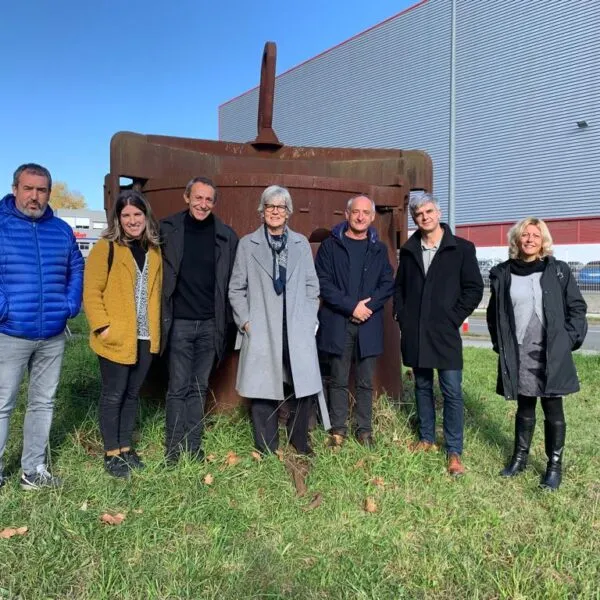
The technical team of the iSocial Foundation gathered on February 13th at the entity’s first Team Day to better understand the new projects and new members of the Foundation, following the growth experienced in recent months.

Recently, new positions have been incorporated, such as the coordinator of European projects and the head of training and research, as well as new project management responsibilities. Currently, there are 16 people on the iSocial technical team.

In this meeting, the director of the Foundation, Toni Codina, and the president of the board, Montse Cervera, reviewed the origins of the organization and its values, the evolution since 2018, and outlined the roadmap to follow. The main initiatives carried out in previous years were also presented, such as the multilingual personal assistant for refugees, Welcome.

On the other hand, the different members of the team explained in more detail the tasks they carry out within the foundation and the projects in which they are participating. Among other things, the digitalization of Social Services with the DigitaliSSB project was discussed, as well as support for people in situations of vulnerability with Solidigital, and how to detect and intervene in cases of unwanted loneliness through the Vincles project. We also had the opportunity to experiment with the Flapp! and Nidus applications and see firsthand how they work.

It was a very inspiring day, which allowed the iSocial technical team to gain a deeper understanding of the work of our colleagues. In addition, we were able to share proposals and suggestions, as well as spend some time together.

Actualitat

138 social workers from 16 ABSS have already completed the course on Self-Directed Support

138 social workers from 16 ABSS have already completed the course on Self-Directed Support

They belong to the Vegueries of the Alt Pirineu-Aran, Terres de l’Ebre and Penedès.
72 professionals of the Penedès follow the course From ACP to Self-directed Support

72 professionals of the Penedès follow the course From ACP to Self-directed Support

72 professionals of the Penedès follow the course From ACP to Self-directed Support.
Dos projectes d’iSocial, finalistes dels Premis Europeus 2021 en Serveis Socials

Two iSocial projects, finalists for the 2021 European Social Services Awards

FLAPP! in the category of digital tolls, and INSESS-COVID-19 in the category of research projects.
The Sant Pere Claver Social Services Foundation becomes member of iSocial

The Sant Pere Claver Social Services Foundation becomes member of iSocial

It is the twelfth member of iSocial. He belongs to the Sant Pere Claver Group and works in the fields of mental health, disability, young people and the elderly.
iSocial members visit Broomx to discover their immersive technology

iSocial members visit Broomx to discover their immersive technology

The entities involved in these sessions will now jointly explore the possibility of testing specific applications of this immersive technology in their services, centres and resources.

Access4you, accessibility certification for people with disabilities

Publications Bank of innovations

Access4you, accessibility certification for people with disabilities

Access4You

Access4You

Innovative initiative based on a certification mark that provides reliable accessibility information of the built environment for people with disabilities

Access4you has a database and a mobile application, available for free, which indicate the degree of adaptation of spaces to the needs of people with disabilities and accessibility needs. It is based on a self-developed system of criteria based on a set of 1000 variables according to the usability aspects of 9 stakeholder groups: people with cognitive and visual disabilities; individuals with blindness, deafness, and hearing difficulties; people in wheelchairs, with baby strollers, and with assistance dogs; and the elderly.

Access4you classifies spaces using a qualification system divided into four categories according to the level of inclusivity of the location: Certified location, Bronze, Silver, and Gold. Moreover, the database offers filterable and detailed data including measurements, as well as images of each location to help people with disabilities to plan their stay at an unknown location.

The certification, apart from benefiting these groups, also supports owners and businesses to obtain information about the accessibility of their buildings. In this way, organizations can commission an independent study to accredit the adaptation of their establishments, as well as acquire detailed proposal on how to improve it. Certified locations receive a designated datasheet in the Access4you database, which is available to everyone for free on the website and the application.

Thus, the initiative proposed by Access4you aims to promote the social integration of people with disabilities, improve the accessibility of the built environment, and serve as a center for the dissemination of knowledge and advice on the obstacles that these people encounter in their daily lives.

Access4you International is present in the CEE, SEE and India with the help of an expanding accredited partner network including Colliers, Bureau Veritas, TÜV, and CBRE. Both companies and individuals can join Access4you’s accreditation programme to acquire the skills and knowledge to join its mission and involve more locations to provide accessibility information.

The Solidigital project kicks off with a dual opening session of partner organizations in Barcelona

Publications News

The Solidigital project kicks off with a dual opening session of partner organizations in Barcelona

Kick-off of the Solidigital project

The iSocial Foundation hosts partner entities of Solidigital, a cross-border project to be developed in Catalonia, France, and Andorra.

On February 7th and 8th, the inaugural sessions of Solidigital took place at the headquarters of the iSocial Foundation in Barcelona. This cross-border project aims to facilitate access to social and solidarity resources through digitalization for people in vulnerable situations. Led by iSocial and enrolled in the framework of the European Interreg POCTEFA program, the project involves collaboration among entities from Catalonia, France, and Andorra: Pere Claver Grup, Associació Alba, la Fundació Resilis from Catalonia, Solinum and Reconnect from France, and Andorra Research and Innovation (ARI).

Solidigital revolves around three technological tools: Soliguia, a geolocated resource finder already existing in France and now to be replicated in Catalonia; the virtual safe Nidus, developed by iSocial and Pere Claver Group; and Reconnect, another virtual safe for homeless people operating in France. Over the 3-year duration of the project, efforts will focus on the development and interconnection of the three tools, integrating Soliguia into Nidus and Reconnect, and making the latter two applications interoperable as well.

In Catalonia, the entities involved in the project will work with Solinum to jointly create Soliguia. The process will involve intensive mapping to geolocate all social resources in each area (food or clothing distribution points, vaccination, psychological care, accommodation for vulnerable people, etc.) and collect as detailed information as possible. During the initial stage of the project, more than 5,000 resources are expected to be mapped, but the ultimate goal is to include the totality or near totality of available resources in the territories where it will be deployed.

Moreover, thanks to the interconnection of the three apps, the resulting resource map can be accessed from Nidus and Reconnect. All three tools will form a comprehensive digital ecosystem, enabling easier and more efficient access to social services for users.

The project also envisages training nearly 8,000 professionals in the social sector in the use of the three tools to achieve better performance and ensure real impact on the people supported by these professionals.

El projecte també preveu formar prop de 8.000 professionals del sector social en l’ús dels tres útils, per tal de poder-ne aconseguir un millor rendiment i assegurar-ne un impacte real en les persones acompanyades per aquests professionals.

This inaugural session marks the start of a fruitful collaboration that will allow us to work towards favoring and providing tools for the empowerment of people in vulnerable situations.

Actualitat

138 social workers from 16 ABSS have already completed the course on Self-Directed Support

138 social workers from 16 ABSS have already completed the course on Self-Directed Support

They belong to the Vegueries of the Alt Pirineu-Aran, Terres de l’Ebre and Penedès.
72 professionals of the Penedès follow the course From ACP to Self-directed Support

72 professionals of the Penedès follow the course From ACP to Self-directed Support

72 professionals of the Penedès follow the course From ACP to Self-directed Support.
Dos projectes d’iSocial, finalistes dels Premis Europeus 2021 en Serveis Socials

Two iSocial projects, finalists for the 2021 European Social Services Awards

FLAPP! in the category of digital tolls, and INSESS-COVID-19 in the category of research projects.
The Sant Pere Claver Social Services Foundation becomes member of iSocial

The Sant Pere Claver Social Services Foundation becomes member of iSocial

It is the twelfth member of iSocial. He belongs to the Sant Pere Claver Group and works in the fields of mental health, disability, young people and the elderly.
iSocial members visit Broomx to discover their immersive technology

iSocial members visit Broomx to discover their immersive technology

The entities involved in these sessions will now jointly explore the possibility of testing specific applications of this immersive technology in their services, centres and resources.

Help to care, support for people who care for others

Publications Bank of innovations

Help to care, support for people who care for others

NHS, The Kent and Medway Sustainability and Transformation Partnership and DLC 

help to care

Innovative mobile application created to support people who care for others

Help to Care can be downloaded for free and is designed to help caregivers find appropriate information when identifying health problems. The application is intended as a portable quick guide that can be accessed without an internet connection. It follows the standards of the National Institute for Health and Care Excellence.

It includes guides, tips and videos on common illnesses such as diabetes, urinary tract infections and respiratory problems. It also offers a section that allows determining if a person is developing a serious health problem that requires medical assistance.

One of the purposes is to empower those who care for someone’s health, whether professionals or not, so they can make the best decisions in the care they provide. Additionally, it provides resources so that caregivers can detect and act on potential health problems, as their close contact with the individuals they care for allows them to perceive anomalous situations more quickly.

Guide to Digital Transformation: A Vision from the Children’s Social Sector

Knowledge Research projects

Guide to Digital Transformation: A Vision from the Children’s Social Sector

Preparation of a report for FICE Spain on the state of digital innovation in the field of social intervention and a collection of best practices (2023)

(2023)

The digital revolution has brought about a process of change that has had – and is having – a significant impact on our society. Historically, technical advances have always led to new ways of thinking, working, and relating to the world and others. However, the acceleration in technological transformation experienced in the 21st century has made it evident the need to adapt quickly and constantly to these new ways of doing things. In this sense, we are facing a paradigm shift that permeates all aspects of our lives, from interpersonal relationships to consumption patterns, and from leisure activities to the way we work.

This transformation we are experiencing highlights the obsolescence of some procedures that we still use but are highly inefficient, and it sparks debates about the enormous possibilities of technology, its proper implementation in our daily lives, and its ethical limits. On the other hand, it reminds us that technology is not always necessarily synonymous with innovation, although, when used correctly, it is an invaluable tool for generating knowledge and optimizing processes.

What is clear, in any case, is that the digital transformation of organizations will be a key factor for their development in the coming years. And this is also true in the field of the third sector and social intervention, where technology can ensure better care, monitoring, management, and communication with the people served.

In this context, FICE Spain, a network of social organizations working to guarantee the rights of children and for the care of at-risk children, has commissioned the iSocial Foundation to develop a guide on technological innovation in the field of social intervention. The resulting document, which focuses especially (though not exclusively) on social organizations dedicated to children and adolescents, is titled “Guide to Digital Transformation: A Vision from the Children’s Social Sector” and aims to offer useful tools and clear guidelines to promote innovation in the third sector. This guide is part of the TIC Impulsa 3 proposal, a digital transformation project in the social field promoted by FICE Spain and financed by the Ministry of Social Rights and Agenda 2030 and the European Union through Next Generation funds.

Promotes

logo fice spain

Audivers 360º, immersive reality speech therapy for individuals with hearing impairment

Publications Bank of innovations

Audivers 360º, immersive reality speech therapy for individuals with hearing impairment

ACAPPS, Broomx and UAB 

Dues usuàries del servei Audivers 360º en una sala de realitat immersiva.

A pioneering project in speech therapy with immersive reality, aimed at children and adults with hearing loss

Audivers 360º seeks to apply new technologies to transform conventional speech therapy sessions into experiences that allow individuals to immerse themselves in the real sounds of an environment, making the session more natural, enriching and efficient.


In collaboration with Broomx, the technological company that owns the tool, they have created immersive scenarios adapted to the needs of people with hearing impairment. With these immersive scenarios, all the objectives set in a conventional speech therapy session are addressed, comprehensively reinforcing aspects of hearing, language and communication. They address aspects such as sound detection and discrimination, recognition, verbal expression and comprehension, as well as other aspects of language pragmatics.


Simultaneously, while these activities are carried out, they are working on other aspects such as executive functions, auditory memory, motivation towards speech therapy and emotional well-being, among others. This innovative methodology has a direct and significant impact on the social inclusion process of adults and children with hearing loss, addressing and incorporating all auditory, communicative and emotional needs to successfully carry out and optimize speech therapy sessions.

e-Rueca, a virtual support for citizens at risk of exclusion

Publications Bank of innovations

e-Rueca, a virtual support for citizens at risk of exclusion

La Rueca Asociación

User using the eRueca application with the mobile phone

A virtual social center that provides information, guidance, and support to individuals facing social exclusion through a multi-channel online connection.

e-Rueca is available 24 hours a day, 365 days a year, and is a completely free service. The application is designed as a physical care center, a building with multiple floors and service rooms where users can find and interact with teams of professionals ready to help them, provide support, and offer information. The more than 10 technicians involved in this project provide user support in various intervention fields. Of the eight rooms that e-Rueca makes available to the user, five are dedicated to direct social and psychological care: the Psychology Room, the Work Room, the Legal and Immigration Room, the Social Care Room, and the Youth Room; in these rooms, they offer everything from legal advice for foreigners to mediation. They also provide answers to frequently asked questions related to each intervention area and a section of resources in text and video format. With these five rooms, the different needs for accompaniment and support of people in situations of social exclusion are covered, always taking into account their specific circumstances.

The remaining three rooms are: the Reception, which provides information about the project and its goals; the Exhibition Room, where tools and resources (hobbies, games, tests, infographics, etc.) are collected with the aim of raising awareness about situations and groups in social vulnerability; and the auditorium, a meeting space for third-sector professionals that includes updates related to online training, webinars, or events that the organization makes available to professionals.

Communication between users and professionals is possible through various channels. The most direct is instant chat, but it is also possible to make inquiries via SMS, WhatsApp, email, or video calls. If the user requests it, the possibility of face-to-face assistance with a hybrid option is also considered. The team of professionals responds within a maximum of 48 hours. Thus, in a simple way and through mobile devices, tablets, and computers, vulnerable individuals can contact and receive the attention they need quickly and efficiently.

Digitalizing Social Services: Apps Supporting Users and Professionals

Campus InnoBreaks

Digitalizing Social Services: Apps Supporting Users and Professionals

Innobreak - Digitalitzar els serveis socials

Reconnect (France) and Gàvius (Catalonia). Held on 6th February, 2024.

Digitization has transformed the world and relationships between people, affecting all aspects of our lives. The numerous tools offered by new technologies have become instruments that significantly facilitate our tasks and have become almost indispensable in daily life.

Gradually, this transformative trend is also reaching social services. In this field, where efficiency and speed in communications between professionals and the people supported are a key factor, digital media provide users with very useful resources and offer very effective monitoring tools for social services.

In this Innobreak, we will explore two initiatives and applications that put technology at the service of professionals and beneficiaries of social services:

  • Reconnect (France), through its Solution Pro tool, allows social services professionals to centrally monitor the social integration processes of the people supported, consulting their history, recording meeting reports, scheduling reminders, etc.
  • Gavius (Catalonia), a project promoted by the Catalan municipalities of Gavà and Mataró, together with other partners. Gavius consists in the implementation of an intelligent virtual assistant that helps citizens with assistance procedures. It recognizes users based on biometric factors and automates processes and aid collection.

Speakers:

  • Valentine de Dreuille, Reconnect (France)
  • Mònica Sagredo, Gàvius (Catalonia)

The iSocial Foundation presents its Guide for Digital Transformation in Entities at the SocialDigital Conference of FICE.

Publications News

The iSocial Foundation presents its Guide for Digital Transformation in Entities at the SocialDigital Conference of FICE.

, ,
Presentacio guia FICE

FICE, a network of social organizations that focuses on advocating for children’s rights, commissioned iSocial to create a guide to promote technological innovation in the third social sector

On November 24th, the SocialDigital conference – Transforming Lives took place at the Cibernàrium auditorium, bringing together experts and entities from the third sector to reflect on how new technologies can contribute to the development of the social sector.

The event was organized by FICE Spain, a network of social organizations specializing in the defense of children’s rights, with the participation of two iSocial member entities: the private foundation Resilis and the Basque cooperative Agintzari.

The highlight of the event was the presentation of the “Guide for Digital Transformation. A Vision from the Social Sector of Childhood,” commissioned by FICE to the iSocial Foundation as part of the TIC Impulsa 3 digital transformation project, a state initiative coordinated by FICE Spain and funded by the Ministry of Social Rights and Agenda 2030 through NextGeneration funds.

Among other content, the guide analyzes what digital transformation is and its implications for the third social sector. It reflects on the specificity of digital transformation in the field of childhood, discusses some challenges and opportunities, and proposes 20 examples of best practices that can help define paths to follow. The guide also includes a questionnaire that allows organizations to self-assess their level of digital transformation, providing recommendations based on the results obtained.

For those interested in the guide, it can be consulted in the research section of our website.

During the FICE-driven event, several inspiring practices of digital transformation with a social perspective were also presented. In this context, there was a presentation of Flapp!, our digital tool for accompanying adolescents and young people with emancipation needs, co-designed participatively with more than 120 young people. Flapp! is the result of a project led by iSocial and funded by the Government of Catalonia and the La Caixa Foundation, with the participation of the Idea Foundation, Pere Claver Group, Resilis, the University of Barcelona and Punt de Referència as partners, and Alba Jussà and the Open University of Catalonia as collaborators.

Actualitat

138 social workers from 16 ABSS have already completed the course on Self-Directed Support

138 social workers from 16 ABSS have already completed the course on Self-Directed Support

They belong to the Vegueries of the Alt Pirineu-Aran, Terres de l’Ebre and Penedès.
72 professionals of the Penedès follow the course From ACP to Self-directed Support

72 professionals of the Penedès follow the course From ACP to Self-directed Support

72 professionals of the Penedès follow the course From ACP to Self-directed Support.
Dos projectes d’iSocial, finalistes dels Premis Europeus 2021 en Serveis Socials

Two iSocial projects, finalists for the 2021 European Social Services Awards

FLAPP! in the category of digital tolls, and INSESS-COVID-19 in the category of research projects.
The Sant Pere Claver Social Services Foundation becomes member of iSocial

The Sant Pere Claver Social Services Foundation becomes member of iSocial

It is the twelfth member of iSocial. He belongs to the Sant Pere Claver Group and works in the fields of mental health, disability, young people and the elderly.
iSocial members visit Broomx to discover their immersive technology

iSocial members visit Broomx to discover their immersive technology

The entities involved in these sessions will now jointly explore the possibility of testing specific applications of this immersive technology in their services, centres and resources.