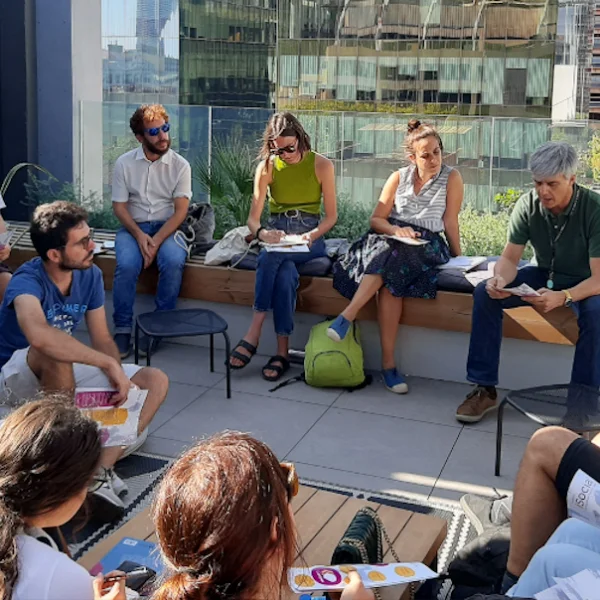
Reviu, a platform that promotes transparency in housing access

Publications Bank of innovations

Reviu, a platform that promotes transparency in housing access

IDRA

Reviu

Online platform for sharing and searching for apartment reviews

Reviu is a portal where tenants can rate the apartments they live in or have lived in, as well as their relationship with the real estate agency and the property owner. The main objective is to provide transparent and real information about the real estate market to prevent people looking for housing from doing so blindly and without references. This way, the information asymmetry that currently characterizes the housing market can be overcome.

The platform allows searching for reviews of specific apartments and buildings, writing anonymous opinions, and searching for all published information about each real estate agency. When publishing a review, tenants must provide data about the apartment, such as the condition of the housing, the initial and final price, the relationship with the property owner and the neighbors, the characteristics of the space, the temperature, etc.

To combat fraud, the website relies on municipal cadastral data and information from Google. Although it is an anonymous portal, the platform asks for some personal data from the authors of the comments in order to contact them if they want to verify the authenticity of the reviews. To avoid creating a platform where only “hate comments” are posted, Reviu approaches reviews from a constructive perspective. The portal also offers practical resources, advice, and explanatory videos about information related to renting housing.

Banc d’innovacions

I·ROC

I·ROC, a tool that evaluates the recovery process of mental health service users

I·ROC is a tool that measures the recovery process of people using mental health services
SmartSocks

SmartSocks, socks that detect distress in people with dementia

SmartSocks that enable the detection of risk situations in people with dementia
Manawanui

Manawanui, Self-Directed Support for people with disabilities

Manawanui is a project aimed at enhancing the autonomy and freedom of choice for people with disabilities
Morphic

Morphic, technology that improves computer accessibility for people with disabilities

Morphic is an application that allows computers to be adapted to the different needs of people with disabilities
V-TOOLS

V-TOOLS, Virtual Reality Applied to Social Innovation

V-TOOLS is a project that combines technology and social innovation through immersive experiences with the aim of improving the lives of people and communities
JOOAY

Jooay, an app that helps children with disabilities find leisure activities

Jooay is a free app that connects leisure activity offerings with families of children with disabilities

I·ROC, a tool that evaluates the recovery process of mental health service users

Publications Bank of innovations

I·ROC, a tool that evaluates the recovery process of mental health service users

Penumbra

I·ROC

A tool that measures the recovery process of people using mental health services

I·ROC is based on a self-assessment questionnaire that follows the HOPE model, an approach that analyzes four areas of personal well-being (home, opportunity, people, and empowerment). Each area includes three indicators that the user must score from 1 to 6. This provides a holistic view of personal well-being.

The tool is available in both paper and digital formats and provides a solid framework for initiating conversations between professionals and users. It also offers a variety of innovative and easy-to-use tools that promote self-management with tips and techniques.

Mental health professionals can obtain individual reports of their patients at any time through the online platform (I·ROC Digital), available for multiple devices. Similarly, entities can consult global data on the user base to evaluate the impact of their projects and programs. Patients also have access to their results and the various support materials offered by the platform.

Banc d’innovacions

I·ROC

I·ROC, a tool that evaluates the recovery process of mental health service users

I·ROC is a tool that measures the recovery process of people using mental health services
SmartSocks

SmartSocks, socks that detect distress in people with dementia

SmartSocks that enable the detection of risk situations in people with dementia
Manawanui

Manawanui, Self-Directed Support for people with disabilities

Manawanui is a project aimed at enhancing the autonomy and freedom of choice for people with disabilities
Morphic

Morphic, technology that improves computer accessibility for people with disabilities

Morphic is an application that allows computers to be adapted to the different needs of people with disabilities
V-TOOLS

V-TOOLS, Virtual Reality Applied to Social Innovation

V-TOOLS is a project that combines technology and social innovation through immersive experiences with the aim of improving the lives of people and communities
JOOAY

Jooay, an app that helps children with disabilities find leisure activities

Jooay is a free app that connects leisure activity offerings with families of children with disabilities

Innovative Services in Drug Addiction: Family Support and Risk Prevention

Campus InnoBreaks

Innovative Services in Drug Addiction: Family Support and Risk Prevention

Innobeak - Serveis innovadors en drogodependencia

BRUS (Denmark) and Energy Control (Catalonia). Held on 2nd July, 2024.

Drug use is a complex phenomenon, surrounded by debate, multifactorial problems, legal and ethical intricacies, and often stigmas. The reasons for its use can vary and stem from diverse social, cultural, psychological, and economic circumstances.

Clearly, not all forms of drug use carry the same level of risk, although it is also true that zero risk does not exist. For this reason, working on information, counselling, and support, while breaking the taboos that render the reality of drugs invisible, is a fundamental step in reducing the negative impact these substances have on individuals.

This approach, practiced by numerous professionals and organizations for years, proves to be a much more effective alternative than purely preventive or restrictive measures, which often tend to shift or overlook the core of the problem.

In this edition of Innobreak, we will present two innovative initiatives in their approach to addressing drug use and its effects on society:

  • BRUS (Denmark) is a program aimed at young people up to the age of 24 who live in families affected by alcohol and drug addictions. Driven by the Center for Digital Pædagogik (CfDP), this initiative seeks to break the taboo surrounding family addictions through face-to-face meetings and an anonymous chat service. Through these tools, BRUS offers a safe space where young people can express their experiences and focus on their own needs, promoting their emotional well-being and reducing the burden of responsibilities that they should not have to bear.
  • Energy Control (Catalonia) is an ABD program dedicated to reducing the risks associated with drug use, with a realistic approach based on providing users with objective information about their use and a substance analysis service. Additionally, they raise awareness among nightlife professionals and collect data on the unregulated market, providing early warnings about adulterated products to protect consumers’ health.

Speakers:

  • Anne Matte Hansen, BRUS (Denmark)
  • Mireia Ventura, Energy Control (Catalonia)

SmartSocks, socks that detect distress in people with dementia

Publications Bank of innovations

SmartSocks, socks that detect distress in people with dementia

Milbotix

SmartSocks

Smart socks that enable the detection of risk situations in people with dementia

According to WHO data from 2023, more than 55 million people worldwide have dementia, with over 60% living in low- and middle-income countries. Annually, there are nearly ten million new cases. Additionally, dementia is the seventh leading cause of death globally and one of the main causes of dependency and disability among the elderly.

SmartSocks are intelligent socks that provide information about the condition of patients with dementia, but also with other conditions such as autism spectrum disorder and various intellectual disabilities. The sensor is embedded in discreet and comfortable socks that can be machine-washed, and it collects physiological data such as heart rate, movement, or anxiety. This way, caregivers receive alerts that allow them to intervene more quickly and prevent undesirable situations.

By scanning the QR code on the SmartSocks, the socks connect via Wi-Fi to the Milbotix app, which uses artificial intelligence to detect patterns and anomalies and alert caregivers before a risk situation occurs. These intelligent socks allow for the remote identification of cognitive changes in patients, a very useful feature for professionals in care homes and also allows extending the stay of people with dementia in their own homes before admitting them to a facility.

Banc d’innovacions

I·ROC

I·ROC, a tool that evaluates the recovery process of mental health service users

I·ROC is a tool that measures the recovery process of people using mental health services
SmartSocks

SmartSocks, socks that detect distress in people with dementia

SmartSocks that enable the detection of risk situations in people with dementia
Manawanui

Manawanui, Self-Directed Support for people with disabilities

Manawanui is a project aimed at enhancing the autonomy and freedom of choice for people with disabilities
Morphic

Morphic, technology that improves computer accessibility for people with disabilities

Morphic is an application that allows computers to be adapted to the different needs of people with disabilities
V-TOOLS

V-TOOLS, Virtual Reality Applied to Social Innovation

V-TOOLS is a project that combines technology and social innovation through immersive experiences with the aim of improving the lives of people and communities
JOOAY

Jooay, an app that helps children with disabilities find leisure activities

Jooay is a free app that connects leisure activity offerings with families of children with disabilities

Manawanui, Self-Directed Support for people with disabilities

Publications Bank of innovations

Manawanui, Self-Directed Support for people with disabilities

Manawanui

Manawanui

Project aimed at enhancing the autonomy and freedom of choice for people with disabilities

Manawanui is an initiative that promotes Self-Directed Support, a system of assistance that encourages people with disabilities to choose, through a personal budget, how, when, and with whom they manage the care services they receive.

Through these personalized budgets, “agents” (mostly volunteers) guide and accompany users in decision-making and self-management of these services. The main goal is to place the person at the center and promote their autonomy.

Users develop a personal life plan and are responsible for managing home care services, hiring necessary personnel, and setting their own goals. In this way, people with disabilities gain independence and freedom of choice in their daily lives.

Banc d’innovacions

I·ROC

I·ROC, a tool that evaluates the recovery process of mental health service users

I·ROC is a tool that measures the recovery process of people using mental health services
SmartSocks

SmartSocks, socks that detect distress in people with dementia

SmartSocks that enable the detection of risk situations in people with dementia
Manawanui

Manawanui, Self-Directed Support for people with disabilities

Manawanui is a project aimed at enhancing the autonomy and freedom of choice for people with disabilities
Morphic

Morphic, technology that improves computer accessibility for people with disabilities

Morphic is an application that allows computers to be adapted to the different needs of people with disabilities
V-TOOLS

V-TOOLS, Virtual Reality Applied to Social Innovation

V-TOOLS is a project that combines technology and social innovation through immersive experiences with the aim of improving the lives of people and communities
JOOAY

Jooay, an app that helps children with disabilities find leisure activities

Jooay is a free app that connects leisure activity offerings with families of children with disabilities

Social innovation in the protection of children and adolescents at risk

Publications Articles

Social innovation in the protection of children and adolescents at risk

, , , ,
Infància i adolescència en risc

According to UNICEF, it is estimated that more than 1 billion children and adolescents are victims of violence worldwide, with profound, lasting, and sometimes deadly consequences. How can social innovation be applied to child protection?

Protection of Children and Adolescents

Child protection involves preventing exploitation, abuse, harmful practices, and violence against children and adolescents (C&A), as well as taking action when any of these situations occur. This protection is recognized in the Convention on the Rights of the Child (1989) and the Sustainable Development Goals (SDGs). According to UNICEF, it is estimated that more than 1 billion C&A are victims of violence worldwide, with profound, lasting, and sometimes deadly consequences. The latest data from PAHO reveal that one in two children between the ages of two and seventeen experiences some form of violence each year. Additionally, according to Save the Children, one in two victims of sexual violence is a child. On average, these victims must recount the events four times after reporting them, and the average duration of the legal process is three years. Furthermore, seven out of ten open cases do not reach oral trial.

According to the study Vulnerability and Exclusion in Childhood, social exclusion in childhood is a multidimensional process affecting different areas, such as residential, socio-health, and relational. Additionally, this study identifies vulnerable groups at greater risk of exclusion, such as children with disabilities, those from minority ethnic groups, or those in situations of family neglect.

In this article, we will explore some innovative proposals and perspectives in the field of child protection that aim to improve the response of social services and social entities to situations of child vulnerability.

Safe spaces for child victims of sexual violence: The Barnahus Model

The Barnahus (children’s house in Icelandic) is an innovative, multidisciplinary, and inter-institutional model that coordinates criminal investigations and social services evaluations in cases of child and youth sexual abuse and violence. The integrated units, formed by specialized teams, aim to avoid the revictimization of children and adolescents and provide all necessary care in one center. The purpose is to place the victim and their well-being at the center of processes, reduce waiting times for help, and improve the efficiency and coordination of the response.

The Barnahus model prevents victims from having to go through courts, police stations, hospitals, and child services. The spaces have a welcoming and pleasant appearance that provides security, comfort, and trust to children and families. The center is open Monday to Friday, from 9 am to 7 pm, and is staffed by a multidisciplinary team, with professionals from different areas of the Administration, such as health, social services, or the judicial sector.

Originally, the National Children’s Advocacy Centre in the United States developed the Barnahus model, and Reykjavik was the first European city to implement it in 1998. In Iceland, according to Save The Children, after extending the Barnahus model throughout the country, convictions for child abuse and violence have doubled, and accusations have tripled. In Catalonia, the Generalitat started a pilot program in Tarragona in 2020, which was pioneering for the rest of Spain. After the center’s positive reception, other units have been opened in various Catalan localities, such as La Seu d’Urgell, Terrassa (both managed by Intress), Granollers (Idea Foundation), and Barcelona (FASI), among others.

Deinstitutionalization

In Spain, in 2021, there were 48,357 children and adolescents in institutionalization, according to a study by the EDI project (Deinstitutionalization Study) in collaboration with the Ministry of Social Rights, Consumer Affairs, and Agenda 2030. On the other hand, the report Deinstitutionalization of the Child and Adolescent Protection System (Síndic de Greuges, 2023) states that in Catalonia, there are 32,481 children and adolescents –2.4% of the total– who live with their families but do not receive adequate care to ensure their optimal development and well-being.

Child institutionalization is a protective administrative measure in response to a situation that poses a risk to a child within their family. As a result, the child’s custody falls to the Public Administration, and various social entities take care of them through shelters, transition apartments to adult life, or residential centers, among others. According to the Síndic de Greuges report, the child and adolescent protection system not only functions to prevent maltreatment or ensure the safety of minors once these have occurred but also works on two fundamental lines:

  • Prevention: The most efficient way to protect children is through support measures for families, both materially and psychosocially, to support them in their parental functions.
  • Prioritize the return of the child to their family unit: Through family support, the main objective should be to overcome the situation of neglect that led to the separation.

In this regard, the report proposes evolving from a perspective based on “separate to protect” to a system based on “prevent to protect” and “protect for return“. However, in this institutionalization process, there are rights that may conflict. The EDI considers that, when articulating the protection system, the best interests of the C&A are often not prioritized. Consequently, institutionalization leads to social, psychological, and physical marginalization and restrictions, among others. The deinstitutionalization model is a process that aims to transform services for vulnerable people, accompanying them in their daily lives and providing follow-up without centralizing care in institutions. In the case of child protection, this perspective works to move towards a system that centers children’s rights and involves families as an essential element to ensure children’s well-being, with a preventive approach.

According to the EDI, a profound cultural change is necessary to successfully implement public policies based on children’s rights. In this sense, it is essential that professionals receive specific training to promote equity, justice, and the well-being of minors, as well as create personalized care models that prioritize children’s dignity, autonomy, and development. Another key measure, as pointed out by the study, is to include ethical audits as a complement to inspection and control instruments to specify the rights that come into conflict, the desirable standards, and the management and improvement systems focused on the best interests of C&A.

Worldwide, work is also being done along these lines. In Italy, the P.I.P.P.I. program (Intervention Program for the Prevention of Institutionalization) seeks to reduce child institutionalization in vulnerable families through a set of actions that address children’s needs. For example, through intensive home care, group activities with other families, and joint work with teachers and social workers.

Similarly, the Youth and Family Office project in Austria accompanies vulnerable families during the upbringing process through flexible advice adapted to each specific case. Through an approach where children and the family are at the center, the aim is to avoid institutionalization.

On the other hand, the Scottish entity Aberlour, through the Intensive Perinatal Support Service program, works to maximize the chances that babies can safely stay with their families. The project supports mothers during pregnancy and the baby’s first year, offering assistance in preparing for the baby’s arrival home, substance abuse recovery, and family bonding, among other services.

Technological Tools

In the field of social innovation, technology enables the creation of efficient tools to address various social problems. In the case of the protection of children and adolescents at risk, numerous initiatives combine technological knowledge with a social perspective. Below, we present four innovative projects in this field:

  • Rafiki (SOS Children’s Villages): Rafiki is a tool that uses artificial intelligence to support professionals caring for children and young people. It is an application that includes a digital assistant configured to answer questions in real time, with links to expand knowledge. In this way, social workers can make better decisions adapted to their context. The areas it covers are diverse, such as parenting, mental health, protection, or psychosocial support. The application has been implemented in countries such as Malawi, Nigeria, and South Africa.
  • Primero (UNICEF): Primero is an open-source technology platform that collects and manages data from children in emergency migration contexts to help social workers manage data related to child protection. The tools facilitate case management, incident tracking, migrant child tracking, and family reunification.
  • Kanjo (Andoain City Council): Kanjo is an application that systematically records the emotional state of adolescents through a tablet. Subsequently, an algorithm analyzes emotional patterns to detect risk cases early. The main function and objective of the program are to support children and adolescents in learning emotional management, as well as to prevent cases of risk and vulnerability.
  • AFST (Allegheny County): The Allegheny Family Screening Tool (AFST) is a Big Data system that provides social services professionals with an objective assessment of risk situations in child neglect. The tool, based on algorithms capable of interrelating a large amount of data, allows cases to be detected preventively and activates social intervention protocols.
  • FLAPP! (Fundació iSocial): Flapp! is a digital platform aimed at adolescents and young people aged 16 to 23 in situations of social fragility and in need of support. The application includes support tools that enhance their autonomy in the emancipation process. Among other resources, it includes a digital safe, an alarm button, and a chat that allows young people to connect with their reference professionals without either using their personal phone numbers. These tools enable social services and entities to establish a communication channel with young people and accompany them with greater guarantees.

Child protection encompasses different areas of intervention in social services, and it is important for professionals to be familiar with all of them to provide a coordinated response to the needs of children and adolescents. In this sense, the cases we have seen in this article are examples of this interdisciplinary and multifactorial approach. On the one hand, the Barnahus model improves efficiency in managing cases of child sexual abuse through coordination between various services; on the other hand, deinstitutionalization is a perspective that places children’s well-being at the center and works to prevent and reduce situations of uprooting; and finally, the different technological tools provide useful instruments to advance towards a more efficient and innovative social sector, capable of facing the new challenges of today’s society.

References

Barnahus en España. (n. d.). Children’s Rights. https://www.coe.int/es/web/children/barnahus-spain [04/06/24]

Barnahus, servei d’atenció a infants víctimes d’abusos sexuals. (February 22, 2024) Fundació iSocial. https://isocial.cat/barnahus-servei-atencio-infants-victimes-abusos-sexuals/ [04/06/24]

Estrategia de protección de la infancia. (n. d.). UNICEF. https://www.unicef.org/es/documents/estrategia-de-protecci%C3%B3n-de-la-infancia#:~:text=La%20protecci%C3%B3n%20infantil%20es%20la%20prevenci%C3%B3n%20y%20la,del%20Ni%C3%B1o%20y%20los%20Objetivos%20de%20Desarrollo%20Sostenible [04/06/2024]

Estrategia estatal de desinstitucionalización. (December 18, 2023). Estrategia estatal de desinstitucionalización. https://estrategiadesinstitucionalizacion.gob.es/ [04/06/24]

El modelo Barnahus. (n. d.). Save The Children. https://www.savethechildren.es/modelo-barnahus [04/06/24]

Emantik, servei de detecció i atenció del malestar infantil i adolescent. (April 21, 2022) Fundació iSocial. https://isocial.cat/emantik-servei-de-deteccio-i-atencio-del-malestar-infantil-i-adolescent/ [04/06/24]

Infancia y juventud. (n.d). Proyecto EDI. https://estudiodesinstitucionalizacion.gob.es/infancia-y-juventud/ [04/06/24]

Ocón, J. (November, 2006). Normativa internacional de protección de la infancia. Cuadernos de Trabajo Social. https://www.researchgate.net/publication/27591862_Normativa_internacional_de_proteccion_de_la_infancia [04/06/2024]

Picontó, T. (June 22, 2016). Fisuras en la Protección de los Derechos de la Infancia. Cuadernos Electrónicos de Filosofía del Derecho. https://zaguan.unizar.es/record/64536/files/texto_completo.pdf [04/06/2024]

Primero, plataforma digital per a la protecció de la infància en contextos migratoris (June 7, 2022). Fundació iSocial. https://isocial.cat/primero-plataforma-digital-per-a-la-proteccio-de-la-infancia-en-contextos-migratoris/ [04/06/24]

Proyecto EDI. (n.d). Estudio sobre los procesos de desinstitucionalización y transición hacia modelos de apoyo personalizados y comunitarios: Niños, niñas y adolescentes. Observatorio de la Infancia. https://www.observatoriodelainfancia.es/oia/esp/descargar.aspx?id=8553&tipo=documento [04/06/24]

Rafiki uses artificial intelligence to support child and youth care practitioners. (May 17, 2022). Sos Children’s Villages. https://www.sos-childrensvillages.org/news/rafiki-digital-care-assistant [04/06/24]

Síndic de Greuges. (November, 2023). Desinstitucionalització del sistema de protecció a la infància i l’adolescència. https://www.sindic.cat/site/unitFiles/9755/Informe%20centres%20de%20proteccio%20sencer_cat.pdf [11/06/24]

Violencia contra las niñas y los niños. (June 6, 2023). OPS/OMS | Organización Panamericana de la Salud. https://www.paho.org/es/temas/violencia-contra-ninas-ninos [04/06/24]

Vulnerabilidad y Exclusión en la Infancia. (n. d.). UNICEF España. https://www.unicef.es/publicacion/vulnerabilidad-y-exclusion-en-la-infancia [04/06/24]


Morphic, technology that improves computer accessibility for people with disabilities

Publications Bank of innovations

Morphic, technology that improves computer accessibility for people with disabilities

Raising the Floor

Morphic

Application that allows computers to be adapted to the different needs of people with disabilities

According to the organization Raising the Floor, one in five people in the world has some form of disability. Only 19% of these people are employed, in contrast with 64% of people without disabilities. Regarding students, 20% have some form of disability.

Morphic is an application that improves the accessibility of computers for people with various types of disabilities. The platform allows one-click access to integrated accessibility functions through a customizable menu. Some of the program’s functions include changing text size, applying a magnifier to specific fragments, enabling text-to-speech, changing color contrast, or setting dark mode, among others.

Additionally, the “Assistive Technology (AT) on Demand” mode allows AT users to access their tools on any computer, regardless of whether the computers have them installed beforehand or not. The goal is to promote digital equity for people with various limitations. This functionality can be applied at home, work, library, school, etc. Different organizations and establishments can make AT appear automatically on any computer, and once the user has finished the session, it will disappear. All this in an efficient and simple manner.

Banc d’innovacions

I·ROC

I·ROC, a tool that evaluates the recovery process of mental health service users

I·ROC is a tool that measures the recovery process of people using mental health services
SmartSocks

SmartSocks, socks that detect distress in people with dementia

SmartSocks that enable the detection of risk situations in people with dementia
Manawanui

Manawanui, Self-Directed Support for people with disabilities

Manawanui is a project aimed at enhancing the autonomy and freedom of choice for people with disabilities
Morphic

Morphic, technology that improves computer accessibility for people with disabilities

Morphic is an application that allows computers to be adapted to the different needs of people with disabilities
V-TOOLS

V-TOOLS, Virtual Reality Applied to Social Innovation

V-TOOLS is a project that combines technology and social innovation through immersive experiences with the aim of improving the lives of people and communities
JOOAY

Jooay, an app that helps children with disabilities find leisure activities

Jooay is a free app that connects leisure activity offerings with families of children with disabilities

iSocial and CIM-UPC Participate in the Annual Rehab-Lab Network Meeting in Belgium

Publications News

iSocial and CIM-UPC Participate in the Annual Rehab-Lab Network Meeting in Belgium

,
Rehab-Lab meeting in Liège

A total of 55 entities from the Rehab-Lab network gathered in Liège to share their knowledge and experiences

Liège (Belgium) hosted the annual European meeting of the Rehab-Lab Network, focused on the design and 3D printing of personalized functional aids, on May 30 and 31.

About sixty participants from the 55 FabLabs within the network, spanning France, Belgium, Italy, Romania, and recently, Catalonia, attended. Representing Catalonia were Toni Codina, Director of the iSocial Foundation, and Felip Fenollosa, Research Director of the CIM Foundation at the Polytechnic University of Catalonia (UPC). They represented the Rehab-Lab.cat 2023-2025 project, funded by the Next Generation funds.

Over two days, participants shared their knowledge and experiences in designing and 3D printing customized plastic parts that help improve personal autonomy in daily activities for people with disabilities.

During the meeting, the Catalan representatives, attending for the first time, had the opportunity to present the Rehab-Lab.cat project to the other European participants. Since 2023, this project has been implementing and expanding this innovative service in Catalonia to benefit people with disabilities.

Currently, Catalonia has its first two FabLabs for personalized functional aids, opened by the Ampans Foundation in Manresa and at the Guttmann Institute in Badalona. In 2024 and 2025, the iSocial Foundation plans to launch at least six more in various locations across Catalonia, in collaboration with disability sector organizations and with the support of other project partners: Avinent, CIM-UPC, Ampans, and Guttmann.

Additionally, the participants approved that the next annual meeting in 2025 will be held in Barcelona.

Actualitat

Delegació italiana visita iSocial - Imatge de la sessió que Toni Codina, director d'iSocial, va tenir amb els representats d'entitats socials de la regió

GrandUP! International Project Visits iSocial for a Case Study

A delegation of 15 individuals connected to social organizations in Cuneo, Italy, visited the iSocial Foundation to learn more about its commitment to social innovation.
iSocial hosts a delegation of social organizations from the Netherlands

iSocial hosts a delegation of social organizations from the Netherlands

Un a delegació d’entitats socials neerlandeses han visitat la Fundació iSocial i les entitats membres. Enguany és el tercer any que ens visita una delegació provinent d’aquest país.
The Habitat3 Foundation becomes the 16th member organisation of iSocial

The Habitat3 Foundation becomes the 16th member organisation of iSocial

It is the organization of the third sector referent in the management of social housing in Catalonia. It manages a park of nearly 1,000 social housing.
22 professionals from iSocial organisations participate in the 1st InnoTrip in the Netherlands

22 professionals from iSocial organisations participate in the 1st InnoTrip in the Netherlands

For four days they visited innovative services and projects in the fields of disability, youth care, access to housing, mental health and community work.
We participated in the 31st European Social Services Congress in Malmö (Sweden).

We participated in the 31st European Social Services Congress in Malmö (Sweden).

It has been dedicated to technological innovation in social services, and we have introduced our Nidus app for the homeless people.
An InnoLab looks at the transformation of professional roles in the social sector

An InnoLab looks at the transformation of professional roles in the social sector

25 human resources managers from 14 member organisations and 12 municipalities are looking for solutions to the difficulties in recruiting, retaining and motivating professionals in the social services sector.

iSocial participates in the kick-off meeting of the Care4Skills project in Brussels

Publications News

iSocial participates in the kick-off meeting of the Care4Skills project in Brussels

, ,
Care4Skills

Care4Skills aims to address the needs of the Long-Term Care sector

Last Thursday, May 23rd, we attended the kick-off meeting of the Care4Skills project in Brussels, organized by the EASPD (European Association of Service Providers for Persons with Disabilities), the entity leading the initiative.

Care4Skills is a EU-funded project that aims to help Long-Term Care (LTC) workers understand how to apply person-centered care approaches and use digital technologies to provide better quality care and support across Europe. This project is the backbone of the Partnership for Skills in Long-Term Care, a cross-European coalition created in April 2023 to upskill and reskill professionals working in social care and support for persons with disabilities and older persons. One of the Partnership’s goals is to contribute to the annual training of at least 60% of the sector’s workforce.

At the meeting, Thomas Bignal, EASPD Secretary General, assured that Care4Skills will develop “cutting-edge training at the European level” and that, if the ambitions are met, it will mean “better quality care and support and better jobs for those who provide these services.”

The project brings together a large number of sector entities. Firstly, it includes six European networks: the EASPD, the European Ageing Network, Social Services Europe, the Federation of European Social Employers, the European Federation of Public Service Unions, and the European Association of Institutes for Vocational Training. The project also includes 21 national organizations in Austria, Belgium, Bulgaria, Czechia, Finland, France, Greece, Hungary, Italy, the Netherlands, and Spain.

The role of the iSocial Foundation within the project’s framework will be the adaptation, implementation, and evaluation of the training program in Spain. To carry it out, it will analyze the Long-Term Care sector in Spain, identifying present and needed skills and competencies through the preparation of a diagnosis of existing gaps.

Actualitat

Delegació italiana visita iSocial - Imatge de la sessió que Toni Codina, director d'iSocial, va tenir amb els representats d'entitats socials de la regió

GrandUP! International Project Visits iSocial for a Case Study

A delegation of 15 individuals connected to social organizations in Cuneo, Italy, visited the iSocial Foundation to learn more about its commitment to social innovation.
iSocial hosts a delegation of social organizations from the Netherlands

iSocial hosts a delegation of social organizations from the Netherlands

Un a delegació d’entitats socials neerlandeses han visitat la Fundació iSocial i les entitats membres. Enguany és el tercer any que ens visita una delegació provinent d’aquest país.
The Habitat3 Foundation becomes the 16th member organisation of iSocial

The Habitat3 Foundation becomes the 16th member organisation of iSocial

It is the organization of the third sector referent in the management of social housing in Catalonia. It manages a park of nearly 1,000 social housing.
22 professionals from iSocial organisations participate in the 1st InnoTrip in the Netherlands

22 professionals from iSocial organisations participate in the 1st InnoTrip in the Netherlands

For four days they visited innovative services and projects in the fields of disability, youth care, access to housing, mental health and community work.
We participated in the 31st European Social Services Congress in Malmö (Sweden).

We participated in the 31st European Social Services Congress in Malmö (Sweden).

It has been dedicated to technological innovation in social services, and we have introduced our Nidus app for the homeless people.
An InnoLab looks at the transformation of professional roles in the social sector

An InnoLab looks at the transformation of professional roles in the social sector

25 human resources managers from 14 member organisations and 12 municipalities are looking for solutions to the difficulties in recruiting, retaining and motivating professionals in the social services sector.

V-TOOLS, Virtual Reality Applied to Social Innovation

Publications Bank of innovations

V-TOOLS, Virtual Reality Applied to Social Innovation

V-TOOLS

V-TOOLS

Project that combines technology and social innovation through immersive experiences with the aim of improving the lives of people and communities

Under the motto “If you don’t live it, you don’t feel it”, V-TOOLS uses virtual reality as a pedagogical tool to address social issues. The initiative mainly focuses on the prevention of cyberbullying and gender-based violence, with special attention to the dynamics generated among children, adolescents, and young people.

The organization conducts sessions in educational centers, targeting individuals aged 10 to 18 years old, where users put themselves in the shoes of people experiencing situations of violence, control, and discrimination. In the field of gender-based violence, for example, there are audiovisual capsules on topics such as jealousy, friendship, social networks, and sexual relationships. Regarding cyberbullying, the program addresses prejudice, diversity, and physical stereotypes, among other aspects.

V-TOOLS follows the quadruple helix model, a methodology based on close collaboration with key community actors: citizens, businesses, public administration, and knowledge centers, to generate synergies that favor economic and social development, promote social inclusion, and foster sustainability.

Banc d’innovacions

I·ROC

I·ROC, a tool that evaluates the recovery process of mental health service users

I·ROC is a tool that measures the recovery process of people using mental health services
SmartSocks

SmartSocks, socks that detect distress in people with dementia

SmartSocks that enable the detection of risk situations in people with dementia
Manawanui

Manawanui, Self-Directed Support for people with disabilities

Manawanui is a project aimed at enhancing the autonomy and freedom of choice for people with disabilities
Morphic

Morphic, technology that improves computer accessibility for people with disabilities

Morphic is an application that allows computers to be adapted to the different needs of people with disabilities
V-TOOLS

V-TOOLS, Virtual Reality Applied to Social Innovation

V-TOOLS is a project that combines technology and social innovation through immersive experiences with the aim of improving the lives of people and communities
JOOAY

Jooay, an app that helps children with disabilities find leisure activities

Jooay is a free app that connects leisure activity offerings with families of children with disabilities