iSocial presents Vincles at the Caixaforum in Lleida

Publications News

iSocial presents Vincles at the Caixaforum in Lleida

,
Vincles Caixaforum Lleida

The initiative, which aims to combat unwanted loneliness, is part of the projects approved by Fundación La Caixa in the 2024 call

Last Friday, May 10th, we attended the Caixaforum in Lleida to present Vincles at the event for the projects approved by Fundación La Caixa in the province for the 2024 call.

Toni Codina, director of the iSocial Foundation, and Gemma Valeri, coordinator of the Vincles project, participated in the event, where a total of 18 social projects related to the areas of poverty and social inclusion, people with disabilities or mental disorders, the elderly, and social action were presented.

During our turn, Gemma Valeri explained the importance of the Vincles project, a pioneering program that combines technology with community intervention to detect, prevent, and address situations of unwanted loneliness among the elderly in Alt Pirineu and Aran.

Vincles is an initiative jointly driven by the Basic Social Services of the Comarcal Councils of Alt Pirineu and the Conselh Generau d’Aran, with the participation of the Private Foundation Integra Pirineus, ABD Association for Welfare and Development, the Alba Jussà Association, and IDAPA, and the collaboration of Fundación “la Caixa” and the Diputación de Lleida. It is based on the successful experience implemented in several municipalities in the Basque Country by Agintzari S. Coop., a member of iSocial, and GISLAN. On April 10th, we held the first project presentation in La Seu d’Urgell, with the presence of the different organizations and entities involved.

We thank Fundació La Caixa for their support and trust in helping to ensure this project has the broadest possible impact among the population affected by situations of unwanted loneliness.

Actualitat

Innovació tecnològica i serveis socials

iSocial presents the report “Technological innovation and social services”

In a public event held on 22.11.2022 at the NTT Data auditorium in Barcelona.
iSocial has moved to a new headquarters in District 22@ of Barcelona

iSocial has moved to a new headquarters in District 22@ of Barcelona

The new office is at 105 Sancho de Ávila Street, in the epicenter of innovation in the city, a few meters from the Glòries Tower and the MediaTIC Building.
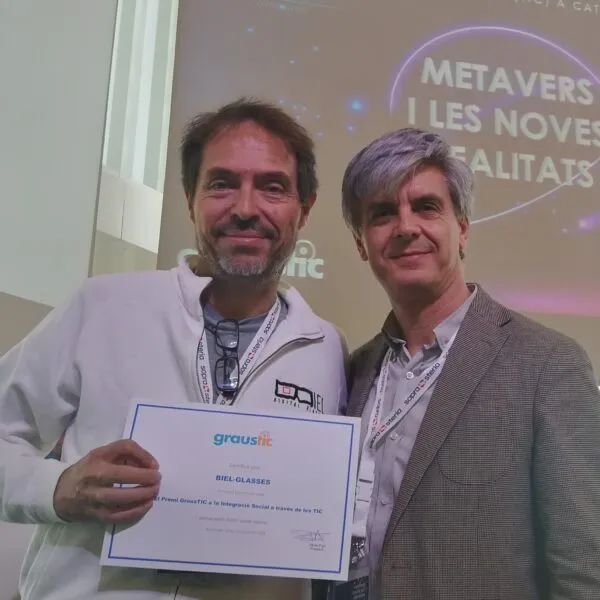
Biel Digital Glasses, 2022 Award for social integration through ICTs

Biel Digital Glasses, 2022 Award for social integration through ICTs

iSocial and GrausTIC awarded the prize in the framework of the ICT Party in Catalonia 2022, at the Telefónica Tower in Barcelona.
iSocial and nine other institutions promote BALL, the first Living Lab focused on ageing

iSocial and nine other institutions promote BALL, the first Living Lab focused on ageing

The Barcelona Aging coLLaboratory (BALL) aims to create innovative solutions, involving end-users.
Professionals of Ampans, Maresme Found., Joia Found., ATRA Group and Support-Girona participate in an exchange in Ireland

Professionals of Ampans, Maresme Found., Joia Found., ATRA Group and Support-Girona participate in an exchange in Ireland

Within the framework of the European project StepForME, led by iSocial, which aims to exchange good practices in the use of new technologies in youth mental health.
52 professionals from the Àuria Group and 5 ABSS from Girona in the course “From ACP to Self-directed Support”.

52 professionals from the Àuria Group and 5 ABSS from Girona in the course “From ACP to Self-directed Support”.

A total of 25 Social Services professionals from the Vegueria of Girona have been following a new edition of the training course “From Person-Centred Care to Self-directed Support” of the iSocial Foundation since 23rd September.

Innovative perspectives to promote access to housing

Publications Articles

Innovative perspectives to promote access to housing

,
Perspectives innovadores accés a l'habitatge

According to the UN, the lack of decent housing is a problem affecting over 20% of the global population. In Catalonia, nearly 60,000 people experience some form of residential exclusion. What innovative initiatives are being implemented worldwide to promote access to housing?

Housing, a global issue

Decent housing is a fundamental right recognized in the Universal Declaration of Human Rights (Article 25) and the Spanish Constitution (Article 47). However, many individuals live in precarious situations and face difficulties in accessing housing. According to the UN, this is a global problem affecting over 20% of the world’s population. In Catalonia, although there are no updated data on the number of people sleeping rough, it is estimated that around 18,000 people experience homelessness, according to the Arrels Foundation. Additionally, data collected in the Framework for Addressing Homelessness in Catalonia (2022-2025) indicates that 58,930 people experience some form of residential exclusion or sleep rough. Furthermore, in Spain, there are 86.6 homeless individuals per 100,000 inhabitants, according to INE data. The main reasons for homelessness include being in a migratory situation (28.8%), losing employment (26.8%), and facing eviction (16.1%). These statistics are calculated according to official data, but they do not show the whole reality. Firstly, there are many uncounted cases and, secondly, there is invisible homelessness. This refers to all those people living in substandard housing or unsafe spaces.

The difficulty in accessing decent housing affects various segments of society, such as youth, individuals with different types of disabilities, and populations at risk of social exclusion.

ETHOS Classification

According to the ETHOS classification, a common typology used in Europe in the field of housing and residential exclusion, there are four groups of individuals in situations of housing vulnerability:

  • Roofless individuals: Includes those living in public spaces or staying in shelters without a fixed address.
  • Houseless individuals: Refers to anyone residing in service centers, women’s shelters, temporary accommodations for immigrants and asylum seekers, institutions such as prisons or hospitals, and supportive housing without a lease contract.
  • Individuals in insecure housing: Describes cases where individuals live in a home without legal title, are under legal notice of abandonment of the property, or live under the threat of domestic violence.
  • Individuals in inadequate housing: Includes living in temporary structures or shacks, housing not compliant with legislation, and overcrowded spaces.

The first two classifications refer to homelessness, and the last two refer to invisible homelessness.

Innovative perspective worldwide to promote access to housing

  • Social housing: The city of Vienna is a global benchmark in housing policy, with 220,000 publicly owned properties, compared to 11,500 in Barcelona. Additionally, the municipality promotes the creation of non-publicly owned social housing through the announcement of property sale contests for social renting, at prices lower than market prices, open to entities and companies. An essential requirement to be selected in the process is to have a social housing plan that promotes diversity, community, and equal opportunities. Additionally, there is a limit on the profits of real estate companies in the city, and the generated profits must be reinvested. As a result of this limitation, rents are more affordable, and access to housing by vulnerable groups is encouraged.

In countries like Denmark, the Netherlands, or Sweden, housing cooperatives are also common, based on lease transfer regimes. This implies collective ownership of the property by a cooperative. Its inhabitants pay a refundable entry fee, at prices below the market, and can use the housing for life. Additionally, all involved partners participate in the purchasing, design, and development process of the housing. It is, therefore, an alternative that promotes self-management and collective fabric.

In Barcelona, the ESAL Agreement, signed by Habicoop, Cohabitac, and XES, establishes a municipal framework for public-social-community collaboration, which seeks to streamline the expansion of the protected public housing stock in the city through rental promotions and use transfer regimes.

As for Catalonia, the Generalitat holds the rights of preemption and redemption regarding housing, which means that the administration has preference in the acquisition of housing that its owner wishes to transfer. The institution can exercise this right directly or indirectly, through entities competent in the matter.

On the other hand, the Empty Flats project, promoted by Hàbitat 3, an entity associated with the iSocial Foundation, offers social housing for people in vulnerable situations. The Barcelona City Council, in agreement with the organization, takes care of the rent and any possible refurbishment works. The aim is to ensure that the city’s empty properties can be made available to those who cannot afford market prices.

Similarly, in Mexico, the Renta tu Casa program offers abandoned and uninhabited houses to individuals with few resources or in situations of social vulnerability. The municipal authority pays a monthly rent to the property owner, and the user contributes with 350 Mexican pesos (approximately 20 euros) and five hours of community work.

  • Shared housing: In the Netherlands, the Mixed Living project promotes cohabitation between homeless individuals and economically vulnerable individuals in blocks of social housing. This formula streamlines the process of accessing shelter and promotes social reintegration.

In the same vein, Startblok is an innovative Dutch model that offers temporary and affordable rentals for young people and migrants, aged between 18 and 28. This space allows for the creation of a diverse community that operates through self-management of residents. The model proposed by Startblok favors, on the one hand, the social integration of newcomers and, on the other hand, allows combating the housing precarity of young people.

Similarly, the SällBo building in Sweden brings together young migrant individuals and elderly people to promote social cohesion between generations and cultures through affordable rentals.

  • Sustainable housing: In California, the Mutual Housing program offers sustainable and low-cost housing to the agricultural population of the area. The price of bills is very low, as the houses generate the same amount of energy they consume. In addition to energy efficiency, the project also includes other services such as digital literacy and affordable loans.

Similarly, the Mas Coop cooperative in France accommodates low-income families in ecological housing with communal spaces. The land and buildings belong to the entity, which acquired them through a state loan for social renting, and the fees for resident members are more affordable than market prices.

  • Technology: Technological tools can be useful in processing data related to housing supply. Kloosiv is a cooperative web platform that combines technology and social intervention to facilitate access to housing for vulnerable groups with difficulties paying rent. Similarly, the Vivenda platform uses technological supports to create a network that connects supply and demand from the parties involved in renovation processes, to combat insecure and poor-condition housing, at reduced prices.

The new formulas in the field of housing access represent an alternative to traditional schemes, with a special emphasis on the most vulnerable groups in society, to ensure access to this universal right for all individuals.

References

Mas Coop: una cooperativa de residentes intergeneracional, ecológica y solidaria – World Habitat. (2023, 6 julio). World Habitat. https://world-habitat.org/es/premios-mundiales-del-habitat/ganadores-y-finalistas/mas-coop-una-cooperativa-de-residentes-intergeneracional-ecologica-y-solidaria/ [13/05/24]

Renta tu casa – World Habitat. (2023, 6 julio). World Habitat. https://world-habitat.org/es/premios-mundiales-del-habitat/ganadores-y-finalistas/renta-tu-casa-mexico/ [13/05/24]

L’habitatge cooperatiu en cessió d’ús (Cohabitatge). Habicoop. (2024, 28 febrero). Habicoop. https://habicoop.cat/cessio-dus/ [13/05/24]

Vivienda Mutua en Spring Lake – World Habitat. (2019, 21 febrero). World Habitat. https://world-habitat.org/es/premios-mundiales-del-habitat/ganadores-y-finalistas/11215/ [13/05/24]

Tipología europea de sin hogar y exclusión residencial. FEANTSA. https://www.feantsa.org/download/ethos_spain-24518105836657575492.pdf [13/05/24]

VESTA, un projecte d’innovació social i treball compartit pel sensellarisme femení. (2021, 23 noviembre). Cohabitac. https://www.cohabitac.cat/vesta-un-projecte-dinnovacio-social-i-treball-compartit-pel-sensellarisme-femeni/ [13/05/24]

Cuando hablamos de innovación en vivienda social también hablamos de la calidad de vida. (s. f.). Vivienda. https://www.habitatge.barcelona/es/noticia/cuando-hablamos-de-innovacion-en-vivienda-social-tambien-hablamos-de-la-calidad-de-vida_1123422 [13/05/24]

Alvear, A. (2022, 11 noviembre). ¿Cómo pueden la innovación y la tecnología solucionar el déficit de vivienda? Ciudades Sostenibles. https://blogs.iadb.org/ciudades-sostenibles/es/como-pueden-la-innovacion-y-la-tecnologia-solucionar-el-deficit-de-vivienda/ [13/05/24]

La Sexta Columna. (2024, 23 febrero). El ‘secreto’ mejor guardado de Austria: así funcionan las viviendas cooperativas de alquiler público. LaSexta. https://www.lasexta.com/programas/sexta-columna/secreto-mejor-guardado-austria-asi-funcionan-viviendas-cooperativas-alquiler-publico-viena_2024022365d909dc4129260001d2feca.html [13/05/24]

El Parque Público de Vivienda. (2023, 6 abril). Vivienda. https://www.habitatge.barcelona/es/acceso-a-vivienda/el-parque-publico-de-vivienda [13/05/24]

Vivienda en cesión de uso. (2018, 24 octubre). Co-Vivienda Barcelona. https://cohousingbarcelona.cat/es/vivienda-cesion-uso/ [13/05/24]

Projecte «Pisos buits» BCN – Fundació Hàbitat3. (s. f.). Fundació Hàbitat3. https://www.habitat3.cat/projecte-pisos-buits-bcn

Conveni ESAL Ajuntament Barcelona – Habicoop. (2022, 20 abril). Habicoop. https://habicoop.cat/conveni-esal-ajuntament-barcelona/


Homelessness and Technology: Tools to rebuild the bonds with the community

Campus InnoBreaks

Homelessness and Technology: Tools to rebuild the bonds with the community

Persona en situació de sensellarisme

Entourage (France) and Nidus (Catalonia). Held on June 5th, 2024.

It is estimated that, as of today, 700.00 people sleep on the streets, in emergency shelters, and temporary accommodations throughout the European Union . In Catalonia alone, according to the estimated data from the Action Framework for Homelessness, at least 58.930 people suffer from some form of homelessness or housing exclusion.

Homelessness is a complex issue, mainly linked to housing, but with consequences that transcend it. Numerous studies and programs show housing insecurity has a significant impact on the physical health and psychological well-being of the individuals experiencing it.

In this Innobreak, we will learn firsthand about two initiatives that seek to significantly improve the quality of life of people experiencing homelessness, addressing some of their relational and support needs:

  • Entourage (France):With over 170,000 active members, the Entourage app promotes the creation of a community committed to social inclusion by connecting people experiencing homelessness with members of the local community. Entourage’s focus is on overcoming social isolation and breaking the stigmas that contribute to the deterioration of the mental healh of those affected.
  • Nidus (Catalonia) is a mobile and web-accessible application designed to provide personalized support to people experiencing homelessness and facilitate communication with their designated professionals. Its features include a digital safe, direct chat with support professionals, and an emergency button. Soon, an interactive map of useful geolocated resources will also be added.

Speakers:

  • Pol Robert, Entourage (France)
  • Oriol Janer, Nidus (Catalonia)

Kloosiv, technology and social intervention to ensure social inclusion in access to housing

Publications Bank of innovations

Kloosiv, technology and social intervention to ensure social inclusion in access to housing

Kloosiv Housing SCCL

Kloosiv

Web platform that promotes social inclusion in housing to combat speculation and unwanted loneliness

Kloosiv is a cooperative web platform that combines technology and social intervention to facilitate access to housing for vulnerable groups struggling to pay rent. Its audience ranges from young people to single-parent families or elderly individuals living alone. The tool includes real information on the supply and demand of real estate in participating municipalities and offers more affordable rental prices compared to the market. The goal is to create a network that connects different stakeholders and, through artificial intelligence, optimizes resources and data to better meet their needs.

The initiative focuses on social and healthcare attention, well-being, home security, and conflict mediation. Kloosiv diagnoses the situation and specificities of both tenants and landlords. Professionals accompany individuals throughout the process and supervise each case personally.

Users’ circumstances vary. A common profile among Kloosiv users is elderly individuals experiencing unwanted loneliness who are looking for someone to safely share their apartment. There are also cases of young people who cannot afford to rent an apartment alone and are interested in accompanying someone living alone. In this sense, Kloosiv includes different types of cohabitation and provides professionals with regular monitoring to ensure residents’ comfort.

Additionally, the technological platform allows processing data and combining it with indicators of health, physical well-being, and emotional well-being to evaluate the program’s impact on users’ lives. Kloosiv also pays special attention to the homeless population and aligns with the Housing First methodology, prioritizing access to housing for these individuals.

Banc d’innovacions

STOP

STOP, artificial intelligence to prevent suicide

STOP és un projecte de recerca per prevenir el suïcidi a través d’intel·ligència artificial aplicada a les xarxes socials
Imatges Posts Web 64 min 2

NaviLens, a code system that guides individuals with visual impairments in public spaces

NaviLens is a code system with relevant information about public spaces to increase the autonomy of people with visual impairments.
Mentegram

Mentegram, therapeutic monitoring of patients in mental health treatment

Mentegram is a tool that allows evaluating and monitoring the daily behavior of individuals in therapeutic treatment.
Pycipedia

Pycipedia, collaborative platform for social workers specialized in parenting with intellectual disabilities

Pycipedia is a web platform for social workers specialized in supporting parents with intellectual disabilities.
Mapathon

Mapathon UPC, a web platform that gathers geolocated points on a map

Mapathon UPC is an open web platform that allows for the collection of geolocated points on a map collaboratively.
AutisMIND

AutisMIND, an application to stimulate the social cognition of children with ASD

AutisMIND is a mobile application that enhances the ability to empathize with others in children with Autism Spectrum Disorder (ASD)

STOP, artificial intelligence to prevent suicide

Publications Bank of innovations

STOP, artificial intelligence to prevent suicide

UPF

STOP UPF

Research project to prevent suicide through artificial intelligence applied to social networks

According to the latest data from the INE, 4,227 people died by suicide in Spain in 2022. It is the highest number ever recorded in the country. One of the most concerning issues is the increase in suicide among adolescents, as cases have significantly risen from 53 to 75 compared to 2021. According to the WHO, each suicide has a severe emotional impact, at least on six people in the victim’s environment.

STOP is a research project that studies mental health problems on social networks through Artificial Intelligence. The goal is to find patterns related to the high risk of suicide and other disorders that can lead to this issue, such as depression or eating disorders. When a user matching a risk profile is detected, a targeted prevention campaign is launched, including information like the Helpline, available 24 hours a day, and other suicide prevention hotlines.

Some indicators taken into account include the times at which the person publishes content, interactions received from other users, their interests, and the type of posts. The team, consisting of psychologists, engineers, and psychiatrists, has developed algorithms that detect suicidal behavior patterns with 85% accuracy through texts, images, and social activities on Twitter.

Banc d’innovacions

STOP

STOP, artificial intelligence to prevent suicide

STOP és un projecte de recerca per prevenir el suïcidi a través d’intel·ligència artificial aplicada a les xarxes socials
Imatges Posts Web 64 min 2

NaviLens, a code system that guides individuals with visual impairments in public spaces

NaviLens is a code system with relevant information about public spaces to increase the autonomy of people with visual impairments.
Mentegram

Mentegram, therapeutic monitoring of patients in mental health treatment

Mentegram is a tool that allows evaluating and monitoring the daily behavior of individuals in therapeutic treatment.
Pycipedia

Pycipedia, collaborative platform for social workers specialized in parenting with intellectual disabilities

Pycipedia is a web platform for social workers specialized in supporting parents with intellectual disabilities.
Mapathon

Mapathon UPC, a web platform that gathers geolocated points on a map

Mapathon UPC is an open web platform that allows for the collection of geolocated points on a map collaboratively.
AutisMIND

AutisMIND, an application to stimulate the social cognition of children with ASD

AutisMIND is a mobile application that enhances the ability to empathize with others in children with Autism Spectrum Disorder (ASD)

Care4Skills

Lab Innovation projects

Care4Skills

Care4Skills

Care4Skills is a European Erasmus+ collaborative project aimed at addressing the training needs in Long-Term Care and establishing a European training strategy with common curricula

(2024-2027)

The Care4Skills project promotes a new strategic approach to enhance the skills and retraining of professional caregivers in the Long-Term Care sector. Through cross-sectoral collaboration among actors from various European countries, with a special focus on elderly care and disability support, the project aims to improve the quality of services and facilitate the digital transition in this field of social intervention. The initiative is supported by the European Union through the Erasmus+ program and will be developed over a four-year period.

Care4Skills is led by EASPD (European Association of Service Providers for Persons with Disabilities) and brings together 6 European platforms and national actors from 10 countries (Belgium, Bulgaria, the Czech Republic, Finland, France, Greece, Hungary, Italy, the Netherlands, and Spain). The key player in Spain is the iSocial Foundation. The consortium includes both Long-Term Care providers and vocational training providers, as well as higher education institutions and certification bodies. The main goal of the collaboration is to address two priority competence areas for the sector: person-centered skills and digital skills.

Systematizing Long-Term Care Training

In the first year, the project plans to develop a training program to address the sector’s most urgent training needs, training 1500 frontline workers in Long-Term Care. This program will be based on an updated version of the MOOC that awards the European Care Certificate, a European qualification that provides the basic knowledge needed to work in the social and health care sector. Additionally, it will gather information on future training needs and develop a standardized methodology to anticipate and monitor these needs.

Care4Skills will not only improve the skills of professional caregivers but also develop new modular vocational training curricula, which will be piloted in the 10 participating countries. As a result of this research process, the project also plans to create European and national certifications and develop a European strategy for Long-Term Care skills, ensuring the project’s impact continues after its completion.

Evaluation of the Training Program

In this context, iSocial Foundation’s role within the project will be to adapt, implement, and evaluate the training program in Spain. To accomplish this task, iSocial Foundation will analyze the Long-Term Care sector in Spain, identifying the existing and necessary skills and competences, and diagnosing the gaps that exist.

Furthermore, it will study the trends in the Long-Term Care sector, defining both the current scenarios with characteristics familiar to the sector and the emerging and innovative elements, thus being able to project probable future scenarios that could accelerate the sector’s transformation.

Care4Skills aligns with the European Commission’s ambition to evaluate and enhance the skills of professional caregivers, with a special emphasis on digital skills and person-centered care. The project follows the guidelines set by the European Care Strategy (September 2022) and the Pact for Skills (“Large-scale Skills Partnership for Long-Term Care,” April 2023), and aims to address the challenges posed by both the sector’s evolution and the rapid social transformation and aging population.

Lead:

logo EASPD

Partners:

Logo iSocial Foundation EN
EPSU 2015 medium
Logo IRTS
EAN logo
EVBB Logo short
Federation of European Social Employers logo
JKU logo
aias logo
AMIMONI logo
logo naso
Logo UNIPSO
Mecses logo
IEK AKMI LOGO
CAC LOGO
Logo Social Services Europe
taitotalo logo
Tukena logo
TÜV HELLAS (TÜV NORD)
Logo APRO Formazione S.C.A.R.L
CAN logo
Logo Dayana

Amb el cofinançament de la Unió Europea a través del programa Erasmus+:

Logo Erasmus+ Cofinanciado por la Uión Europea

NaviLens, a code system that guides individuals with visual impairments in public spaces

Publications Bank of innovations

NaviLens, a code system that guides individuals with visual impairments in public spaces

Neosistec

NaviLens

A code system with relevant information about public spaces to increase the autonomy of people with visual impairments

Individuals with visual impairments face difficulties in performing everyday tasks, such as locating restrooms, recognizing which bus is in front of them, or reading a street sign. To address this issue, NaviLens has been created, a system of labels with codes, similar to barcodes or QR codes, that provides useful information to facilitate the mobility of people with visual impairments in public spaces.

To read the information contained in the signs, all that is needed is to download an application and move the mobile device around the area where the code is located. Without the need to approach closely, NaviLens labels can be read from a distance, while in motion, and with the camera unfocused. These are some of the main differences compared to QR codes, which are of little use to people with visual impairments as they require proximity to be interpreted with a mobile device. This implies that users must know beforehand where they are located.

Once the code is detected, a “click” is heard, and the application vocalizes the information. For example, the stop number where the user is located, the transportation schedule, the position relative to the space, etc. It can also be used in cultural events such as museums or exhibitions, with informative labels about the route or artistic works.

Additionally, some product brands are using NaviLens on the labels of their items to provide information about the components or usage. The application also allows for the identification of personal use objects, as the codes can be printed and stuck onto any surface.

Banc d’innovacions

STOP

STOP, artificial intelligence to prevent suicide

STOP és un projecte de recerca per prevenir el suïcidi a través d’intel·ligència artificial aplicada a les xarxes socials
Imatges Posts Web 64 min 2

NaviLens, a code system that guides individuals with visual impairments in public spaces

NaviLens is a code system with relevant information about public spaces to increase the autonomy of people with visual impairments.
Mentegram

Mentegram, therapeutic monitoring of patients in mental health treatment

Mentegram is a tool that allows evaluating and monitoring the daily behavior of individuals in therapeutic treatment.
Pycipedia

Pycipedia, collaborative platform for social workers specialized in parenting with intellectual disabilities

Pycipedia is a web platform for social workers specialized in supporting parents with intellectual disabilities.
Mapathon

Mapathon UPC, a web platform that gathers geolocated points on a map

Mapathon UPC is an open web platform that allows for the collection of geolocated points on a map collaboratively.
AutisMIND

AutisMIND, an application to stimulate the social cognition of children with ASD

AutisMIND is a mobile application that enhances the ability to empathize with others in children with Autism Spectrum Disorder (ASD)

We present Vincles Alt Pirineu-Aran at a public event in La Seu d’Urgell

Publications News

We present Vincles Alt Pirineu-Aran at a public event in La Seu d’Urgell

, ,
Vincles

El projecte, liderat per la Fundació iSocial, té per objectiu la detecció i prevenció de situacions de soledat no desitjada en la gent gran al territori de l’Alt Pirineu i la Vall d’Aran

El passat 10 d’abril es va presentar, a La Seu d’Urgell, el projecte Vincles Alt Pirineu-Aran, en un acte al qual van assistir-hi responsables dels serveis socials, representants polítics de la regió i mitjans de comunicació. Vincles és una iniciativa que aplica la innovació per fer front a l’increment de situacions de soledat no desitjada entre la gent gran a l’Alt Pirineu i el territori de l’Aran, combinant, d’una banda, la ciència de dades per geolocalitzar zones de risc, i de l’altra, l’activació de la xarxa comunitària local. Després d’uns mesos en els quals s’han realitzat sis pilots a diferents localitats de l’Alt Pirineu, el projecte arrenca ara en ferm en el conjunt d’aquest territori.

L’acte de presentació va comptar amb la intervenció inicial de Toni Codina, director de la Fundació iSocial, que va explicar el funcionament del projecte i les necessitats a les quals respon. Tot seguit, van intervenir-hi representants dels diversos governs regionals implicats en Vincles, que van ressaltar que la soledat no desitjada és una problemàtica cada cop més present en el territori. Per aquest motiu, van celebrar la posada en marxa del projecte.

Els assistents a la presentació van poder conèixer també el testimoni d‘Albert Marquet, alcalde de Montferrer i Castellbó, un dels municipis on s’ha realitzat la prova pilot del projecte. Marquet va explicar els avenços duts a terme en els darrers mesos i va valorar molt positivament la iniciativa. També van assistir a l’acte representants d’ABD, Integra Pirineus i Alba Jussà, entitats que participen en el projecte.

Roda de Premsa Vincles

El projecte Vincles inclou la realització d’un doble diagnòstic, qualitatiu i quantitatiu, per conèixer amb més detall la situació de la zona i estudiar les estratègies de desplegament més adequades. Gemma Valeri, coordinadora del projecte, va exposar els primers resultats dels diagnòstics qualitatius, que s’han obtingut a través d’entrevistes, d’observacions de camp i prop de 700 qüestionaris. Les dades revelen que la soledat no desitjada preocupa seriosament el 80% dels habitants de l’Alt Pirineu-Aran. A més, una gran part dels enquestats assenyalen que troben a faltar millors xarxes de transport per poder accedir a la socialització, així com espais oberts on poder dur a terme trobades informals. Els resultats també apunten una bretxa de gènere en la participació en les activitats socials, ja que la majoria de les persones que hi assisteixen són dones.

Aliança per combatre la soledat

L’Alt Pirineu-Aran concentra algunes de les comarques més sobre envellides de tot Catalunya i registra la xifra més alta de llars unipersonals, que conformen aproximadament una tercera part del total. Com a conseqüència, hi ha moltes persones que se senten soles.

En aquest context, Vincles Alt Pirineu-Aran reuneix un consorci d’entitats i serveis socials amb la idea de sumar esforços per combatre el fenomen de la soledat no desitjada al territori. Per fer-ho, s’emmiralla en el programa Auzosare, impulsat per la cooperativa Agintzari, entitat membre d’iSocial, i per l’empresa tecnològica Gislan, i que ja s’ha aplicat en diversos municipis d’Euskadi amb gran efectivitat. Totes dues organitzacions han compartit els seus coneixements amb les entitats i organismes catalans per tal de facilitar la implantació del projecte Vincles al territori de l’Alt Pirineu i l’Aran.

Vincles està liderat per la Fundació iSocial i també compta amb la participació dels organismes territorials de l’Alt Pirineu-Aran (els Consells Comarcals de l’Alt Urgell, el Pallars Sobirà, Pallars Jussà, la Cerdanya, l’Alta Ribagorça i el Conselh Generau d’Aran), la Universitat de Lleida, l’Institut per al Desenvolupament i la Promoció de l’Alt Pirineu-Aran (IDAPA), i tres entitats del tercer sector que actuen en aquestes comarques: la cooperativa Alba Jussà, la fundació Integra Pirineus i l’Associació Benestar i Desenvolupament (ABD). El projecte compta també amb la col·laboració de la Fundació La Caixa i la Diputació de Lleida. Vincles és finançat pels fons europeus Next Generation, a través del Departament de Drets Socials de la Generalitat de Catalunya.

Actualitat

Innovació tecnològica i serveis socials

iSocial presents the report “Technological innovation and social services”

In a public event held on 22.11.2022 at the NTT Data auditorium in Barcelona.
iSocial has moved to a new headquarters in District 22@ of Barcelona

iSocial has moved to a new headquarters in District 22@ of Barcelona

The new office is at 105 Sancho de Ávila Street, in the epicenter of innovation in the city, a few meters from the Glòries Tower and the MediaTIC Building.
Biel Digital Glasses, 2022 Award for social integration through ICTs

Biel Digital Glasses, 2022 Award for social integration through ICTs

iSocial and GrausTIC awarded the prize in the framework of the ICT Party in Catalonia 2022, at the Telefónica Tower in Barcelona.
iSocial and nine other institutions promote BALL, the first Living Lab focused on ageing

iSocial and nine other institutions promote BALL, the first Living Lab focused on ageing

The Barcelona Aging coLLaboratory (BALL) aims to create innovative solutions, involving end-users.
Professionals of Ampans, Maresme Found., Joia Found., ATRA Group and Support-Girona participate in an exchange in Ireland

Professionals of Ampans, Maresme Found., Joia Found., ATRA Group and Support-Girona participate in an exchange in Ireland

Within the framework of the European project StepForME, led by iSocial, which aims to exchange good practices in the use of new technologies in youth mental health.
52 professionals from the Àuria Group and 5 ABSS from Girona in the course “From ACP to Self-directed Support”.

52 professionals from the Àuria Group and 5 ABSS from Girona in the course “From ACP to Self-directed Support”.

A total of 25 Social Services professionals from the Vegueria of Girona have been following a new edition of the training course “From Person-Centred Care to Self-directed Support” of the iSocial Foundation since 23rd September.

Mentegram, therapeutic monitoring of patients in mental health treatment

Publications Bank of innovations

Mentegram, therapeutic monitoring of patients in mental health treatment

Mentegram

Mentegram

Tool that allows evaluating and monitoring the daily behavior of individuals in therapeutic treatment

Mentegram is a platform that allows for daily monitoring of the state of patients in mental health consultations. The instruments and detection criteria can be customized according to the individual or, if preferred, pre-configured ones can be used. This way, therapists can adapt the treatment in each case more reliably.

This monitoring also allows for session optimization and time-saving, as professionals obtain a quick overview of how patients have been in the days leading up to the visit. The tool also enables the detection of risk situations to act preventively.

Additionally, the application offers the possibility of sharing educational materials, instructions, questionnaires, and reminders with users through their mobile devices. Furthermore, the platform collects information on patient evaluations, staff workload, and clinical effectiveness.

Banc d’innovacions

STOP

STOP, artificial intelligence to prevent suicide

STOP és un projecte de recerca per prevenir el suïcidi a través d’intel·ligència artificial aplicada a les xarxes socials
Imatges Posts Web 64 min 2

NaviLens, a code system that guides individuals with visual impairments in public spaces

NaviLens is a code system with relevant information about public spaces to increase the autonomy of people with visual impairments.
Mentegram

Mentegram, therapeutic monitoring of patients in mental health treatment

Mentegram is a tool that allows evaluating and monitoring the daily behavior of individuals in therapeutic treatment.
Pycipedia

Pycipedia, collaborative platform for social workers specialized in parenting with intellectual disabilities

Pycipedia is a web platform for social workers specialized in supporting parents with intellectual disabilities.
Mapathon

Mapathon UPC, a web platform that gathers geolocated points on a map

Mapathon UPC is an open web platform that allows for the collection of geolocated points on a map collaboratively.
AutisMIND

AutisMIND, an application to stimulate the social cognition of children with ASD

AutisMIND is a mobile application that enhances the ability to empathize with others in children with Autism Spectrum Disorder (ASD)

Social Innovation to Prevent Gender Violence

Publications Articles

Social Innovation to Prevent Gender Violence

, ,
Innovació social per prevenir la violència masclista

During the year 2023, fifty-eight women and two minors died due to gender-based violence in Spain. How can we use social innovation to prevent and address this issue?

What is gender violence?

According to the United Nations, gender-based violence is “any act of violence based on the female sex that results in physical, sexual, or psychological harm or suffering to women, as well as threats of such acts […] or arbitrary deprivation of liberty […]”. This violence is rooted in unequal power relations between men and women and is structural.

In Spain, according to data from the Ministry of Equality, 1,245 women have been murdered by gender violence between January 2003 and February 2024. During the last month, more than eight thousand calls have been received on the victim assistance hotline (016). During the year 2023, fifty-eight women and two minors died due to gender-based violence in Spain.

Social services and gender violence

Demands for gender violence are diverse and involve different areas. Consequently, there are many professionals involved in the process. One of the main problems faced by victims is revictimization, which occurs when they have to explain the events they have experienced many times, to different professionals. Consequently, the feeling of vulnerability and helplessness is reinforced. For this reason, it is important that there is good coordination among professionals.

On the other hand, the role of social workers is crucial in the fight against gender violence. In this sense, preventive socialization is discussed. This concept refers to the acquisition of values and norms that prevent macho behaviors and favor equality values. Professional training is essential to ensure early intervention, as well as effective and respectful management of cases.

When addressing gender violence with victims, it is important to consider some aspects:

  • Listen without judgment. Do not hold the victim responsible for their situation and avoid compassion.
  • Do not overwhelm with excessive information or insist on intimate details of the aggression.
  • Respect the decisions of the victim and do not act without their consent. However, it is important to emphasize the possible risk situation in which they find themselves.
  • Accompany in the process, even if it is slow.
  • Inform about the available reporting channels without pressuring the victim to choose a specific path.

Social Innovation to Prevent Gender Violence

Social innovation is key in the field of prevention and management of gender violence cases, as new technologies, as well as new approaches, allow us to approach the problem in a more efficient and transformative way.

  • Empowerment of women. To combat gender violence, it is essential to carry out prevention strategies. In this sense, numerous organizations have promoted applications with information and resources to detect violence situations and be able to combat them. An example is SARA (UNDP), a free and confidential chat that guides and accompanies victims. There are also platforms aimed at promoting the safety of women in dangerous situations, such as the bSafe app. This tool allows sharing real-time location, recording videos and audios in alarm situations, and generating fake calls to deter potential aggressors.

  • Community involvement. Another key element is to generate links between the community to involve all actors in the eradication of discrimination. The MADRE project, in collaboration with Wangki Tangni, mobilized communities in Nicaragua to create joint action plans, through which groups identify problems and offer solutions to combat machismo in the region. There are also digital options that allow involving a large number of people in the prevention and elimination of these violences. In Gurgaon (Haryana, India), they have promoted the SafetiPin initiative, which promotes community collaboration through an application where users can send information about spaces and aspects of urban roads that can be potentially dangerous through maps. For example, street lighting, the absence of police presence in the area, and the low circulation of vehicles.

  • Intersectional perspective. Not all women experience violence in the same way. In addition to the gender variable, other aspects such as social class, race, or sexual orientation also affect. In Mexico, through a survey conducted by CIDIP and the Government of CDMX, the need to create specific materials for women with disabilities in situations of gender violence was seen. As a result, CIDIP created the App Morada, aimed at giving tools to these women to understand the specific discrimination they suffer and to ask for help if necessary.

  • Technological tools. Although technology has often been highlighted as an instrument that contributes to macho discrimination, for example, through cyberbullying, it also presents positive opportunities to combat this violence. Specifically, the blockchain system achieves registering materials with high protection that prevents them from being modified. This allows registering violent behaviors, with audio or image evidence, in an unalterable way. Therefore, they are valid documents for possible judicial processes. Similarly, artificial intelligence can be used to compare data on gender violence reports and detect repeating patterns. This has been done by the Complutense University of Madrid and the Ministry of the Interior, through a project that allows obtaining more accurate diagnoses and predicting cases of recidivism.

In conclusion, social innovation presents new ways to prevent and manage gender violence, a problem that continues to be present in our society and that requires the involvement of all sectors to be eradicated.

References

Diez caminos para prevenir la violencia contra las mujeres y las niñas | ONU Mujeres. (s. f.). ONU Mujeres. https://www.unwomen.org/es/noticias/articulo-explicativo/2023/11/diez-caminos-para-prevenir-la-violencia-contra-las-mujeres-y-las-ninas#:~:text=Diez%20caminos%20para%20prevenir%20la%20violencia%20contra%20las,8%20Empoderar%20a%20la%20juventud%20. . .%20M%C3%A1s%20elementos [15/04/24]

Elboj, C., & Ruiz Eugenio, L. (2010). TRABAJO SOCIAL Y PREVENCIÓN DE LA VIOLENCIA DE GÉNERO. Trabajo Social Global-Global Social Work, 1(2), 220–233. https://doi.org/10.30827/tsg-gsw.v1i2.912 [15/04/24]

Iniciativas contra la violencia de género. (s. f.). Instituto de las Mujeres. https://www.inmujeres.gob.es/imioweb/1_AreasTematicas/1_SocInfor/1_Iniciativas/4_ContraViolencia/ContraLaViolenciaDeGenero.pdf [15/04/24]

Juan Martín, M. D. (2017). Violencia de género y servicios sociales: análisis la aplicación del objetivo” violencia cero” desde los servicios sociales básicos. https://uvadoc.uva.es/bitstream/handle/10324/26723/TFG-G2506.pdf;sequence=1 [15/04/24]

Piedra-Cristobal, J., Rosa-Martín, J. J., & Muñoz-Domínguez, M. C. (2018). Intervención y prevención de la violencia de género: un acercamiento desde el trabajo social. Trabajo Social Global-Global Social Work, 8(14), 195–216. https://doi.org/10.30827/tsg-gsw.v8i14.6595 [15/04/24]

Pinedo, M. (2021, 2 septiembre). Matemáticas e inteligencia artificial contra el maltrato machista. El País. https://elpais.com/sociedad/2021-09-02/matematicas-e-inteligencia-artificial-contra-el-maltrato-machista.html [15/04/24]

Principales datos sobre violencia de género. (2024). Ministerio de Igualdad. https://violenciagenero.igualdad.gob.es/violenciaEnCifras/boletines/boletinMensual/2024/docs/Principales_datos_enero_2024.pdf [15/04/24]

Vegezzi, A. P., Vegezzi, A. P., & Vegezzi, A. P. (2020, 13 marzo). Lo que la revolución tecnológica puede hacer contra la violencia de género. El País. https://elpais.com/elpais/2020/03/10/planeta_futuro/1583861107_474286.html [15/04/24]